Home sales jump 8% the month a two-year mortgage deal ends
Published 15 August 2026 · 7 min read · By Evren Ergin
Sales of the same home rise 8.25 per cent between the 23rd and the 24th month of ownership, the biggest step at any anniversary in the first ten years, and there is nothing like it at three, four or five years.
TL;DR
- •ValuQ followed 5,953,153 individual homes in England and Wales from one sale to the next and counted how long each owner kept them.
- •Home sales jump 8.25 per cent in the single month the two-year mark passes. The equivalent step is 3.9 per cent at three years, 2.5 per cent at four years and 2.5 per cent at five.
- •Strip out the ordinary seasonal pull towards anniversaries and the two-year step is the one left standing, at 2.4 per cent above trend, peaking in month 25.
- •It is absent in homes bought between 1995 and 1999 and appears in every cohort bought from the mid 2000s, as fixed-rate lending took over.
- •It is largest for flats, leasehold homes and homes bought below their local median price, and smallest for detached houses and the dearest homes.
- •Selling on the clock does not cost sellers anything. Price growth and cash-loss rates both run smoothly through the two-year mark.
Advertisement

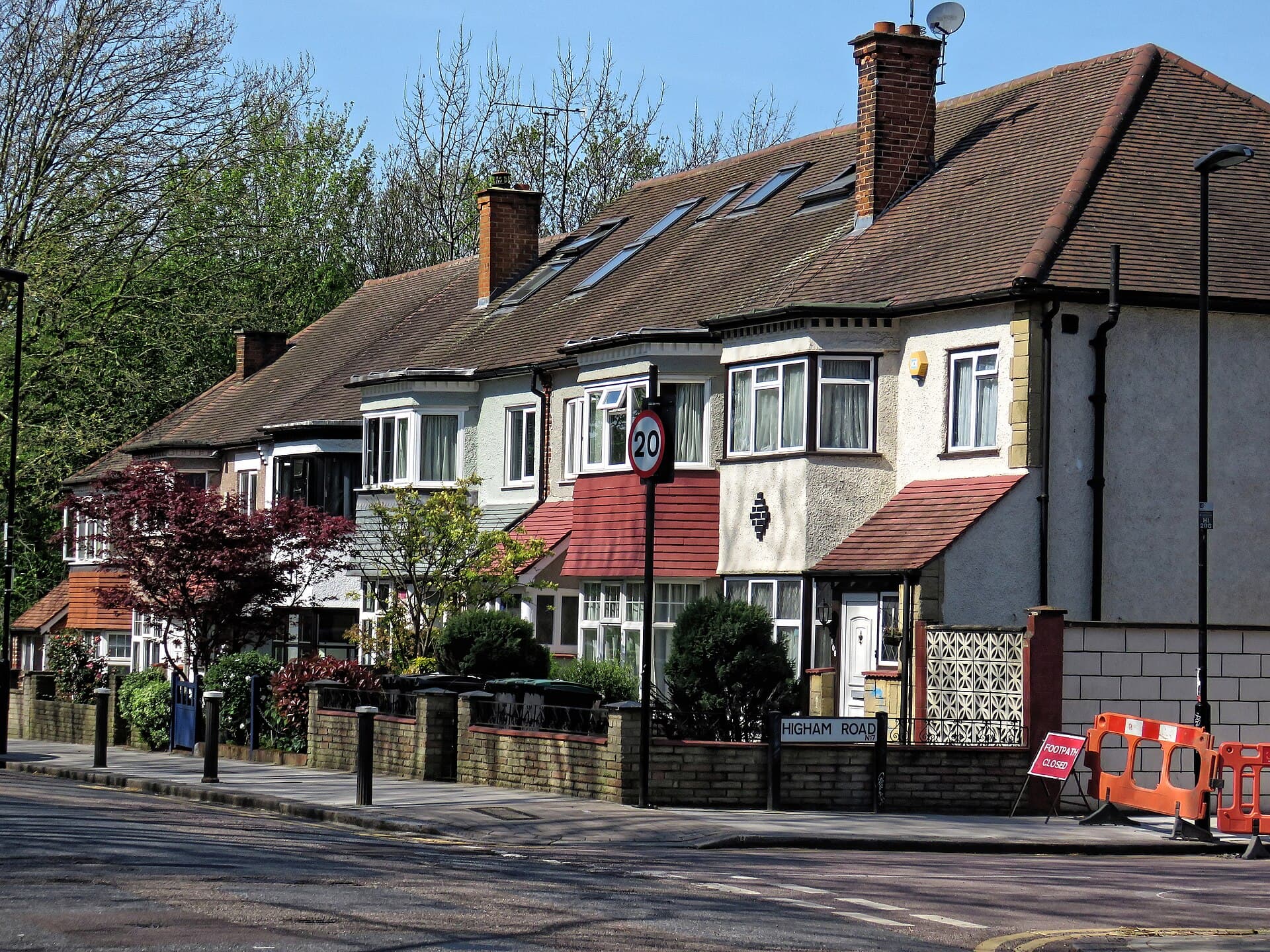
Research by ValuQ: we followed 5,953,153 individual homes in England and Wales from one sale to the next, and counted how many months their owners kept them, to find out when people actually move.
There is a jump in home sales at the two-year mark. Sales of the same home rise 8.25 per cent between the 23rd and the 24th month of ownership, the biggest step at any anniversary in the first ten years. Nothing like it happens at three, four, five, six or seven years. And it is not there at all in homes bought in the late 1990s, before fixed-rate mortgages took over. The shape matches a cost that stops applying on a date: the early repayment charge that runs for the length of a fixed-rate deal.
Every sale of a home in England and Wales is recorded by HM Land Registry, along with the date it completed. Match a home's sale to its previous sale and you know exactly how long the owner kept it. Do that 5.95 million times and you can see when Britain moves.
Sales climb steadily through the first two years of ownership, then jump, then fall away. The jump lands in month 24 and peaks in month 25, and the months just before it are slightly quiet. People who want to move appear to wait, and then go.
Home sales by month of ownership, England and Wales, homes bought 2000 to 2015
| Months owned | Homes sold | Change on the month before |
|---|---|---|
| 21 | 63,354 | +1.4% |
| 22 | 63,790 | +0.7% |
| 23 | 65,639 | +2.9% |
| 24 | 71,057 | +8.3% |
| 25 | 72,464 | +2.0% |
| 26 | 71,264 | -1.7% |
| 27 | 70,734 | -0.7% |
| 28 | 68,849 | -2.7% |
Home sales cluster at every whole year, because buying and selling are both seasonal. So the fair test is one anniversary against another. Sales rise 8.3 per cent crossing the two-year mark, 3.9 per cent crossing three years, 2.5 per cent crossing four years and 2.5 per cent crossing five. Strip out the ordinary seasonal pull and the two-year step is the one still standing, at 2.4 per cent above trend across the six months that follow it. Every other anniversary from three to nine years sits between minus 1.3 and plus 0.2 per cent.
Two more things point the same way. The step is absent in homes bought between 1995 and 1999, when fixed-rate lending was far less common, and it appears in every cohort bought from the mid 2000s onwards. And it is largest exactly where people borrow most: flats show 3.5 per cent, leasehold homes 3.2 per cent and homes bought just below their local median price 3.1 per cent, against 1.3 per cent for detached houses and 1.0 per cent for homes worth more than one and a half times their local median.
One honest caveat. The sold-price register holds no information about anyone's mortgage. This is a reading of the timing and of who shows it most, not an observation of anyone's loan. It is also still happening: people who bought between 2019 and 2022 show the same two-year step, at three times its margin of error.
An early repayment charge is a fee your lender applies if you pay off your mortgage before the end of your fixed period. Selling your home pays off the mortgage, so selling inside the fixed period can trigger it, unless your deal can be carried across to your next property. The charge stops applying when the fixed period ends, which for a two-year deal is roughly two years after you completed.
1.
2.
3.
4.
No, and this was worth checking rather than assuming. We compared each sale against what the UK House Price Index did over that exact window, then compared like with like within the same district, property type and purchase year. Price growth runs smoothly through the two-year mark with no break. The share of homes selling for less in cash than they cost does the same. Around 9,800 more sales landed in the six months after the two-year mark than the trend implies, and those sellers did no worse on price. The clock changes when people sell, not what they get.
There is no five-year spike anywhere in the data, which is worth saying plainly because the five-year fix is now the more common product. Two things could account for it. Someone who remortgages at two years starts a fresh charge period that no longer lines up with the day they bought, so the clock stops being visible in the register. And choosing to fix for five years is itself a statement that you do not expect to move soon, so there is no held-back demand waiting for the date. This data cannot separate the two, so we report the finding and stop there.
How long do most people own a home before selling?
Of homes in England and Wales bought between 2000 and 2015 and sold again within ten years, more were sold in their 25th month of ownership than in any other single month. Sales then fall away steadily. Plenty of owners stay far longer, and almost half of England's homes have not changed hands this century at all.
Can I sell my house during a fixed-rate mortgage?
Yes. Selling is not blocked by a fixed-rate deal. What can apply is an early repayment charge, because completing the sale pays off the loan. Whether it applies to you depends on your deal and on whether it can be carried to your next property, so ask your lender for the specific answer.
When should I put my house on the market if my fixed rate is ending?
Count back four to five months from the end date. The charge is triggered when the sale completes, not when you list, and a typical sale takes that long between agreeing a price and completing. Listing on the end date means completing well past it.
Does selling as soon as the charge lapses get me a worse price?
Not on this evidence. Price growth measured against the UK House Price Index runs smoothly through the two-year mark, and so does the share of homes selling below what they cost. There is no price penalty visible at the point where the extra sellers arrive.
Where does this data come from?
HM Land Registry Price Paid Data, the public record of every property sale in England and Wales, using the file published on 28 July 2026. We matched 13.4 million pairs of sales of the same address and analysed the 5,953,153 pairs where the full holding period could be observed without bias. The full method and every figure are published open access.
The full research paper, with the complete method, all tables and the code that produced them, is published under a Creative Commons licence at valuq.co.uk/research.
Sources
- [1]HM Land Registry Price Paid Data (complete file) · 2026-07-28 · https://www.gov.uk/government/statistical-data-sets/price-paid-data-downloads
- [2]HM Land Registry UK House Price Index, England and Wales · 2026-05-01 · https://landregistry.data.gov.uk/app/ukhpi
- [3]Office for National Statistics, How increases in housing costs impact households · 2023-01-09 · https://www.ons.gov.uk/peoplepopulationandcommunity/housing/articles/howincreasesinhousingcostsimpacthouseholds/2023-01-09
Terms in this article
Plain-English definitions from the ValuQ property glossary.
Read next
Related insights
The new 2.5% deposit scheme: what it means if you're selling
What happens if my estate agent goes out of business?
Can I switch estate agent while my house is on the market?
Can my estate agent use AI to edit photos of my house?
What is your home worth today?
ValuQ gives UK homeowners free, side-by-side property valuations from competing local estate agents. Anonymous until you choose. No cold calls.
Get your free anonymous valuationSellers and buyers never pay.