The three-year starter flat is now a nine-year hold
Published 10 June 2026 · 5 min read · By Evren Ergin
A flat sold in England and Wales in 2000 had been owned for a median of 2.8 years; a flat sold in 2025 had been owned for 9.1 years, ValuQ analysis of every repeat sale since 1995 shows. The flat that used to be the property ladder's quick first step has quietly become a near-decade commitment, and in the North East flats are now held longer than houses.
TL;DR
- •Median ownership of a flat at the point of sale has more than tripled this century, from 2.8 years for flats sold in 2000 to 9.1 years for flats sold in 2025.
- •Houses stretched too, from 3.1 to 10.0 years, but the flat lost its defining advantage: it no longer turns over much faster than a house.
- •The North East is the one region where flats are now held longer than houses: 10.2 years against 9.5.
- •London house sellers had held the longest of anyone in the country: a median 12.6 years for houses sold since 2024.
- •A quarter of the flats sold in 2025 had been owned for more than 16 years.
Advertisement

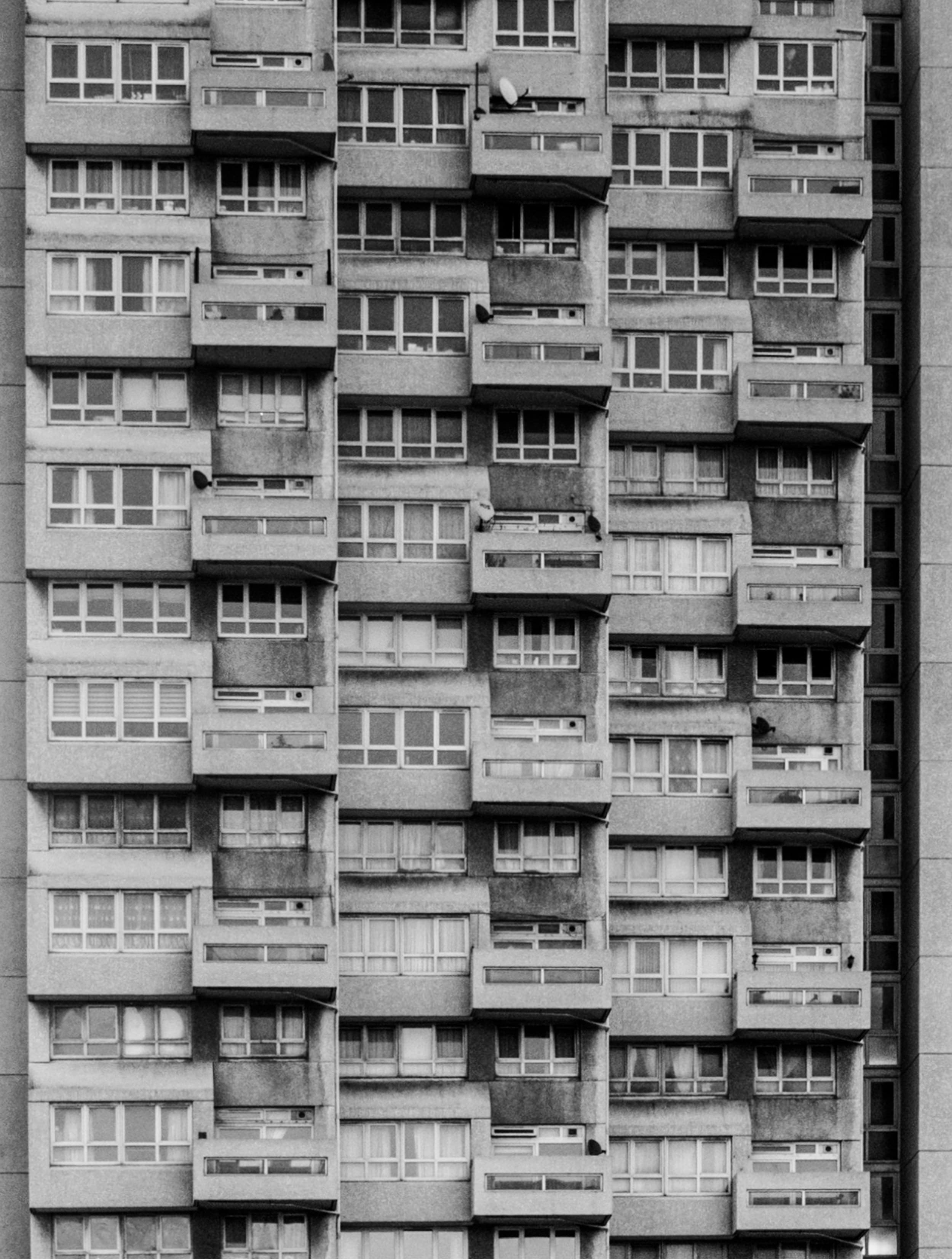
Research by ValuQ: we matched every open-market sale in HM Land Registry Price Paid data from January 1995 to April 2026 by address, building 30 years of repeat-sale pairs, and measured how long each home had been owned at the moment it sold. The 2025 figures alone rest on 530,024 sales.
ValuQ Property Watch. The property ladder's first rung had one job: be easy to step off. For the whole of the 2000s it worked. You bought a flat, life moved on, and within three or four years so did you. The record now shows that step has stretched to nearly a decade.
How long do people actually keep a flat before selling?
Among flats sold in 2025, the median time since the same flat last changed hands was 9.1 years. For flats sold in 2000 it was 2.8 years. Ownership length is the gap between a home's consecutive open-market sales: it measures how long the keys actually stayed in one pair of hands.
ValuQ analysis: median years owned at the point of sale, England and Wales, by year of sale
| Year sold | Flats | Houses |
|---|---|---|
| 2000 | 2.8 | 3.1 |
| 2005 | 3.9 | 4.2 |
| 2010 | 5.8 | 6.7 |
| 2015 | 8.2 | 8.9 |
| 2020 | 7.3 | 9.1 |
| 2025 | 9.1 | 10.0 |
Houses tell the same story, from 3.1 years to 10.0. What has vanished is the difference between the two. In 2000 a flat turned over noticeably faster than a house; that was the whole point of starter stock. By 2025 the gap has nearly closed, and the tail has grown long: a quarter of the flats sold in 2025 had been owned for more than 16 years.
Where are flats held the longest?
ValuQ analysis: median years owned at sale, homes sold 2024 to April 2026, by region
| Region | Flats | Houses |
|---|---|---|
| North East | 10.2 | 9.5 |
| London | 9.6 | 12.6 |
| North West | 9.3 | 9.7 |
| Yorkshire and the Humber | 9.1 | 9.5 |
| West Midlands | 8.9 | 9.7 |
| East Midlands | 8.6 | 9.4 |
| Wales | 8.6 | 9.5 |
| South East | 8.6 | 10.4 |
| East of England | 8.4 | 10.1 |
| South West | 8.3 | 9.6 |
The North East stands alone: it is the one region in England and Wales where the median flat is now held longer than the median house. London is the other extreme in its own way, with house sellers having held a median 12.6 years, the longest holds in the country.
Why did the first rung stretch from three years to nine?
- Moving costs rose faster than wages: stamp duty, fees and the deposit gap to the next rung all grew through the 2010s.
- The price gap between a flat and a house widened in most regions, so the step up needs more saved cash than it did in 2005.
- Since 2017, building-safety and cladding issues slowed or froze sales in parts of the flat market, stretching holds for some owners who wanted to move sooner.
- Owners who bought flats as long-term homes rather than stepping stones make up more of each year's sellers than they did in 2000.
None of those forces shows any sign of reversing quickly. The practical meaning is simple: the decision to buy a flat is no longer a three-year decision, and the decision to sell one is usually being taken by someone who has not faced the market for the better part of a decade.
An entire generation bought flats expecting to move in three years. The market they will sell into is one they have not met for nine. The single most useful thing a long-hold owner can do is find out what the home is worth now, from people who sell homes like it every week. Evren Ergin, founder of ValuQ.
How we did this
ValuQ used HM Land Registry Price Paid data, standard open-market sales (category A) from 1 January 1995 to 30 April 2026, 29.5 million records. Sales were matched into repeat-sale pairs on the same address (postcode plus building and unit identifiers) and the same property type, and ownership length is the time between a home's consecutive sales. Pairs under 12 months apart are excluded as churn and data noise. Regions follow the ONS Postcode Directory, February 2026.
Two honest limits. First, a home only enters the figures when it sells again, so homes still being held do not count yet; if anything, true ownership lengths are longer than these. Second, early years of the series can only observe short holds (a flat sold in 2000 can show at most five years of Land Registry history), which flatters the 2000s comparison; by 2010 the window is wide enough that the trend stands on its own, and the direction since then is unambiguous.
What should a long-hold flat owner do?
Selling starts with your decision, not the market's mood. If you bought in the mid-2010s you have already outlasted what used to be a full ownership cycle, and your sense of the flat's value is probably years out of date. ValuQ gives UK homeowners free, side-by-side property valuations from competing local estate agents, while you stay anonymous until you choose to connect. Free for homeowners, always.
Sources
- [1]HM Land Registry, Price Paid Data (complete file, transactions to 30 April 2026) · 2026 (data to 30 Apr 2026) · https://www.gov.uk/government/statistical-data-sets/price-paid-data-downloads
- [2]ONS Postcode Directory, February 2026 · 2026-02 · https://geoportal.statistics.gov.uk/datasets/3080229224424c9cb53c0b48f5a64d27
Terms in this article
Plain-English definitions from the ValuQ property glossary.
HM Land Registry
HM Land Registry is the government body recording ownership of land in England and Wales, whose register is the definitive proof of title.
Stamp duty land tax (SDLT)
Stamp duty land tax is the tax buyers pay on property purchases in England and Northern Ireland, charged in slices at rising rates.
Read next
Related insights
Does a good school nearby add value to my house?
Should I price my house on what I need for my next one?
House prices now falling in 1 in 3 areas of Britain
What happened to house prices after the last nine Budgets?
What is your home worth today?
ValuQ gives UK homeowners free, side-by-side property valuations from competing local estate agents. Anonymous until you choose. No cold calls.
Get your free anonymous valuationSellers and buyers never pay.