Essex homes bought new resell £20,000 behind their neighbours
Published 18 August 2026 · 7 min read · By Evren Ergin
An Essex home bought new from a developer grows 10.8 log points less than an identical second-hand purchase in the same district and year, a typical £20,272 of price growth, and about half of that gap is the price of the home having been new.
TL;DR
- •ValuQ matched 30,701 Essex homes bought new from a developer against 251,797 bought second-hand in the same districts, property types, purchase years and sale years.
- •At first resale the new-build homes grew 10.8 log points less than their matched neighbours, a typical £20,272 of price growth. For 2020 to 2024 buyers it is £25,171.
- •New-build buyers pay about 26 per cent above the going rate for a second-hand home of the same type. Roughly half the resale gap is the reversion that follows any purchase above the going rate, and roughly half is specific to being new.
- •The gap is paid off in stages. It falls to 3.9 points for the next owner of the same home and to 2.4 points once the home is over ten years old.
- •Thurrock is the widest Essex district at 15.6 points, the second widest of 78 county areas in England and Wales. Basildon is 10.9. The national figure is 9.9.
- •Cash losses are a flats story: 13.6 per cent of new-build flats resold within five years sold for less than the owner paid, against 6.0 per cent of second-hand flats.
Advertisement

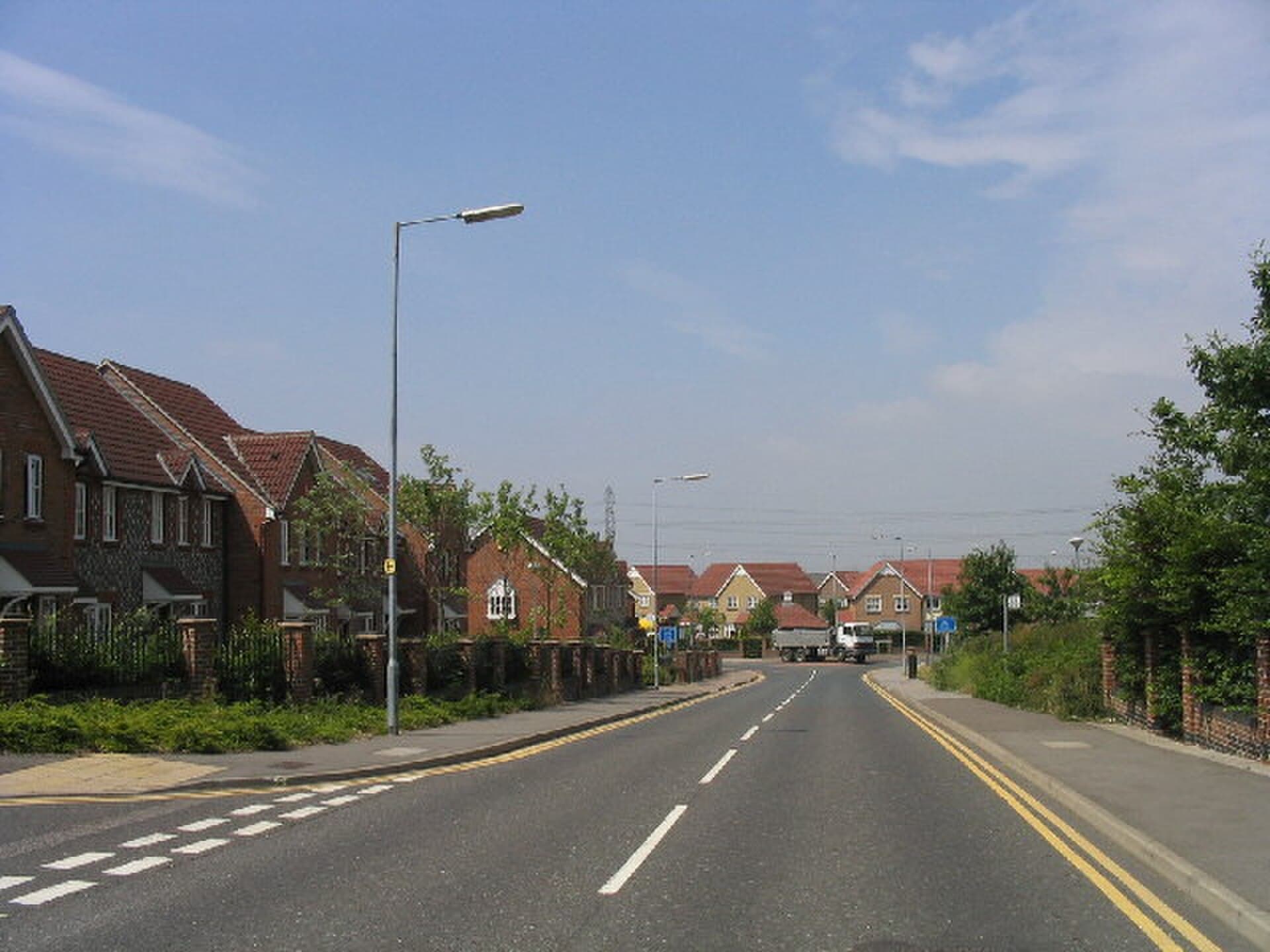
Research by ValuQ: we matched 30,701 Essex homes that were bought new from a developer and later resold, against 251,797 homes in the same districts bought second-hand, to find out what happens to the new-build premium when the owner comes to sell.
An Essex home bought new from a developer grows 10.8 log points less than an identical second-hand purchase in the same district, of the same property type, bought in the same year and sold in the same year. In cash, the typical gap is £20,272 of price growth that did not arrive. For people who bought new between 2020 and 2024, at a median price of £329,998, it is £25,171.
A new-build buyer in Essex pays 23.2 log points more than the going rate for a second-hand home of the same type in the same district and year, which is about 26 per cent. Some of that buys real things: a warranty, current building standards, a home nobody has lived in and a purchase with no chain in front of it. What the sold-price register shows is how much of that price difference is still there when the home changes hands again.
About half of the 10.8 point gap is not really about new builds at all. Anybody who buys above the going rate in their area gives some of it back later, whatever the age of the house. Measuring that effect on second-hand buyers alone and removing it leaves 5.8 points that belong to the home having been new.
The most useful part of this for a homeowner is what happens next. Following the same Essex homes into their second resale, where the owner bought second-hand and sold second-hand, the gap drops to 3.9 points. Split those owners by how old the home was when they bought it, and the picture is a premium being paid down in instalments.
How far a once-new Essex home lags its neighbours, by stage of ownership
| Stage | Sale pairs | Growth gap against matched homes |
|---|---|---|
| Bought new from the developer, first resale | 30,701 | 10.8 points |
| Bought when the home was under 5 years old | 3,748 | 5.9 points |
| Bought when the home was 5 to 10 years old | 3,088 | 2.7 points |
| Bought when the home was over 10 years old | 2,285 | 2.4 points |
By the time a home passes its tenth birthday, most of the effect has gone. The premium is not lost in one hit by the first owner. Each owner in turn pays a little less for newness than the one before, until there is nothing left to pay.
Growth gap at first resale for homes bought new, by district
| District | Matched sale pairs | Growth gap | After removing the price-position effect |
|---|---|---|---|
| Thurrock | 4,381 | 15.6 points | 8.3 |
| Braintree | 4,284 | 12.2 points | 8.1 |
| Harlow | 1,243 | 11.9 points | 5.3 |
| Southend-on-Sea | 1,755 | 11.9 points | 6.6 |
| Basildon | 3,703 | 10.9 points | 6.7 |
| Maldon | 801 | 9.9 points | 6.6 |
| Rochford | 678 | 9.9 points | 6.4 |
| Epping Forest | 1,574 | 9.4 points | 5.1 |
| Colchester | 5,786 | 8.8 points | 4.6 |
| Tendring | 1,964 | 8.8 points | 3.8 |
| Brentwood | 376 | 8.7 points | 2.4 |
| Uttlesford | 845 | 8.5 points | 6.0 |
| Chelmsford | 2,973 | 8.2 points | 2.2 |
| Castle Point | 338 | 6.3 points | 0.5 |
Thurrock stands out, and not only in Essex. Running the same method across the whole of England and Wales, on 825,928 matched sale pairs, the national gap is 9.9 points. Thurrock's 15.6 is the second widest of the 78 county-level areas with enough sales to measure, behind the City of Nottingham. Essex county as a whole sits at 9.9, right on the national figure.
Within five years of buying, 13.6 per cent of Essex new-build flat owners sold for less in cash than they paid, against 6.0 per cent of people who bought a second-hand flat. New-build houses are far steadier. For detached homes the cash-loss rate is 5.1 per cent, slightly below the 5.7 per cent for second-hand detached homes.
1.
2.
3.
4.
5.
The sold-price register holds no floor area, no room count and no specification, so a new home and a second-hand home of the same type are not the same product. Part of that 26 per cent premium buys more house. The register also does not record developer incentives such as deposit contributions or part-exchange terms, which raise the recorded price without necessarily raising what a later buyer will pay. Both sit inside the measured gap and neither can be separated out with this data, which is why the paper reports the raw figure and the adjusted figure side by side.
Do new build homes lose value?
Not in the sense of falling in price. Across 30,701 matched Essex sale pairs, homes bought new grew 10.8 log points less than identical second-hand purchases bought and sold in the same years, which is a smaller gain rather than a loss. Cash losses are a flats story: 13.6 per cent of new-build flats resold within five years sold for less than the owner paid, against 6.0 per cent of second-hand flats.
How long does it take to recover the new build premium?
It depends entirely on what the market does. Essex second-hand homes that sold between 2021 and 2026 grew about 4.6 per cent a year, and at that rate a 10.8 point gap takes roughly two and a half years to cover. At the rate recorded in the year to May 2026, which was 1.1 per cent for Essex, it would take close to a decade.
Is the new build premium worse for flats or houses?
The raw gap is widest for flats and terraced homes, at 11.8 and 11.5 points, because those are bought furthest above their local going rate. Once that price-position effect is removed, detached and semi-detached homes carry the slightly larger gap that is specific to being new, at about 6.8 points each.
Should I price my new build against the developer's current prices?
The register says no. A resale is priced against second-hand homes in the same district, which is why the gap exists in the first place. Ask any agent valuing your home which completed sales they used, and whether any of them are developer sales on your own estate.
Where does this research come from?
HM Land Registry Price Paid Data, the public record of every property sale in England and Wales, using the complete file downloaded on 15 August 2026 and covering sales to 30 June 2026. We matched every Essex address that sold twice, compared homes bought new against homes bought second-hand in the same district, property type, purchase year and sale year, and published the full method open access.
The full research paper, with the complete method, every table and the caveats in full, is published under a Creative Commons licence at valuq.co.uk/research.
Sources
- [1]HM Land Registry Price Paid Data (complete file) · 2026-08-15 · https://www.gov.uk/government/statistical-data-sets/price-paid-data-downloads
- [2]HM Land Registry UK House Price Index, Essex and Basildon, May 2026 · 2026-05-01 · https://landregistry.data.gov.uk/app/ukhpi
- [3]Plumplot, Losses on First Resale of New Builds · 2026-05-12 · https://www.plumplot.co.uk/posts/losses-on-first-resale-of-new-builds.html
Terms in this article
Plain-English definitions from the ValuQ property glossary.
Read next
Related insights
Basildon's 2021 buyers are up £52,800 as their five-year fixes end
Mortgage approvals hit their lowest since 2023. What now?
My house didn't sell last year. Should I try again now?
Mortgage rates rose after I agreed my move. Should I still go?
What is your home worth today?
ValuQ gives UK homeowners free, side-by-side property valuations from competing local estate agents. Anonymous until you choose. No cold calls.
Get your free anonymous valuationSellers and buyers never pay.