New builds cost 30% more. Do you get it back when you sell?
Published 6 August 2026 · 6 min read · By Evren Ergin
Figures published on 6 August 2026 put the average new-build premium in Great Britain at 30%, up from 23.7% a decade ago. You recover part of that premium when you sell, and how much depends mostly on how long you have owned the home, because your buyer prices it against the second-hand houses nearby rather than against a show home.
TL;DR
- •New-build homes in Great Britain sold for an average of 30% more than existing homes in 2026, up from 23.7% in 2016.
- •The gap runs from 60% in the North East to minus 10.5% in London, where new builds sell for less than existing homes.
- •A new build stops being new on the day you complete, so a resale is priced against second-hand homes on the same streets.
- •Only 5% of sellers in England and Wales this year had owned their home for under three years, so most owners hold long enough for the question to settle itself.
Advertisement

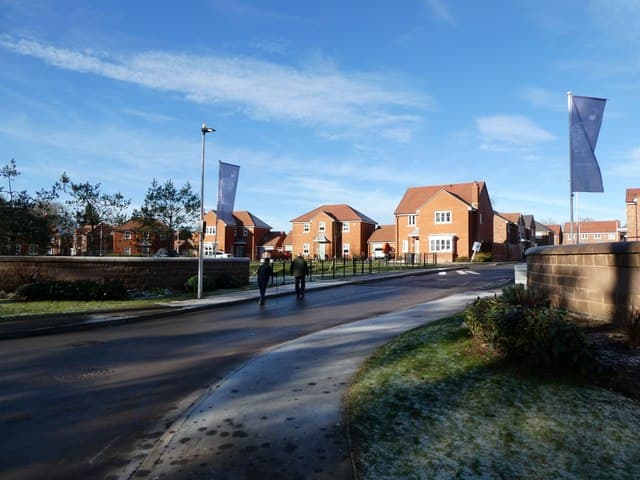
If you bought a new build, this is the number that decides whether you feel good or uneasy about selling it. The premium is real and it is growing. What matters for you is which part of it a second-hand buyer will still pay for.
What do the new figures say?
The new-build premium is the difference between what a newly built home sells for and what an existing home sells for in the same market. Analysis by UK Property Development, reported on 6 August 2026, put that gap at 30% across Great Britain, against 23.7% in 2016. In England on its own it moved from 23.5% to 28.9% over the same decade.
Average new-build price premium over existing homes, 2026. Source: UK Property Development analysis, reported 6 August 2026.
| Area | Average new-build premium, 2026 |
|---|---|
| North East | 60% |
| Scotland | 55.4% |
| Wales | 44.7% |
| East Midlands | 41.8% |
| Yorkshire and the Humber | 40.6% |
| Great Britain (average) | 30% |
| England (average) | 28.9% |
| London | minus 10.5% |
Why is the premium 60% in the North East and negative in London?
Because the premium is measured against whatever else is for sale locally, not against a national standard. Where the existing housing stock is older, smaller and cheaper, a new four-bedroom home on a fresh estate sits a long way above the local average, and the gap looks enormous.
London runs the other way. Its existing stock includes period houses in expensive locations, while a large share of its new supply is flats. The average new build there sold for 10.5% less than the average existing home in 2026, and that discount widened from 8.5% in 2016. London is the one part of Great Britain where the analysis found new builds selling below existing homes.
So a national premium figure is a headline, not a valuation. What you paid over the local second-hand price is a question about your street, your town and your property type.
Do you get the premium back when you sell?
Part of it, and the part that survives is the part a buyer can still see and use.
- What tends to carry over: a home in good condition with nothing to fix, low running costs from newer insulation and heating, an EPC rating well above the older homes nearby, and any remaining structural warranty cover.
- What tends to fade: the value of being the first owner, the show-home presentation, the fitted upgrades chosen from a developer's list, and the part of the price set by what the developer needed to achieve on that plot.
- What changes completely: your buyer is no longer choosing between plots on one estate. They are choosing between your home and every other home in the area at that price.
This is why the same house can feel differently priced on the day you buy and the day you sell. Nothing has gone wrong. The comparison set has changed.
How long do people actually own before they sell?
Longer than they used to, which works in a new-build owner's favour. Analysis of Land Registry data for England and Wales by Connells Group, published on 6 August 2026, found that 5% of sellers this year had owned their home for less than three years, against 8% in 2016 and 15% in 2006.
Share of sellers in England and Wales by how long they had owned. Source: Connells Group analysis of Land Registry data, published 6 August 2026.
| Owners selling after... | 2006 | 2026 |
|---|---|---|
| Less than three years | 15% | 5% |
| Less than five years | 29% | 14% |
The short hold has become rare. Most owners now sell after long enough that the newness question has settled and the home is being priced on the same basis as its neighbours.
A new build is priced by a developer on the day you buy it. It is priced by the market on the day you sell it.
What should you do if you own a new build and want to sell?
- Get more than one local valuation, and ask each agent which specific homes they are comparing yours with.
- Ask whether they are pricing against other homes on your estate or against second-hand homes in the wider area, because the two answers can be thousands apart.
- Check what the developer is still doing. If plots are still selling on your development with incentives attached, you are competing with them for the same buyer.
- Get your paperwork together early: warranty documents, any estate or service charge details, and your EPC. A buyer's solicitor will ask for all of it.
- Work out your net figure before you set an asking price, not after you accept an offer.
Common questions about new builds and resale value
Do new build homes lose value?
Not automatically. What fades is the premium attached to being brand new, because a resale is priced against second-hand homes locally rather than against other plots on the estate. The underlying value moves with the local market like any other home.
Is the new build premium the same everywhere in the UK?
No. The 2026 analysis put it at 60% in the North East and 55.4% in Scotland, against minus 10.5% in London. The premium is measured against local existing homes, so it reflects what else is for sale near you.
How long should I own a new build before selling?
There is no fixed period, and the right time is the one that fits your plans. It helps to know that short holds are now unusual: only 5% of 2026 sellers in England and Wales had owned for under three years.
Will my EPC rating help me sell a new build?
It can. A strong EPC is one of the parts of a new home that a second-hand buyer can still see and value, because it shows up in running costs rather than in presentation.
Finding out what your own home is worth now
A national premium figure cannot tell you what your home is worth. Several local agents pricing the same property, and telling you which homes they compared it with, can. ValuQ gives UK homeowners free, side-by-side property valuations from competing local estate agents, so you can see the range before you speak to anyone. It is free for homeowners, always.
Sources
- [1]The Intermediary: New build price premium rises to 30% in Great Britain, data reveals · 2026-08-06 · https://theintermediary.co.uk/2026/08/new-build-price-premium-rises-to-30-in-great-britain-data-reveals/
- [2]Property Industry Eye: New-build price premium rises to nearly a third · 2026-08-06 · https://propertyindustryeye.com/new-build-price-premium-rises-to-nearly-a-third/
- [3]Property Industry Eye: Short-term home moves fall to record low (Connells Group analysis of Land Registry data) · 2026-08-06 · https://propertyindustryeye.com/short-term-home-moves-fall-to-record-low/
Terms in this article
Plain-English definitions from the ValuQ property glossary.
Structural warranty
A structural warranty is the ten-year insurance policy behind a new build, from NHBC or an equivalent provider such as LABC Warranty, Premier Guarantee or ICW.
Service charge
A service charge is the leaseholder's share of the building's running costs: maintenance, insurance, cleaning, lifts and management.
Energy Performance Certificate (EPC)
An Energy Performance Certificate rates a home's energy efficiency from A to G and is legally required before marketing a property for sale.
Show home
A show home is the developer's furnished, upgraded example plot, dressed to sell the development.
Read next
Related insights
Can I switch estate agent while my house is on the market?
Can my estate agent use AI to edit photos of my house?
A buyer wants to film my house at the viewing. Should I let them?
How do I know if my estate agent is doing enough?
What is your home worth today?
ValuQ gives UK homeowners free, side-by-side property valuations from competing local estate agents. Anonymous until you choose. No cold calls.
Get your free anonymous valuationSellers and buyers never pay.