Do new estates drag down nearby prices? Essex data says barely
Published 10 June 2026 · 5 min read · By Evren Ergin
Existing homes in the Essex postcode sectors that absorbed the most new building since 2015 have grown 69.4% in value since 2013, against 71.8% where almost nothing was built, ValuQ analysis of Land Registry sales shows. Eleven years of heavy construction cost neighbouring owners about two percentage points, and Basildon's busiest building sectors posted some of the strongest growth in Essex.
TL;DR
- •Across Essex postcode sectors, existing homes next to heavy new building grew 69.4% from 2013-14 to 2024-26; sectors with little building grew 71.8%.
- •The feared collapse does not appear: the gap is about 2.4 percentage points spread across eleven years.
- •Basildon's heaviest new-build sectors are among the county's best performers: existing homes in SS16 5 grew 94.4% and in SS15 6 (Laindon) 92.4%.
- •With 27,000 homes planned for Basildon borough and a national new-towns programme in motion, this is the question every nearby owner is asking.
Advertisement

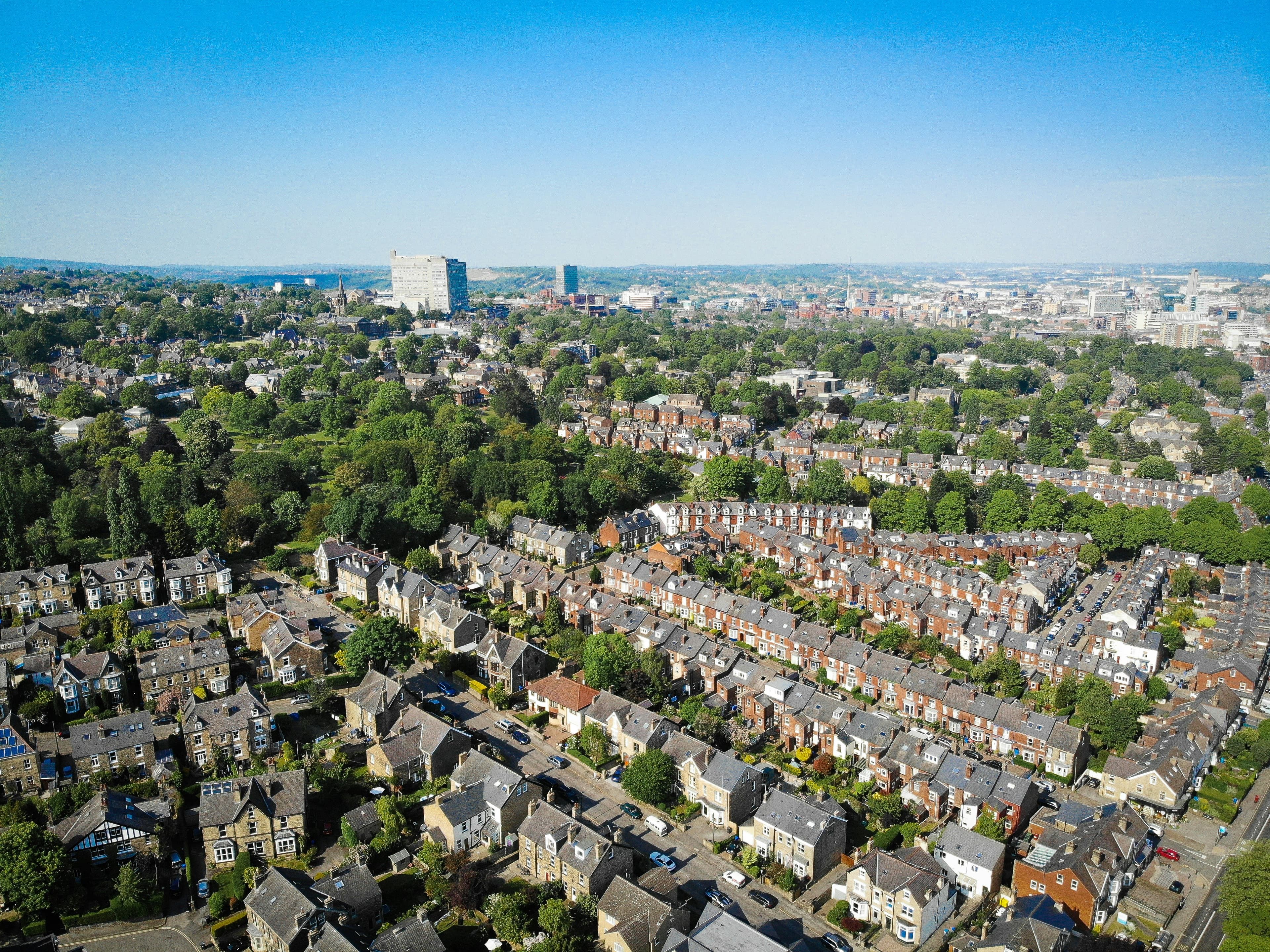
Research by ValuQ: we measured every open-market sale across the SS and CM postcode areas (Essex and its borders) in HM Land Registry data, counted new-build sales in each postcode sector from 2015 to 2022, and compared what happened to the prices of existing homes, not the new ones, in the sectors that took heavy building against the sectors that took almost none.
ValuQ Property Watch. Stand at any parish meeting about a proposed estate and you will hear the same fear: all those new houses will drag our values down. With 27,000 homes planned for Basildon borough alone and the government reviving new towns nationally, that fear now has a number attached. It is smaller than almost anyone at that meeting would guess.
What happens to existing homes when a big estate arrives?
Mostly, they keep doing what Essex homes do. We split the county's 134 qualifying postcode sectors into three groups by how many new-build sales the Land Registry recorded there between 2015 and 2022, then tracked the median price of existing homes only, comparing 2013-14 with 2024 to April 2026.
ValuQ analysis: existing-home price growth by new-build intensity, SS and CM postcode sectors
| Sector group | Sectors | Existing-home growth 2013-14 to 2024-26 |
|---|---|---|
| Heavy building (300+ new-build sales 2015-22) | 21 | 69.4% |
| Moderate building (50 to 299) | 50 | 67.0% |
| Little building (under 50) | 63 | 71.8% |
A new-build sale is the first recorded sale of a newly constructed home; an existing-home sale is everything else. The gap between heavy-building sectors and quiet ones is 2.4 percentage points across eleven years, around a fifth of a point a year, and the moderately built sectors actually trail both. Local variation swamps it: within the heavy-building group alone, growth ranges from 42.9% to 94.4%.
Which Essex sectors took the most new homes, and what happened there?
ValuQ analysis: the ten biggest new-build sectors in Essex and borders, and their existing-home growth
| Postcode sector | Area | New-build sales 2015-22 | Existing-home growth |
|---|---|---|---|
| CM1 6 | Chelmsford | 804 | 76.7% |
| CM17 0 | Harlow | 703 | 53.4% |
| CM23 2 | Bishop's Stortford | 696 | 42.9% |
| CM17 9 | Harlow | 624 | 70.7% |
| SS2 6 | Southend-on-Sea | 589 | 62.0% |
| SS16 5 | Basildon (Langdon Hills and Vange) | 579 | 94.4% |
| CM1 1 | Chelmsford | 550 | 45.3% |
| CM20 2 | Harlow | 484 | 68.9% |
| CM3 3 | Rural Chelmsford | 479 | 91.9% |
| SS15 6 | Basildon (Laindon) | 426 | 92.4% |
Look at the Basildon rows. SS16 5 and SS15 6 absorbed a thousand new homes between them, and existing homes there grew 94.4% and 92.4%, near the top of the entire county. Heavy building arrived where demand was strongest, and the established streets next door rode the same demand.
Does this mean new estates are good for my house price?
No, and the claim matters enough to be precise about. This is an observed pattern, not a controlled experiment: builders choose growth areas, so strong demand drives both the building and the price rises. What the record does show is the absence of the feared effect. Across eleven years and 134 sectors, heavy local building did not produce the collapse in neighbouring values that residents predict at planning meetings. The cost, if it exists at all, measures in single percentage points across a decade.
- An estate next door changes a street's daily life: traffic, schools, GP queues. Those costs are real even though the price effect is small.
- New stock can compete directly with yours when you sell, especially flats and small houses sold while a developer is still discounting nearby.
- The reverse fear is also overdone: a new estate does not automatically lift older homes either. The market mostly carries on.
Every planning objection says the same thing: this estate will knock thousands off our homes. Eleven years of Essex sales say the difference is about two points, and in Basildon the heaviest-built corners outgrew nearly everywhere else. Owners deserve the number, not the folklore. Evren Ergin, founder of ValuQ.
How we did this
ValuQ used HM Land Registry Price Paid data, standard open-market sales (category A), across all SS and CM postcode sectors, which cover Essex plus border towns such as Bishop's Stortford. For each sector we counted new-build sales lodged from 2015 to 2022, then compared the median price of existing homes (new-build flag N) sold in 2013-14 against 2024 to April 2026. Sectors needed at least 30 existing-home sales in each window to qualify; 134 did. Growth figures compare medians, so a change in the mix of homes sold can move an individual sector; the group-level comparison across 134 sectors is the finding, and single-sector rows are context, not verdicts.
One more honest caveat: postcode sectors are a proxy for neighbourhood. A sector is typically 2,000 to 4,000 homes, so this measures the wider area around heavy building, not the street directly facing it.
What should an owner near a planned estate do?
Get evidence before the diggers arrive. If an allocation site sits near you, the data says panic-selling is unjustified, and pricing your home on folklore, in either direction, is how value gets left on the table. ValuQ gives UK homeowners free, side-by-side property valuations from competing local estate agents, anonymously until you choose to connect, with each valuation built on the sold evidence around your actual street. Free for homeowners, always.
Sources
- [1]HM Land Registry, Price Paid Data (complete file, transactions to 30 April 2026) · 2026 (data to 30 Apr 2026) · https://www.gov.uk/government/statistical-data-sets/price-paid-data-downloads
- [2]GOV.UK: Seven new towns proposed to kickstart housebuilding push · 2026-03-23 · https://www.gov.uk/government/news/seven-new-towns-proposed-to-kickstart-housebuilding-push
- [3]ValuQ: 27,000 homes are coming to Basildon. Can the town cope? · 2026-06-04 · https://valuq.co.uk/insights/basildon-27000-homes-can-the-town-cope-2026
Terms in this article
Plain-English definitions from the ValuQ property glossary.
Read next
Related insights
In Basildon, the step up to a detached shrank by up to £23,500
A Basildon house on a Close sells 4.4% below its neighbours
Does a good school nearby add value to my house?
Should I price my house on what I need for my next one?
Is your asking price where it should be?
ValuQ gives UK homeowners free, side-by-side property valuations from competing local estate agents. Anonymous until you choose. No cold calls.
Get your free anonymous valuationSellers and buyers never pay.