My buyer wants repairs done before exchange. Should I agree?
Published 22 September 2026 · 8 min read · By Evren Ergin
Not always, and not without looking at what the survey actually found. A repair request after a survey is a normal stage of a sale, and the fair answer is usually one of three: fix a specific item properly and prove it, adjust the price instead, or say no to items that were obvious at the viewing.
TL;DR
- •A buyer asking for repairs after their survey is normal, and most requests are a negotiation rather than a threat to the sale.
- •Look for the survey's condition ratings: a 3 (red) is urgent, a 2 (amber) is not serious or urgent, and a 1 needs no repair.
- •Doing the work yourself only makes sense for a specific, quotable job done by a qualified trade with paperwork your buyer's solicitor will accept.
- •Agree nothing on the phone and spend nothing until your buyer has committed their own money, and put every agreement through the solicitors in writing.
Advertisement

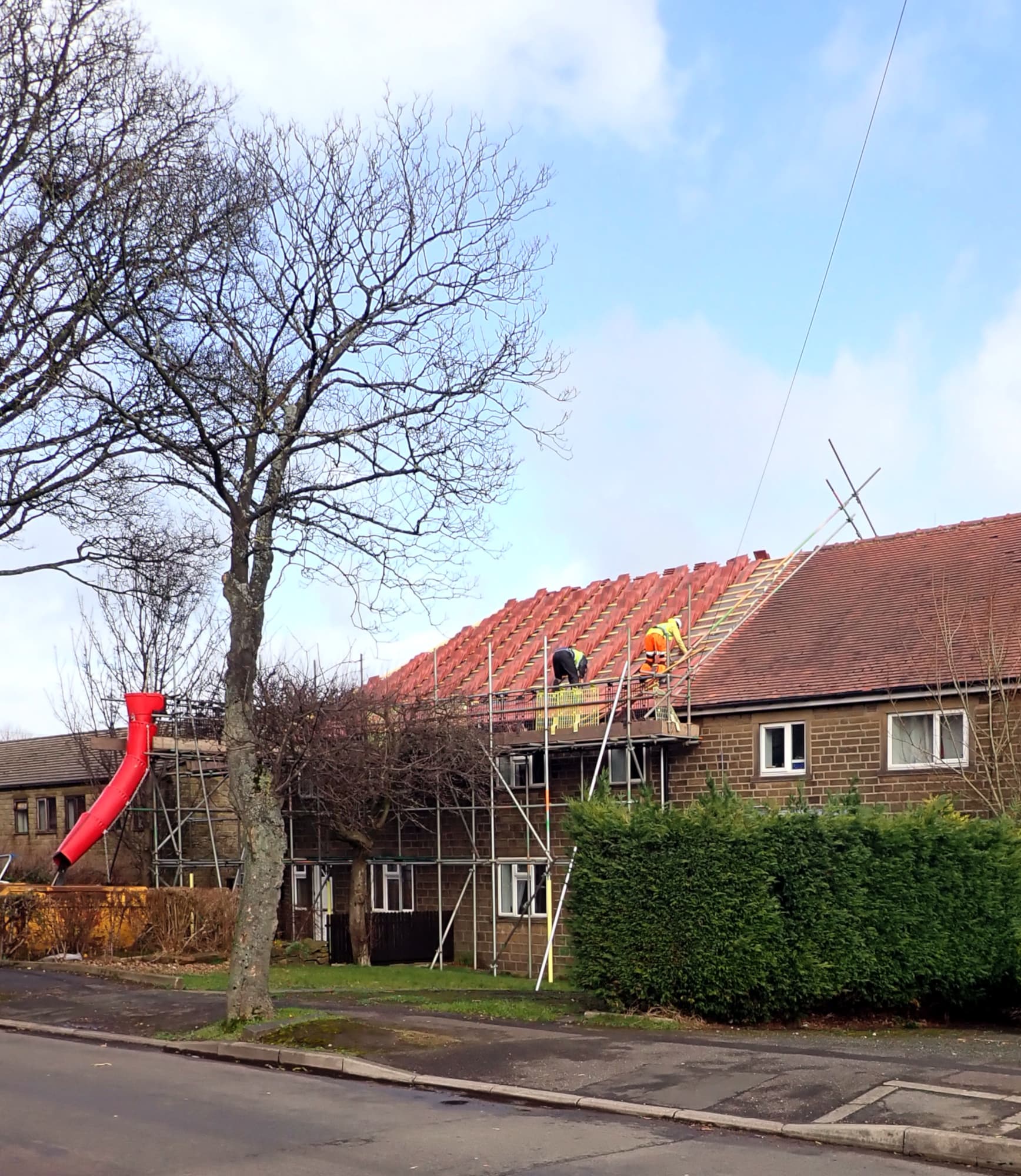
The call usually comes a week or two after the survey. Your agent says the buyer is still keen, but they would like a few things sorted first.
It feels like the ground moving. In most cases it is simply the part of the sale where the survey gets priced in.
What does a buyer's repair request actually mean?
A repair request is the buyer asking you to fix, before exchange, something their surveyor flagged. Exchange of contracts is the moment the sale becomes legally binding in England and Wales, so until then everything, including the price and the condition, can still be discussed.
RICS surveys grade each part of the home with a condition rating, from 1 to 3. The rating is the first thing to look for beside any item your buyer raises.
- Condition rating 3: defects that are serious or need repairing, replacing or investigating urgently.
- Condition rating 2: defects that need repairing or replacing but are not considered serious or urgent.
- Condition rating 1: no repair is currently needed.
How to read the request against the survey
| What the buyer is asking for | Usually normal | Worth pushing back |
|---|---|---|
| A condition rating 3 item, such as a failing roof covering or unsafe wiring | Yes. Urgent defects are fair to raise | Only if the survey wording does not support it |
| A condition rating 2 item, such as a worn window seal or a dripping gutter | Sometimes, as part of a small overall adjustment | If the buyer wants a full price cut for routine wear |
| Specialist reports the surveyor recommended, such as a gas or electrical check | Yes. These are cheap and settle the question | If they arrive in batches weeks apart |
| Things visible at the viewing, such as an old kitchen or dated decor | Rarely | Yes. It was already in the price they offered |
| A long list with no survey extract attached | No | Ask for the survey section before discussing anything |
Should I do the repairs or reduce the price?
There are four common outcomes, and the right one depends on what the item is and how much control you want over the work. Most sellers do best when they keep the job small and specific, or turn it into a price adjustment the buyer's lender can see.
The usual ways to settle a survey repair request
| Option | How it works | Best when | Watch out for |
|---|---|---|---|
| You do the repair | A qualified trade fixes the item before exchange and you hand over the paperwork | One clear job with a fixed quote, such as a gas appliance or a roof section | Your buyer may still question the quality; keep invoices, certificates and guarantees |
| Price reduction | You agree a lower price that reflects a quote for the work | Several small items, or work the buyer would rather choose themselves | Base it on a real quote, not the buyer's estimate |
| Retention | Part of the money is held back by the solicitors until an agreed job is done | A job that cannot be finished before exchange | It needs clear wording in the contract and adds admin |
| Decline | You explain politely that the item was reflected in the agreed price | Cosmetic items, or things plainly visible at the viewing | In a crowded market the buyer has other choices, so decline with evidence |
Any cash allowance or price change has to be dealt with through the solicitors, because the buyer's lender needs to know the true price it is lending against. That is one reason a straightforward price reduction is usually cleaner than cash handed over at completion.
How do I handle a repair request step by step?
1. Ask for the survey extract
Ask your agent for the exact section of the survey behind each request, with its condition rating. A request you can read in the surveyor's own words is much easier to answer calmly.
2. Get your own quote
Ask a qualified local trade to price the work. A written quote turns a vague worry into a number both sides can discuss, and it stops a £300 job being treated as a £3,000 one.
3. Check who is allowed to do the work
Gas work in a home must be done by a Gas Safe registered engineer. Some electrical work, such as replacing a fuse box, needs building regulations approval or an installer registered with a competent person scheme, who can certify it.
4. Choose repair, reduction or retention
Fix the item yourself only when the job is specific and you can prove it was done properly. For anything broader, a price adjustment based on your quote is usually faster and leaves the buyer free to choose their own trades.
5. Answer in writing through the solicitors
Agree nothing binding in a phone call with the agent. Once terms are settled, ask your solicitor to confirm them to the buyer's solicitor so they sit in the file and nobody remembers them differently at exchange.
6. Spend only once the buyer has spent
Before you pay a trade, check the buyer has submitted their full mortgage application and their solicitor has ordered searches. Book the work once they have committed their own money, not on the strength of a promise.
7. Keep the timetable moving
Ask your solicitor to carry on with the rest of the legal work while the repair question is settled. A sale that pauses completely for one item loses more time than the item is worth.
A survey request is a conversation about a number. Keep it specific, keep it in writing, and it need not end a sale.
Is my buyer in a strong position to ask right now?
Stronger than in recent years. Rightmove reported on 21 September 2026 that the number of homes for sale is at a 12-year high for the time of year, with buyer enquiries 9% lower than a year earlier. A buyer who walks away can find other homes to view, and you would be back to an average of 64 days to find the next buyer.
That is a reason to answer reasonable requests quickly, not to agree to everything. The same data shows 61% of homes that come to market find a buyer on average, so a buyer who is already through the survey is worth looking after.
Why timing matters once a survey is done, latest figures
| Measure | Latest figure | Source and date |
|---|---|---|
| Homes for sale | 12-year high for the time of year | Rightmove, 21 September 2026 |
| Average time to find a buyer | 64 days | Rightmove, 21 September 2026 |
| Average time from sale agreed to completion | 150 days | Rightmove, 21 September 2026 |
| Average time from sale agreed to exchange | 123 days | TwentyCi, reported 21 September 2026 |
| Agreed sales that fell through, early 2026 | 23.7% | TwentyEA, reported 16 April 2026 |
Common questions about repair requests
Do I have to do repairs the buyer asks for after a survey?
No. In England and Wales nothing is binding until contracts are exchanged, so a repair request is a negotiation. You can agree, offer a price adjustment instead, or decline. The buyer can also withdraw, which is why most sellers answer reasonable requests quickly.
Is it better to fix the problem or knock money off?
For one specific job with a fixed quote, fixing it can protect your price. For several items, or anything the buyer may want to do their own way, a price reduction based on a real quote is usually quicker and avoids arguments about workmanship.
What is a condition rating 3 on a survey?
It is the most serious rating in a RICS Home Survey. It means a defect that is serious or needs repairing, replacing or investigating urgently. Buyers and their lenders pay close attention to these items, so expect them to be raised.
Can I use my own builder for the repairs?
Yes, as long as the trade is qualified for the job. Gas work must be done by a Gas Safe registered engineer, and some electrical work needs a registered installer or building regulations approval. Keep every invoice, certificate and guarantee for your buyer's solicitor.
What if the buyer asks for more repairs later?
Ask for the survey extract behind each new item and deal with them together rather than one at a time. A pattern of new requests with no survey basis can be a sign the buyer is reconsidering, so check with your agent what else they have done to progress the sale.
Does a repair request mean my buyer is about to pull out?
Usually not. Most requests are the survey being priced into the deal. Look at what the buyer is doing alongside it: a submitted mortgage application and ordered searches are signs of commitment.
Where does ValuQ fit in?
ValuQ gives UK homeowners free, side-by-side property valuations from competing local estate agents. The selling decisions stay yours, including how you answer a buyer's survey, and a clear, evidence-based valuation from the start is what gives you the confidence to hold a fair price.
Sources
- [1]RICS Home Survey Standard, Level 3 report template (condition ratings 1, 2 and 3) · 2021-03-01 · https://www.rics.org/content/dam/ricsglobal/documents/standards/rhs_level_three.pdf
- [2]Health and Safety Executive, Domestic gas safety FAQs · 2023-03-16 · https://www.hse.gov.uk/gas/domestic/faqs.htm
- [3]GOV.UK, Building regulations approval · Accessed 21 September 2026 · https://www.gov.uk/building-regulations-approval
- [4]GOV.UK, Competent person schemes: current schemes · Accessed 21 September 2026 · https://www.gov.uk/guidance/competent-person-scheme-current-schemes-and-how-schemes-are-authorised
- [5]Rightmove House Price Index, 21 September 2026 · 2026-09-21 · https://www.rightmove.co.uk/news/content/uploads/2026/09/Rightmove-HPI-21st-September.pdf
- [6]Property Industry Eye, Conveyancer numbers plunge as sales take 123 days to exchange (TwentyCi, IRN Research) · 2026-09-21 · https://propertyindustryeye.com/conveyancer-numbers-plunge-as-sales-take-123-days-to-exchange/
- [7]PropertyWire, Property fall-throughs decline to 23.7% in early 2026 (TwentyEA data) · 2026-04-16 · https://www.propertywire.com/news/property-fall-throughs-decline-to-23-7-in-early-2026/
Terms in this article
Plain-English definitions from the ValuQ property glossary.
Building regulations approval
Building regulations approval certifies that works meet safety and construction standards, separate from and additional to planning permission.
Exchange of contracts
Exchange of contracts is the moment a sale becomes legally binding, when the two signed contracts are formally swapped and the deposit is paid.
Price reduction
A price reduction is lowering the asking price of a home already on the market to restart buyer interest.
Sale agreed
Sale agreed means an offer has been accepted and the property is coming off active marketing while lawyers take over.
Consumer unit
The consumer unit is the modern fuse box, distributing power around a home and cutting it instantly when a fault is detected.
Defect
A defect is any fault in a property's condition, from a slipped tile to structural movement.
RICS
RICS is the Royal Institution of Chartered Surveyors, the professional body that sets the standards UK surveyors and valuers work to.
Read next
Related insights
Prices rose in September, but only 6 in 10 homes find a buyer
My buyer is still viewing other houses. Should I worry?
Two in five flats bought in 2021 are worth less as fixes end
What is the TA6 form, and what changed in 2026?
Know what your home is worth today
ValuQ gives UK homeowners free, side-by-side property valuations from competing local estate agents. Anonymous until you choose. No cold calls.
Get your free anonymous valuationSellers and buyers never pay.