Two in five flats bought in 2021 are worth less as fixes end
Published 19 September 2026 · 10 min read · By Evren Ergin
Nearly two in five flats bought in England and Wales in 2021 are worth less today than their owners paid, according to ValuQ analysis of 1,086,507 Land Registry sales, while fewer than one house in a hundred is. Those 2021 buyers are now coming off five-year fixed rates just as the Bank of England weighs its next rise.
TL;DR
- •38.2% of the 180,709 flats bought in England and Wales in 2021 are worth less today on their local price index; for houses the figure is under 1%.
- •In 74 local authorities the typical 2021 flat is worth less than it cost, led by Westminster (-18.8%) and Tower Hamlets (-18.6%); none are in the North, the Midlands or Wales.
- •A typical 2021 flat buyer refixing now pays about £259 a month more on a 75% mortgage, as five-year deals from 2021 expire.
- •In Basildon the typical 2021 flat is up 2.5% and none is behind on the local index, while neighbouring Thurrock and Castle Point are down.
Advertisement

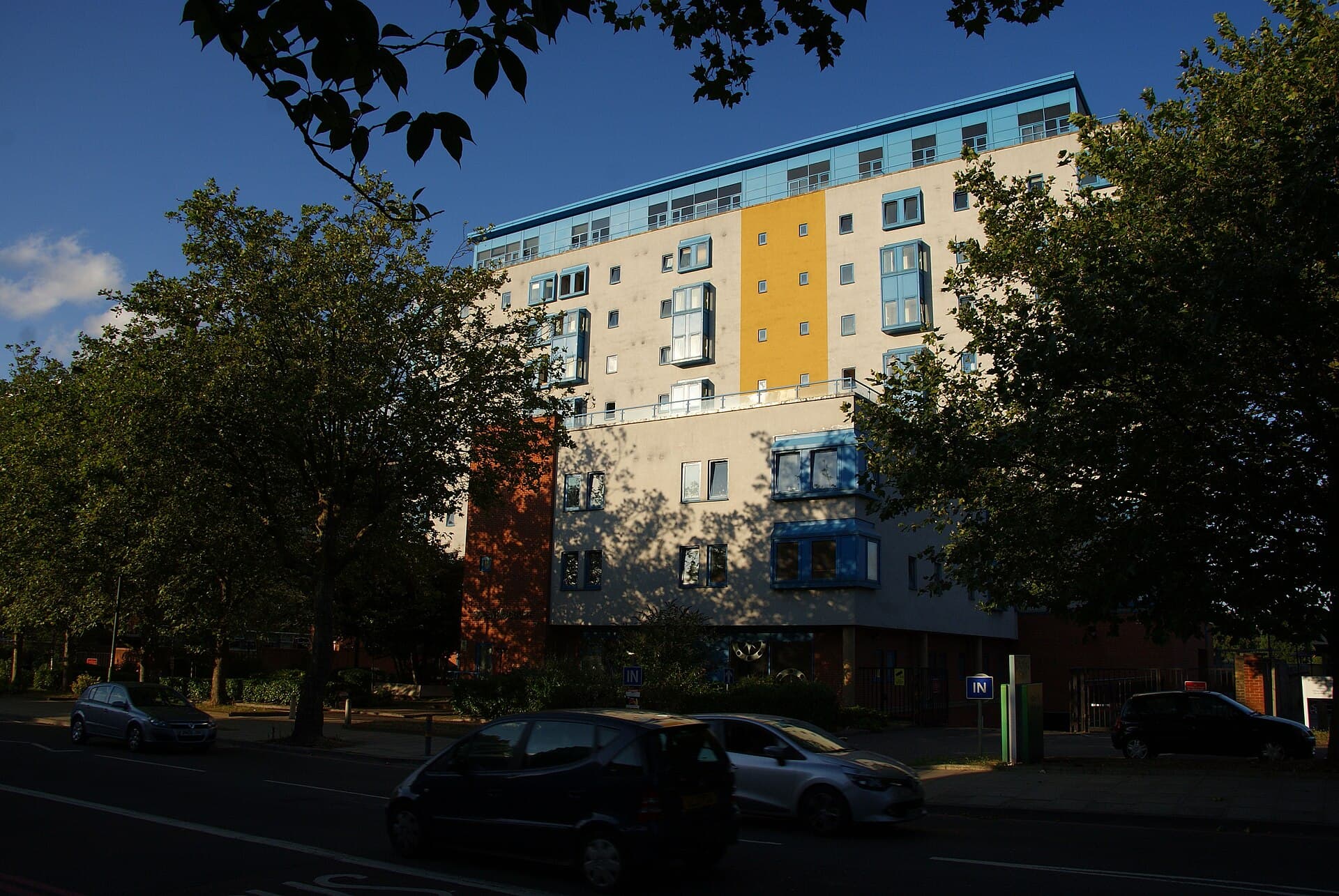
Research by ValuQ: we took all 1,086,507 standard home sales registered by HM Land Registry for England and Wales in 2021 and marked each one to today's prices using the official UK House Price Index for its own local authority, its own property type and its own month of purchase.
ValuQ Property Watch, 19 September 2026.
How many homes bought in 2021 are worth less today?
Very few houses, and a large share of flats. Of the 1,086,507 homes bought in 2021, 73,131 (6.7%) would be worth less today if they had moved in line with their local index. 69,100 of those are flats, which means flats make up more than nine in every ten of the 2021 purchases now behind.
Across all 180,709 flats bought that year, 38.2% sit below their purchase price on the local index. The typical 2021 flat is up just 1.8%, a median gain of £3,486. The typical semi-detached house bought the same year is up 18.4%, a median gain of £45,294.
ValuQ analysis: homes bought in England and Wales in 2021, marked to July 2026 local prices
| Property type | 2021 purchases | Worth less today | Typical change | Typical change in £ |
|---|---|---|---|---|
| Flat or maisonette | 180,709 | 38.2% | +1.8% | +£3,486 |
| Terraced house | 292,020 | 0.6% | +16.7% | +£35,530 |
| Semi-detached house | 311,044 | 0.2% | +18.4% | +£45,294 |
| Detached house | 302,734 | 0.6% | +15.4% | +£59,562 |
| All homes | 1,086,507 | 6.7% | +15.4% | +£39,724 |
Source: ValuQ analysis of HM Land Registry Price Paid Data (standard sales, 2021) and the UK House Price Index by local authority and property type (July 2026, published 16 September 2026). Free to republish with credit to ValuQ.
Why does 2021 matter right now?
2021 was the year of the stamp duty holiday and of record-cheap five-year fixed-rate mortgages. A five-year fix is a mortgage whose interest rate is locked for five years; when it ends, the borrower has to take a new rate or move to the lender's standard variable rate. Deals taken in 2021 are ending now.
UK Finance expects 1.8 million fixed-rate mortgages to come to an end during 2026. On 17 September the Bank of England held Bank Rate at 3.75%, but three of the nine members of its Monetary Policy Committee voted to raise it to 4%. The owners of 2021 flats are asking for a new mortgage just as the direction of rates turns.
What the same 2021 flat costs to finance now (illustration)
| Item | 2021 | 2026 |
|---|---|---|
| Average 5-year fix, 75% loan-to-value (Bank of England) | 1.58% (2021 average) | 4.78% (August 2026) |
| Mortgage on the typical £237,500 flat (75%) | £178,125 over 30 years | £153,975 left, 25 years to run |
| Monthly repayment | £622 | £880 |
| Extra cost | £259 a month, about £3,100 a year |
The illustration assumes a repayment mortgage at 75% of the purchase price. Buyers who borrowed more, as many first-time flat buyers did, face a bigger jump and have less equity to absorb a fall.
Which areas have the most 2021 flat buyers behind?
In 74 of the 269 local authorities with at least 100 flat sales in 2021, the typical flat bought that year is now worth less than it cost. The deepest falls are in central London, where prices were highest, but the list runs well beyond the capital into the Surrey commuter belt, the Sussex and Kent coast, and Oxford.
ValuQ analysis: the 20 areas where 2021 flat buyers are furthest behind
| Rank | Area | Region | 2021 flat sales | Typical change | Typical change in £ |
|---|---|---|---|---|---|
| 1 | Westminster | London | 2,443 | -18.8% | -£151,226 |
| 2 | Tower Hamlets | London | 4,416 | -18.6% | -£101,718 |
| 3 | Kensington and Chelsea | London | 1,515 | -12.8% | -£136,997 |
| 4 | Lambeth | London | 3,480 | -9.3% | -£45,338 |
| 5 | Newham | London | 1,422 | -8.0% | -£32,735 |
| 6 | Tandridge | South East | 413 | -7.9% | -£26,683 |
| 7 | Croydon | London | 2,210 | -7.8% | -£21,866 |
| 8 | Hammersmith and Fulham | London | 1,913 | -7.8% | -£47,541 |
| 9 | Worthing | South East | 1,022 | -7.0% | -£14,498 |
| 10 | Hastings | South East | 692 | -6.9% | -£11,595 |
| 11 | Dover | South East | 363 | -6.6% | -£10,840 |
| 12 | South Hams | South West | 334 | -5.6% | -£14,633 |
| 13 | Canterbury | South East | 485 | -4.8% | -£9,870 |
| 14 | City of London | London | 213 | -4.7% | -£40,328 |
| 15 | Hertsmere | East of England | 421 | -4.5% | -£15,373 |
| 16 | Eastleigh | South East | 444 | -4.3% | -£6,797 |
| 17 | Oxford | South East | 365 | -4.2% | -£14,366 |
| 18 | Eastbourne | South East | 973 | -4.2% | -£7,836 |
| 19 | New Forest | South East | 621 | -4.0% | -£8,848 |
| 20 | Arun | South East | 735 | -4.0% | -£6,213 |
Typical change is the median across every 2021 flat purchase in the area, marked from its month of purchase to July 2026 on the area's own flat price index. Free to republish with credit to ValuQ.
Is this a North and South story?
Yes, and a sharp one. Of the areas with at least 100 flat sales in 2021, not one local authority in the North East, North West, Yorkshire and the Humber, the Midlands or Wales has a typical 2021 flat worth less today. In the North West the typical 2021 flat is up 12.3% and not one is behind on the index; in London 64.3% are behind.
ValuQ analysis: 2021 flat purchases by region
| Region | 2021 flat sales | Worth less today | Typical change | Areas where the typical flat is behind |
|---|---|---|---|---|
| London | 59,254 | 64.3% | -1.5% | 19 of 33 |
| East of England | 17,278 | 42.3% | +0.7% | 22 of 42 |
| South East | 37,153 | 40.6% | +0.9% | 25 of 64 |
| South West | 20,694 | 38.0% | +2.4% | 8 of 24 |
| East Midlands | 4,895 | 6.3% | +4.0% | 0 of 18 |
| Wales | 3,727 | 3.7% | +7.3% | 0 of 10 |
| Yorkshire and the Humber | 8,297 | 2.5% | +9.3% | 0 of 14 |
| West Midlands | 9,724 | 0.9% | +5.7% | 0 of 28 |
| North East | 4,331 | 0.0% | +11.2% | 0 of 9 |
| North West | 15,356 | 0.0% | +12.3% | 0 of 27 |
Where does Basildon sit? In the middle. Counting from the furthest behind, Basildon ranks 118th of 269: its typical 2021 flat is up 2.5% (£5,388) and none of its 2021 flat purchases is behind on the local index. Its neighbours Thurrock (-0.2%) and Castle Point (-1.5%) are on the wrong side of the line.
A flat bought in 2021 has had the hardest five years of any home in England and Wales, and many owners will only find out when they ask their lender for a new rate.
Does this mean my flat is worth less?
Not necessarily. These figures show where the typical 2021 flat in each area has moved. Individual homes spread widely around that line: earlier ValuQ research found that homes identical on paper end up about 21 percentage points of growth apart. Your floor, your lease length, your service charge and your street all move your own number.
The index is a direction, not a valuation. If you bought in 2021 and your fix ends in the next year, the number that matters is what your own home would sell for now, because it decides your loan-to-value band and so the rate you are offered.
What should 2021 buyers do before their fix ends?
- Find your fix end date and start comparing new deals several months before it, since many lenders let you secure a rate in advance.
- Get a realistic current value for your home from people who sell homes like it locally, not a single online figure.
- Work out your loan-to-value from that number, since crossing a band such as 75% or 85% changes the rates you can get.
- If you plan to sell rather than remortgage, price from recent local sales of your property type, not from what you paid.
- If you own a flat, check your lease length and service charge history now, because buyers and lenders will.
ValuQ gives UK homeowners free, side-by-side property valuations from competing local estate agents, so you can compare what several local experts think your home is worth before you speak to any of them.
What does it mean for sellers and buyers?
For sellers of 2021 flats in the South, pricing to the purchase price is the most common way to sit on the market for months. For house owners the picture is much calmer: fewer than one house in a hundred bought in 2021 is behind on its local index. For buyers, the South's flat market is one of the few places where prices have come back towards 2021 levels, and some sellers there will need to move.
How did ValuQ do this?
How we did this: ValuQ took every standard residential sale in HM Land Registry Price Paid Data completed between 1 January and 31 December 2021 (1,086,507 sales of detached, semi-detached, terraced homes and flats). Each sale was matched to the UK House Price Index for its local authority and property type. Its value today is the purchase price multiplied by that index in July 2026, divided by the index in its month of purchase.
Sales in districts merged since 2021 (in North Yorkshire, Somerset, Cumbria and Northamptonshire) were matched to the new authority's index; 25 sales on the Isles of Scilly were excluded. Area rankings include only authorities with at least 100 flat sales in 2021. Regions come from each area's postcodes via postcodes.io. July 2026 local index figures are provisional and can be revised.
This measures how the typical home of each type in each area has moved, not the value of any single home. Prices are nominal, with no adjustment for inflation. The mortgage illustration uses Bank of England quoted rates for a five-year fix at 75% loan-to-value.
Evren Ergin, founder of ValuQ, said: "A flat bought in 2021 has had the hardest five years of any home in England and Wales, and many owners will only find out when they ask their lender for a new rate. The index tells you what the typical flat did. It cannot tell you what yours did, and that is the number your next mortgage depends on."
Questions 2021 buyers are asking
Are homes bought in 2021 worth less now?
Most are not. ValuQ analysis of 1,086,507 sales in England and Wales found 6.7% of homes bought in 2021 would be worth less today on their local price index. For flats the figure is 38.2%, for houses it is below 1%.
Why have flats done so much worse than houses since 2021?
The sales data shows the gap but not its cause. The explanations most often given are buyers moving towards houses with more space after the pandemic, rising service charges and leasehold costs, and higher mortgage rates since 2022 cutting first-time buyers' budgets. The gap is widest in London and the South, where flats are a large share of the market.
What happens when my five-year fix from 2021 ends?
You either agree a new deal with your lender, switch to another lender, or move onto the lender's standard variable rate. The rate you are offered depends partly on your loan-to-value, which depends on what your home is worth now.
Is my flat in negative equity?
Negative equity means owing more on the mortgage than the home is worth. Most 2021 flat owners who put down 10% or more and have repaid for five years are not in that position, but 5.5% of 2021 flats are more than 10% below their purchase price on the local index, so higher-borrowing buyers in those areas should check.
Sources
- [1]HM Land Registry Price Paid Data (standard residential sales, 2021; release covering sales to 30 June 2026) · 2026-07 · https://www.gov.uk/government/statistical-data-sets/price-paid-data-downloads
- [2]HM Land Registry, UK House Price Index for July 2026 (local authority indices by property type) · 2026-09-16 · https://www.gov.uk/government/statistics/uk-house-price-index-for-july-2026
- [3]ONS, Private rent and house prices, UK: September 2026 · 2026-09-16 · https://www.ons.gov.uk/economy/inflationandpriceindices/bulletins/privaterentandhousepricesuk/september2026
- [4]Bank of England, Bank Rate decision (held at 3.75%) · 2026-09-17 · https://www.bankofengland.co.uk/monetary-policy/the-interest-rate-bank-rate
- [5]Associated Press via BNN Bloomberg, Bank of England holds rates but appears ready to hike soon (6-3 vote) · 2026-09-17 · https://www.bnnbloomberg.ca/business/international/2026/09/17/bank-of-england-holds-rates-but-appears-ready-to-hike-soon/
- [6]Bank of England Database, quoted rates: 5 year (75% LTV) fixed rate mortgage, series IUMBV42 (to August 2026) · 2026-09-17 · https://www.bankofengland.co.uk/boeapps/database/
- [7]UK Finance, Mortgage market forecast: 1.8 million fixed rate mortgages due to end in 2026 · 2025-12-15 · https://www.ukfinance.org.uk/news-and-insight/press-release/modest-growth-forecast-mortgage-lending-in-2026
- [8]postcodes.io (ONS Postcode Directory lookups, used for region assignment) · 2026-09-19 · https://postcodes.io/
Terms in this article
Plain-English definitions from the ValuQ property glossary.
Repayment mortgage
A repayment mortgage pays interest and a slice of the loan every month, clearing the whole debt by the end of the term.
HM Land Registry
HM Land Registry is the government body recording ownership of land in England and Wales, whose register is the definitive proof of title.
Negative equity
Negative equity is owing more on the mortgage than the home is currently worth.
Service charge
A service charge is the leaseholder's share of the building's running costs: maintenance, insurance, cleaning, lifts and management.
Stamp duty land tax (SDLT)
Stamp duty land tax is the tax buyers pay on property purchases in England and Northern Ireland, charged in slices at rising rates.
Base rate
The base rate is the interest rate the Bank of England sets, which flows through to mortgage pricing across the market.
Read next
Related insights
What is the TA6 form, and what changed in 2026?
My buyer wants to pay a 5% deposit on exchange. Should I agree?
My buyer wants to come back and measure up. Should I let them?
Rates are rising. Can my buyer's mortgage offer be pulled?
See every local agent on one screen.
Free for homeowners. Always. No cold calls. No data sales. No starting-line advantage for the fastest dialler in town.
Get your free anonymous valuationSellers and buyers never pay.