The 28 towns where flats fell while the houses next door rose
Published 29 June 2026 · Reviewed 23 July 2026 · 6 min read · By Evren Ergin
Across 46 English towns ValuQ analysed, the average flat lost value over the past year in 28 of them, while the semi-detached houses on the same streets gained. In places like Southampton, Medway and Colchester a flat is worth thousands of pounds less than a year ago, even as the family homes around it kept rising.
TL;DR
- •Official Land Registry figures show flats falling in 28 of the 46 English towns ValuQ checked, while houses in those same towns rose.
- •The widest splits are in the Midlands and the North: in Leicester and Sheffield a flat fell while a semi rose by about six percentage points more.
- •The steepest cash falls were in London and the South East: an average Greenwich flat lost about £12,800 and a Lewisham flat about £11,200 in a year.
- •Nationally the pattern is milder but real: flats rose just 0.3% in the year to April 2026 while semis rose 5.1%, per the UK House Price Index.
Advertisement

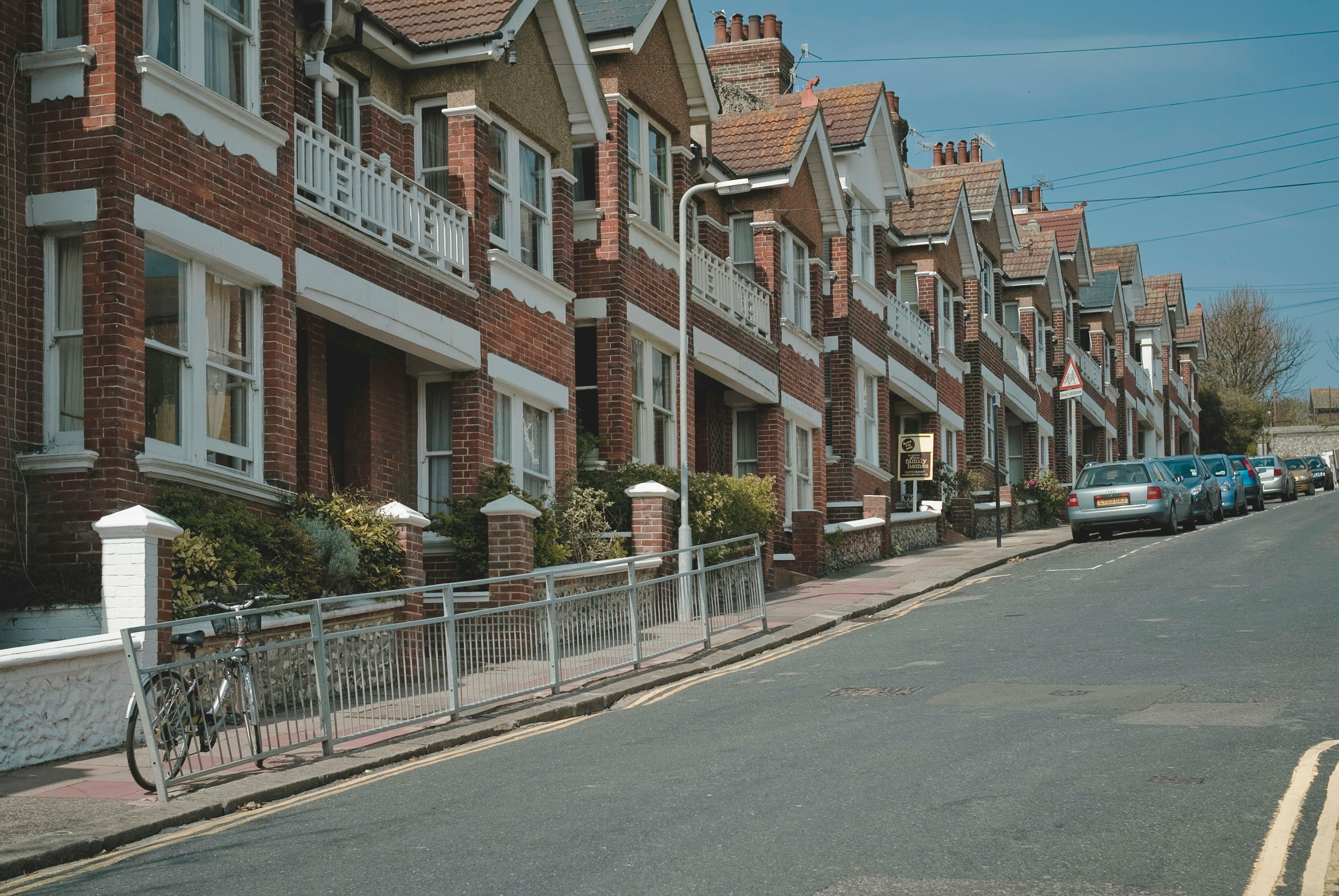
Research by ValuQ: we analysed Land Registry UK House Price Index data for 46 English local-authority areas, comparing the average price of a flat against detached, semi-detached and terraced houses in each, over the year to April 2026.
This is the latest in ValuQ Property Watch, where we read the week's housing data for what it actually means for your own home.
The headline this week is that house prices are still rising. The quieter story underneath it is that one type of home is being left behind. Flats are not keeping up, and in a long list of towns they are going backwards in cash terms while the houses around them move forward.
What did ValuQ find?
A flat or maisonette is a home that shares a building with others, usually held on a lease. Year-on-year change means the difference between the average price in April 2026 and the same month a year earlier. On that measure, flats fell in 28 of the 46 towns we looked at, even though houses rose in most of them.
The split is not subtle. In some towns a flat owner and a house owner on the same street saw their homes move in opposite directions in the same twelve months.
Which towns saw flats fall while houses rose?
These are the 15 towns with the widest gap between how a flat moved and how a semi-detached house moved over the year to April 2026. A minus sign means the average price fell. The list runs to 28 towns in total.
Flat vs semi-detached price change, year to April 2026. ValuQ analysis of Land Registry UK House Price Index data.
| Town | Flat change | Semi change | Gap |
|---|---|---|---|
| Leicester | -1.8% | +4.1% | 5.9 points |
| Sheffield | -1.3% | +4.6% | 5.9 points |
| Liverpool | -0.9% | +5.1% | 5.9 points |
| Wolverhampton | -0.4% | +5.4% | 5.8 points |
| Norwich | -1.4% | +4.3% | 5.7 points |
| Stevenage | -1.0% | +4.7% | 5.6 points |
| Manchester | -1.5% | +3.8% | 5.4 points |
| Wakefield | -2.0% | +3.3% | 5.3 points |
| Colchester | -3.9% | +1.3% | 5.3 points |
| Thurrock | -1.6% | +3.6% | 5.2 points |
| Southampton | -4.5% | +0.7% | 5.2 points |
| Southend-on-Sea | -1.6% | +3.6% | 5.2 points |
| Medway | -4.1% | +1.1% | 5.2 points |
| Bolton | -2.5% | +2.5% | 5.1 points |
| Leeds | -0.7% | +4.2% | 5.0 points |
Where did flat owners lose the most money?
In percentage terms the falls look small. In pounds, on a London or South East flat, they are not. These are the average cash falls for a flat over the year to April 2026 in the towns where houses still rose.
Average fall in a flat's price, year to April 2026. ValuQ analysis of Land Registry UK House Price Index data.
| Town | Average flat now | Fall over the year |
|---|---|---|
| Greenwich | £348,182 | -£12,829 |
| Lewisham | £378,250 | -£11,201 |
| Brighton and Hove | £295,319 | -£9,608 |
| Barking and Dagenham | £241,057 | -£9,415 |
| Croydon | £257,384 | -£8,026 |
| Medway | £166,367 | -£7,181 |
| Southampton | £152,001 | -£7,146 |
| Colchester | £161,975 | -£6,607 |
| Portsmouth | £166,359 | -£6,222 |
| Coventry | £124,586 | -£5,504 |
Why are flats falling while houses rise?
Three forces are pulling in the same direction. Buyers have wanted space since the pandemic, so houses with gardens are in demand and flats are not. First-time buyers, who once started in a flat, are stretching straight to a small house where they can. And the leasehold market that most flats sit in carries its own friction: service charges, ground rent and cladding or building-safety questions that make some flats slower to sell and easier to haggle down.
None of that is new on its own. What this week's data shows is the three pressures landing together, hard enough to push flats below where they were a year ago in most of the towns we checked.
What does the national picture say?
The town-level falls sit inside a national gap that the headline average hides. The UK House Price Index, published on 17 June 2026, shows every house type rising in the year to April while flats barely moved.
UK average price change by property type, year to April 2026. Source: UK House Price Index, 17 June 2026.
| Property type | Annual change |
|---|---|
| Terraced | +5.8% |
| Semi-detached | +5.1% |
| Detached | +3.0% |
| Flat or maisonette | +0.3% |
| All homes | +3.8% |
Zoopla's June update, published on 23 June 2026, put the gap even wider on its own index, with semis up 2.5% over the year while flats fell 1.3%, which it called the widest split in years. Our town-by-town cut shows where that average actually bites: in 28 places a flat did not just lag a house, it lost money.
How we did this
ValuQ analysed the Land Registry UK House Price Index average price for flats, terraced, semi-detached and detached homes in 46 English local-authority areas, comparing April 2026 with April 2025. We ranked towns by the gap between the flat change and the semi-detached change, and separately by the cash fall in the average flat. These are average prices for each property type, not the price of any single home, so an individual flat may have done better or worse. The underlying data is public and dated; the figures here are ValuQ's own cut of it.
For years a flat was the safe first rung on the ladder. Our data shows that rung has stopped moving while the rest of the ladder pulls away. If you own one, the worst move is to guess. Find out what it is worth today, then decide from facts rather than fear. Evren Ergin, founder of ValuQ.
What it means if you own a flat
A falling average is not a verdict on your specific home, and it is not a reason to rush. It is a reason to act from real numbers.
- Find out what your flat is actually worth now, from more than one local agent, before you assume the headline applies to you.
- If you are trading up, remember the gap to a house has widened in most towns, so the sooner you understand both numbers, the better you can time the move.
- If you are not moving, you do not crystallise a paper fall by staying put. Flats have led recoveries before.
- If you do sell, judge a buyer by what they have committed, not what they say, and do not take your home off the market until they have put their own money down.
What it means if you are buying
If you are buying a flat, this is the strongest negotiating position flat buyers have had in years, because demand is soft and sellers know it. If you are buying a house, expect more competition, because that is where the demand has gone.
ValuQ gives UK homeowners free, side-by-side property valuations from competing local estate agents, so you can see what your home is worth from more than one expert before you decide anything.
Are flats a bad investment in 2026?
Not necessarily. Flats have underperformed houses over the past year, falling in 28 of the 46 English towns ValuQ checked while houses rose. But the falls are mostly small in percentage terms, and flats have led market recoveries before. The right answer depends on your own flat, your town and your timeline, which is why a current valuation matters more than the headline.
Why are houses rising faster than flats?
Buyers have prioritised space since the pandemic, first-time buyers are stretching to small houses instead of flats, and the leasehold market carries extra costs and building-safety questions that slow some flats down. Together those pushed flats below houses in most towns over the year to April 2026.
How do I find out what my flat is worth now?
Get more than one local agent to value it, ideally side by side, so you can compare. ValuQ lets UK homeowners do this free and anonymously, which is the quickest way to see whether the national pattern applies to your home or not.
Sources
- [1]HM Land Registry UK House Price Index (ValuQ analysis of average price by property type, 46 local authorities, April 2025 to April 2026) · 2026-06-17 · https://landregistry.data.gov.uk/app/ukhpi
- [2]UK House Price Index summary: April 2026, GOV.UK · 2026-06-17 · https://www.gov.uk/government/statistics/uk-house-price-index-for-april-2026/uk-house-price-index-summary-april-2026
- [3]Zoopla House Price Index, June 2026 update · 2026-06-23 · https://www.zoopla.co.uk/discover/property-news/whats-happening-with-house-prices-in-the-uk/
- [4]Rightmove House Price Index, June 2026 · 2026-06-16 · https://www.rightmove.co.uk/news/house-price-index/
Terms in this article
Plain-English definitions from the ValuQ property glossary.
Read next
Related insights
The new 2.5% deposit scheme: what it means if you're selling
What happens if my estate agent goes out of business?
Can I switch estate agent while my house is on the market?
Can my estate agent use AI to edit photos of my house?
What is your home worth today?
ValuQ gives UK homeowners free, side-by-side property valuations from competing local estate agents. Anonymous until you choose. No cold calls.
Get your free anonymous valuationSellers and buyers never pay.