Revealed: the cheaper your town, the faster its homes are rising
Published 13 June 2026 · 6 min read · By Evren Ergin
The cheapest towns in England are now rising fastest while the priciest are falling, a reversal of the old rule that expensive areas always lead. ValuQ's analysis of the latest official house price data found Hartlepool, the cheapest town we studied at an average of £136,532, rose 8.0% in the year to March 2026, while Watford at £381,977 fell 5.1%.
TL;DR
- •In the year to March 2026, England's average home value fell 0.6%, but the change was wildly uneven from one town to the next.
- •Across 44 towns ValuQ analysed, the cheaper the town, the more its homes rose: every one of the ten fastest risers was priced under £200,000.
- •Every one of the steepest fallers was an expensive southern town, led by Watford down 5.1% and Brighton and Hove down 3.3%.
- •Basildon, at £355,621, fell 1.6% over the year, placing it firmly in the falling half of the table.
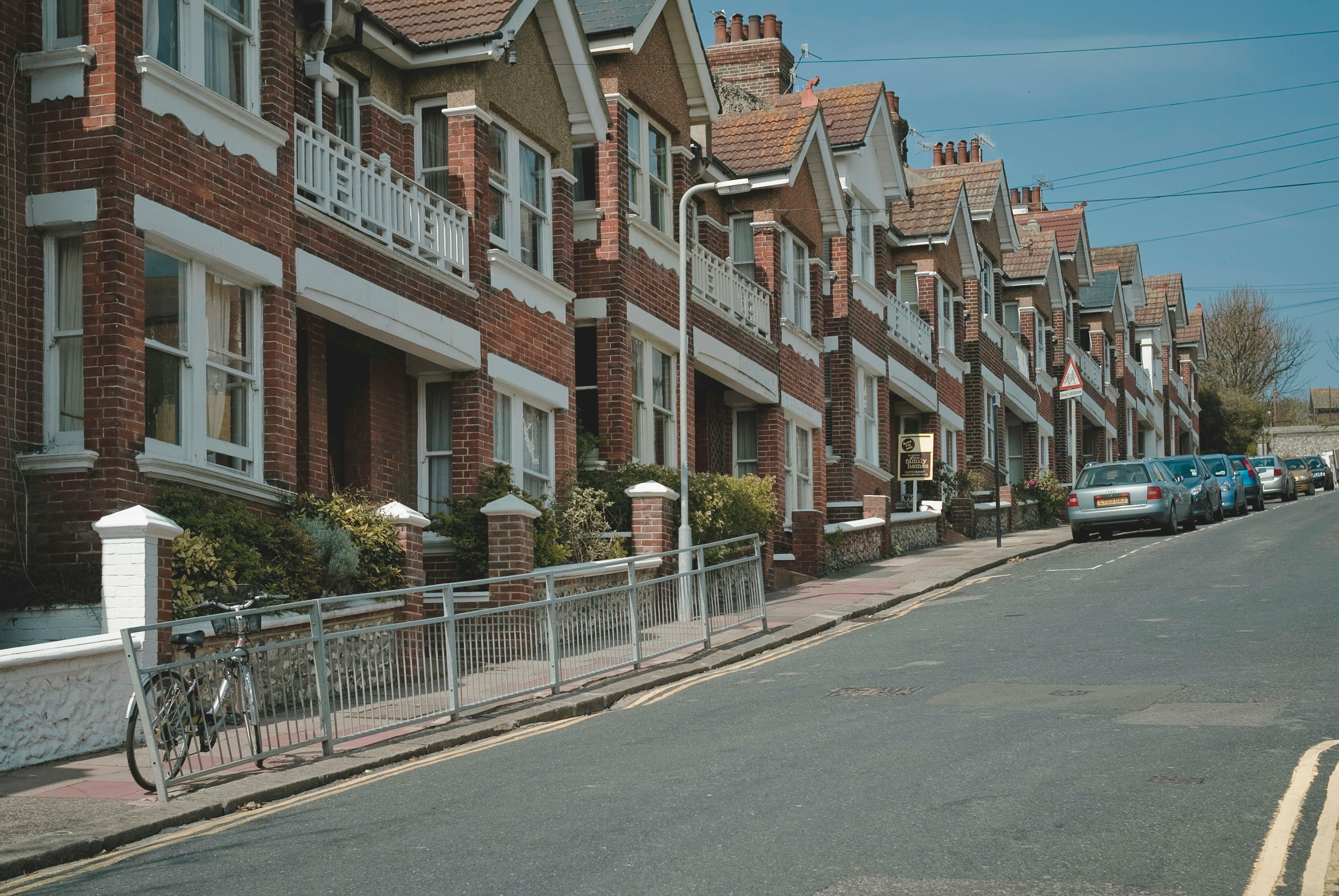
Research by ValuQ: we pulled the official UK House Price Index for 44 English towns and cities, ranked each by its annual price change to March 2026, and set that change against the town's average price to test whether cheaper or pricier areas are leading the market.
This is part of ValuQ Property Watch, our weekly look at the numbers behind the UK housing market. The finding this week is a clean one. Sort the towns by how much they rose, and you have almost sorted them by price: the cheaper a town, the better its year.
Which towns are rising fastest in 2026?
The annual change is the percentage difference between a town's average sold price in March 2026 and the same month a year earlier. The ten strongest performers were all northern or Midlands towns priced below £200,000, led by Hartlepool on the north-east coast.
The ten fastest-rising towns, year to March 2026 (ValuQ analysis of UK House Price Index data)
| Town | Average price (Mar 2026) | Annual change |
|---|---|---|
| Hartlepool | £136,532 | +8.0% |
| Preston | £188,844 | +4.8% |
| Bradford | £186,734 | +3.9% |
| Sunderland | £145,546 | +3.8% |
| Barnsley | £173,847 | +3.6% |
| Doncaster | £174,216 | +3.4% |
| Wakefield | £198,662 | +3.1% |
| Burnley | £128,826 | +2.9% |
| Liverpool | £181,505 | +2.9% |
| Blackpool | £135,792 | +2.4% |
Which towns are falling the most?
At the other end, the steepest falls were all in expensive southern towns, most of them in the London commuter belt. Watford, where the average home costs nearly three times the price of one in Hartlepool, fell furthest of all.
The ten steepest-falling towns, year to March 2026 (ValuQ analysis of UK House Price Index data)
| Town | Average price (Mar 2026) | Annual change |
|---|---|---|
| Watford | £381,977 | -5.1% |
| Brighton and Hove | £403,808 | -3.3% |
| Cambridge | £471,532 | -2.2% |
| Luton | £278,032 | -2.1% |
| Bournemouth, Christchurch and Poole | £308,248 | -2.0% |
| Reading | £349,144 | -1.9% |
| Slough | £343,618 | -1.9% |
| Basildon | £355,621 | -1.6% |
| Milton Keynes | £323,611 | -1.1% |
| Oxford | £473,994 | -0.8% |
Why are cheap towns beating expensive ones?
The pattern is about affordability, not geography. When mortgage rates are higher than buyers were used to, the cheapest homes are the ones people can still stretch to, so demand holds up where prices are low. Expensive towns rely on bigger mortgages and bigger deposits, and that is exactly where higher borrowing costs bite hardest.
- Lower-priced towns need smaller mortgages, so monthly payments stay within reach even when rates are higher.
- Expensive commuter towns depend on large loans, and demand there cools first when borrowing gets dearer.
- England's overall average fell 0.6% over the year, and London fell 2.1%, so the national picture is being dragged down by its priciest corners.
- Affordable northern towns are rising from a low base, where there is more room for prices to climb before they hit a ceiling.
The headline that England fell 0.6% hides what is really happening. A homeowner in an affordable northern town has had a strong year. Someone in an expensive commuter town may be worth less than they were last spring. The national average belongs to no one; what matters is your town, your street and your type of home.
That quote is from Evren Ergin, founder of ValuQ.
How we did this
ValuQ analysed the official UK House Price Index, published by HM Land Registry and the Office for National Statistics, using the average price and annual percentage change for the year to March 2026, the most recent month available. We selected 44 local authority areas spread across the North, the Midlands and the South, ranked each by its annual change, and compared that against its average price. The UK House Price Index is a sold-price index that adjusts for the mix of homes sold, so the figures are not skewed by a handful of unusually large sales.
What does it mean if you are thinking of selling?
It means the national headline is close to useless for your own decision. A 0.6% national fall tells you nothing if your town rose 8% or fell 5%. The first step is to find out what your specific home, in your specific town, is worth right now.
- Check where your town sits, not just the national average, before you set an asking price.
- If you are in an affordable town that has risen, you may have more equity than you think.
- If you are in an expensive southern town that has fallen, pricing to last year's level is the fastest way to sit unsold.
- Get more than one valuation, because a single agent's number is an opinion, not a market.
What does it mean if you are buying?
Buyers in the falling southern towns have the most room to negotiate in years, with more homes on the market than at any time since 2015 and around a third of listings already reduced. Buyers in the rising northern towns face more competition, so a strong, well-evidenced offer matters more there.
What is the UK House Price Index?
The UK House Price Index is the government's official measure of house prices, built from completed sales registered with HM Land Registry. It is a sold-price index, not an asking-price one, and it adjusts for the type and size of homes sold each month so the average is not distorted by the mix of sales. ValuQ gives UK homeowners free, side-by-side property valuations from competing local estate agents.
Which UK town had the fastest-rising house prices in 2026?
Among the 44 towns ValuQ analysed, Hartlepool rose fastest, up 8.0% in the year to March 2026 to an average of £136,532. It was also the cheapest town in the study.
Are house prices falling across the whole of England?
No. England's average fell 0.6% in the year to March 2026, but the change varied enormously by town. The cheapest towns mostly rose, while expensive southern towns mostly fell, with Watford down 5.1%.
Why does the national average house price feel wrong for my area?
Because it blends thousands of very different local markets into one number. In the year to March 2026 the gap between the best and worst town in this study was more than 13 percentage points, so the average reflects almost no one's real experience.
Sources
- [1]UK House Price Index, England (March 2026), HM Land Registry and ONS · 2026-05-21 · https://www.gov.uk/government/statistics/uk-house-price-index-for-march-2026/uk-house-price-index-england-march-2026
- [2]HM Land Registry UK HPI Linked Data (SPARQL endpoint), accessed by ValuQ · 2026-06-13 · https://landregistry.data.gov.uk/
- [3]Savills UK Housing Market Update, June 2026 · 2026-06-01 · https://www.savills.co.uk/research_articles/229130/391503-0
- [4]Halifax House Price Index, May 2026 · 2026-06-05 · https://www.halifax.co.uk/media-centre/house-price-index.html
Terms in this article
Plain-English definitions from the ValuQ property glossary.
Read next
Related insights
Should I sell my house to a cash buying company?
My buyer wants to exchange but I haven't found a house
My agent already has a buyer. Should I sell off-market?
Eight towns where first-time buyers just started paying stamp duty
See every local agent on one screen.
Free for homeowners. Always. No cold calls. No data sales. No starting-line advantage for the fastest dialler in town.
Get your free anonymous valuationSellers and buyers never pay.