My buyer's survey found Japanese knotweed. What now?
Published 22 July 2026 · 7 min read · By Evren Ergin
Knotweed on a survey is a delay far more often than it is a dead sale, and the route through it is well worn. Since the RICS professional standard took effect on 23 March 2022, surveyors judge knotweed by whether it is being managed rather than by how close it grows to the house, and most lenders will proceed on a treatment plan from an accredited contractor backed by a 10 year guarantee.
TL;DR
- •Knotweed is no longer assessed on the old 7 metre distance rule. The RICS standard effective 23 March 2022 uses management categories instead.
- •Most lenders will lend where there is a treatment plan from a Property Care Association or INNSA member, backed by an insurance-backed guarantee, typically 10 years.
- •Around 4 to 5% of UK homes experience issues with Japanese knotweed, so buyers, surveyors and lenders all deal with it regularly.
- •Never answer the property information form incorrectly. In Downing v Henderson (2023) a seller who declared no knotweed was ordered to pay £32,000 in damages plus £95,000 in costs.
Advertisement

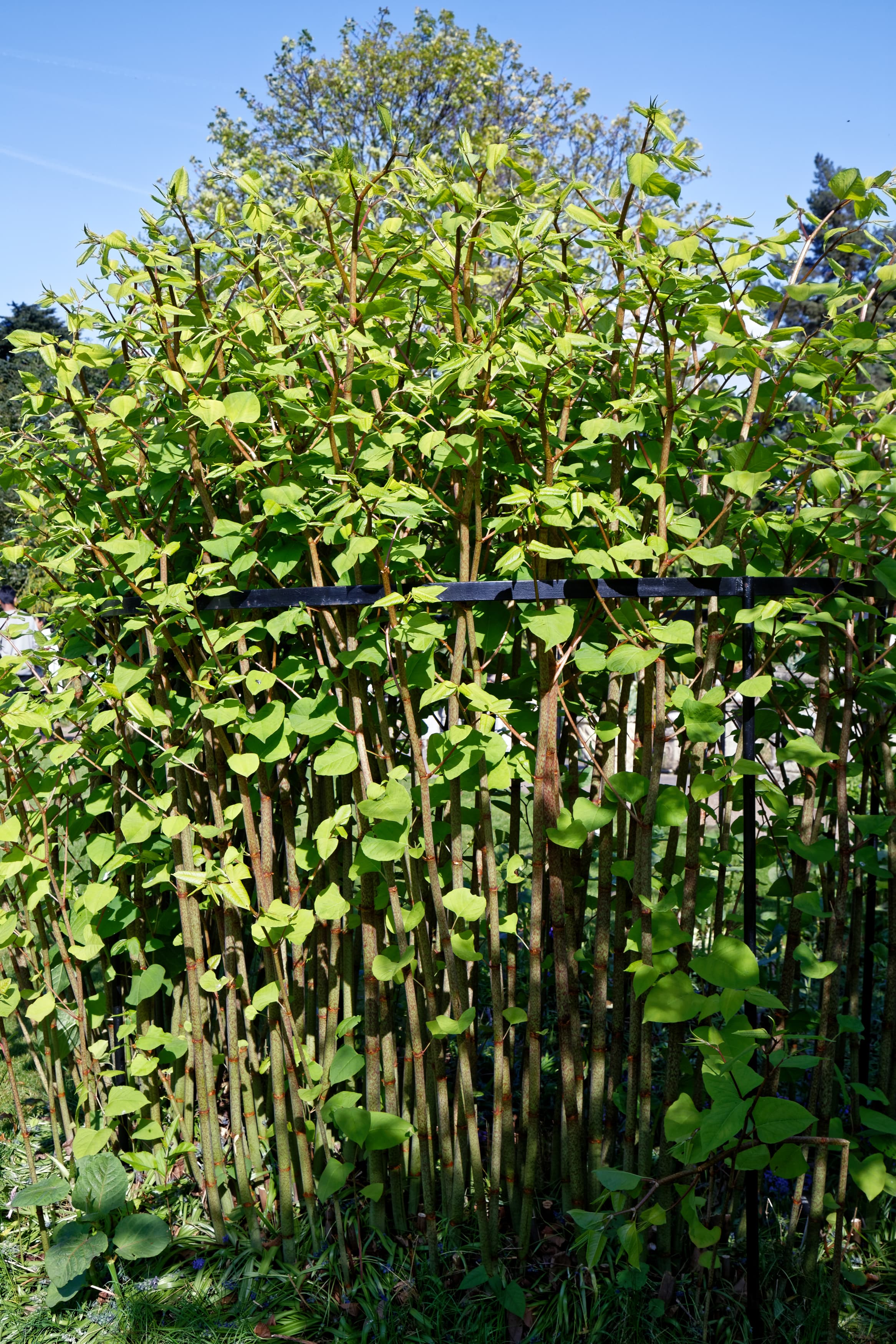
The word lands badly. A surveyor writes it into a report, the buyer reads it on their phone, and within an hour you are being asked whether the sale can go ahead at all. It usually can.
Japanese knotweed is a fast-growing plant with bamboo-like stems and cream flowers in late summer, and it spreads from its underground root system rather than its seeds. It is a management problem with a known cost, not a verdict on your home.
Does Japanese knotweed mean my sale is over?
No. It means one item has been added to your sale that needs a document attached to it. Around 4 to 5% of UK homes experience issues with knotweed, which is why lenders and conveyancers have a standard process for it rather than a panic.
RICS itself notes that where knotweed sits within a property's boundaries, the reduction in value is likely to be limited to the cost of dealing with it. That single sentence is the one to hold on to when a buyer opens with a much larger number.
What changed in how surveyors judge knotweed?
For years surveyors worked to a distance rule, where knotweed within 7 metres of a building triggered an automatic risk category. That rule caused sales to fail over plants that were causing no harm.
The RICS professional standard on Japanese knotweed and residential property, effective 23 March 2022 and reissued in October 2022, replaced it with management categories that ask what the plant is actually doing and whether it is being treated. A management plan is a written programme from a specialist contractor setting out how the knotweed will be controlled and monitored.
How knotweed is categorised, and what lenders usually want
| Category | What the surveyor has found | What a lender typically asks for |
|---|---|---|
| A | Knotweed causing clear structural damage or significant impact | A management plan from a PCA or INNSA accredited contractor, usually with remedial work |
| B | Knotweed present and unmanaged, no damage yet | A management plan from an accredited contractor, backed by a guarantee |
| C | Knotweed present and already under a professional management plan | Evidence that treatment is under way and the guarantee is in place |
| D | Knotweed visible on neighbouring land, not within the property | Often no action, unless there is a real risk of it spreading in |
Will my buyer still get a mortgage?
In most cases yes, once the paperwork exists. Lenders including the major high street names ask for the treatment provider to be a member of the Property Care Association or the Invasive Non-Native Species Association, and for the work to carry an insurance-backed guarantee.
An insurance-backed guarantee is a policy that stands behind the contractor's promise if that contractor stops trading, and 10 years is the length lenders most commonly require. It transfers to the buyer, which is exactly why it settles the mortgage question.
A buyer is not asking you to make the plant disappear this month. They are asking who is responsible for it, in writing, for the next ten years.
What should I do this week?
1. Confirm it actually is knotweed
Bindweed, Russian vine, bamboo and dogwood are all mistaken for it every summer. Ask for photographs from the surveyor and have them checked by a specialist before you accept the finding or price anything around it.
2. Do not cut it, dig it or move it
Disturbing knotweed spreads it from root fragments, and the material counts as controlled waste once removed, so it cannot go in a garden bin or a skip. Leave it exactly where it is until a specialist has surveyed it.
3. Get a survey and a written management plan
Instruct a contractor who is a member of the Property Care Association or INNSA. Ask for a site survey, a written management plan and a quotation, because those three documents are what the lender and the buyer's solicitor will want to see.
4. Ask for the insurance-backed guarantee in writing
Confirm the guarantee length before you instruct anyone, and check it is transferable to a buyer. A plan without a transferable guarantee will not do the job the lender needs it to do.
5. Tell your solicitor straight away
Your solicitor will place the plan and the guarantee into the sale pack, and will correct the property information form if your earlier answer is now out of date. Both of those steps protect you.
6. Answer the price conversation with the quotation
When the buyer asks for a reduction, put the contractor's actual quotation on the table. RICS takes the view that the loss in value is likely to be limited to the cost of dealing with it, and a written quote is far stronger than an argument.
7. Keep every document together
The survey, the plan, the invoices, the treatment records and the guarantee certificate form a single file. That file is what makes the next sale straightforward, whether this buyer completes or not.
Do I have to tell buyers about it?
Yes, and this is the part where sellers get hurt. The property information form asks whether the property is affected by Japanese knotweed, and your answer is something the buyer is entitled to rely on.
In Downing v Henderson (2023) a seller who had answered that his London property was not affected was ordered to pay £32,000 in damages plus £95,000 in costs after knotweed was found by the new owner. His defence was that he had not known. Expert evidence that the plant had once stood two metres tall and been treated with herbicide defeated it.
Having knotweed on your land is not an offence. Under section 14 of the Wildlife and Countryside Act 1981 it is an offence to plant it or cause it to grow in the wild, and allowing it to spread onto a neighbour's land can bring its own consequences, so treatment is the safe course as well as the commercial one.
How do I stay in control of the sale while this is dealt with?
- Set the pace by getting your own specialist survey rather than waiting for the buyer's contractor to write the story for you.
- Judge the buyer's commitment by what they have spent. A solicitor instructed and a mortgage application submitted mean they intend to buy this house, knotweed included.
- Treat a large, round price reduction request as an opening position, not a valuation. The written quotation is the number that counts.
- If the buyer walks, the plan and the guarantee stay with the property and make the next sale easier, so the money is not lost.
- Do not come off the market or commit to your onward purchase until the lender has confirmed it is satisfied with the plan.
How long does knotweed treatment take?
Herbicide programmes run over several growing seasons with monitoring visits, which is why the guarantee matters more than the finish date. A sale does not usually wait for treatment to complete, it waits for the plan and the guarantee to be in place.
Can I just remove it myself before anyone sees it?
No. Digging or cutting it spreads it through root fragments, the excavated material is classed as controlled waste, and a surveyor can often tell that a stand has been disturbed. It also creates a disclosure problem you did not have before.
The knotweed is next door, not in my garden. Is that my problem?
It becomes part of your sale because a surveyor records what is visible near the property. It usually falls into the category needing no action from you, though you should raise it with your neighbour and keep a note of when you did.
Should I reduce my asking price because of knotweed?
Not as a first move. Get the specialist quotation, put the management plan in the sale pack, and let the documented cost frame the conversation. RICS guidance points to the loss in value being limited to the cost of remediation where the plant is within the boundary.
ValuQ gives UK homeowners free, side-by-side property valuations from competing local estate agents. When something like this lands mid-sale, the useful thing is an agent who has handled it locally and can tell you how buyers in your area reacted, which is easier to judge when you can compare their answers together.
Sources
- [1]RICS professional standard, Japanese knotweed and residential property · October 2022 · https://www.rics.org/content/dam/ricsglobal/documents/standards/Japanese%20knotweed_October%202022.pdf
- [2]Property Care Association, Japanese knotweed guidance for valuers and surveyors · December 2022 · https://www.property-care.org/media/zj0jwhgr/guidancenote-japaneseknotweedforvaluersandsurveyors-dec2022.pdf
- [3]Hodge Jones and Allen, The lesson from Downing v Henderson (2023) · 2023-02-10 · https://www.hja.net/expert-comments/opinion/residential-property-disputes/the-dangers-of-knotweed-for-all-the-lesson-from-downing-v-henderson-2023/
- [4]Environet, Japanese knotweed and mortgages · Accessed 22 July 2026 · https://www.environetuk.com/japanese-knotweed/mortgages
- [5]Wildlife and Countryside Act 1981, section 14, legislation.gov.uk · 1981 · https://www.legislation.gov.uk/ukpga/1981/69/section/14
Terms in this article
Plain-English definitions from the ValuQ property glossary.
Japanese knotweed
Japanese knotweed is an invasive plant whose presence must be declared when selling and which most lenders will only accept under a professional management plan.
Onward purchase
An onward purchase is the home a seller is buying with the proceeds of their sale, linking the two transactions.
Price reduction
A price reduction is lowering the asking price of a home already on the market to restart buyer interest.
Boundary
A boundary is the legal line dividing one property from the next, defined by the deeds and only generally shown on the title plan.
RICS
RICS is the Royal Institution of Chartered Surveyors, the professional body that sets the standards UK surveyors and valuers work to.
Read next
Related insights
Does a good school nearby add value to my house?
Should I price my house on what I need for my next one?
House prices now falling in 1 in 3 areas of Britain
What happened to house prices after the last nine Budgets?
Know what your home is worth today
ValuQ gives UK homeowners free, side-by-side property valuations from competing local estate agents. Anonymous until you choose. No cold calls.
Get your free anonymous valuationSellers and buyers never pay.