What fixtures and fittings do I leave when I sell?
Published 25 June 2026 · 5 min read · By Evren Ergin
When you sell in England or Wales, anything fixed to the property (a fitted kitchen, built-in wardrobes, radiators) is assumed to stay unless you say otherwise, while free-standing items (sofas, curtains, a plug-in fridge) are yours to take. You record exactly what stays and what goes on a form called the TA10, which becomes legally binding once contracts are exchanged.
TL;DR
- •Fixtures (things attached to the home) are included in the sale by default; fittings (free-standing things) are not.
- •You list everything that stays or goes on the TA10 Fittings and Contents Form, the standard form used across England and Wales.
- •Once contracts exchange, the TA10 is legally binding, so a buyer can object at completion if a listed item has gone.
- •Anything you want to take but that looks built-in should be named on the form early to avoid a last-minute dispute.
Advertisement

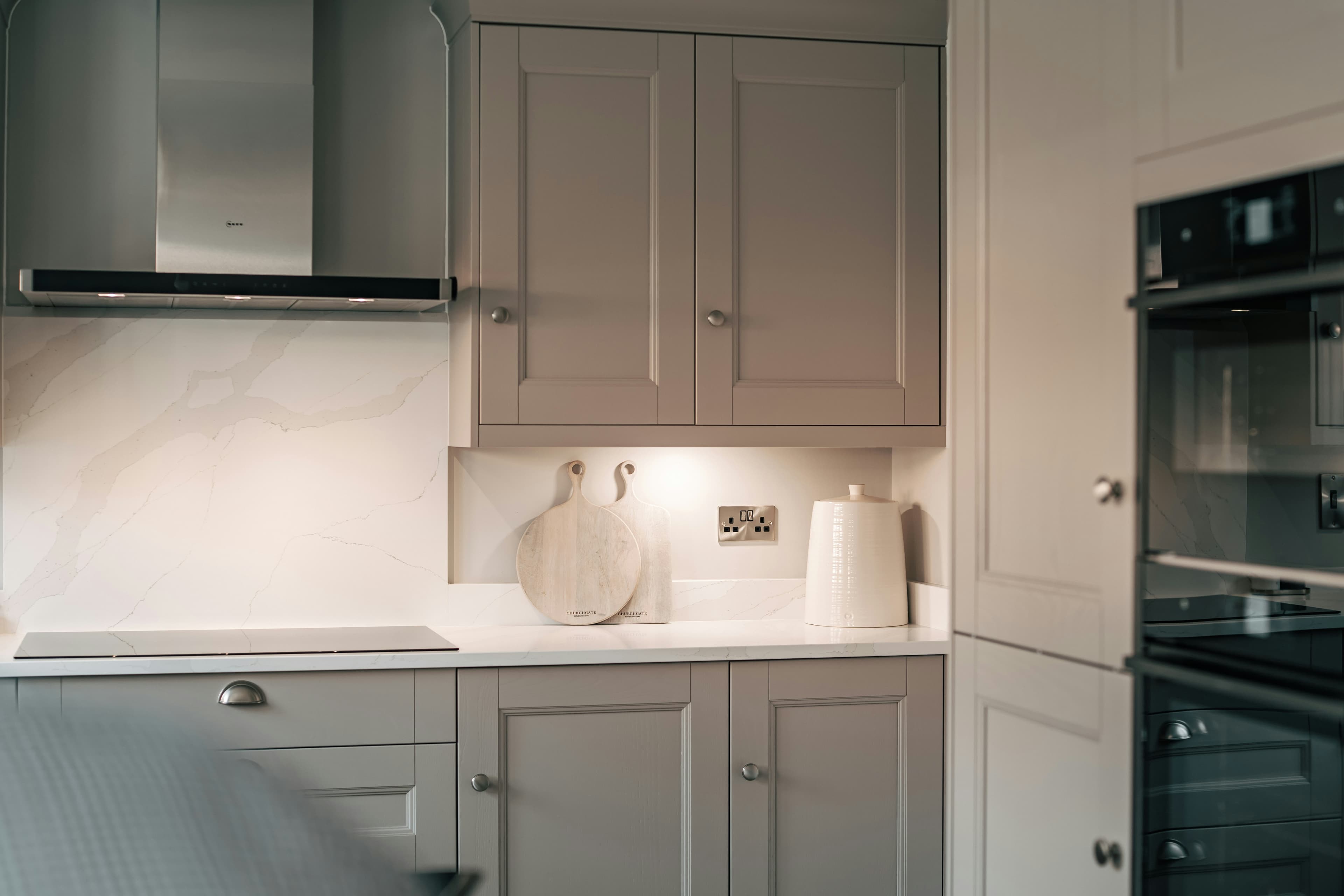
Few sellers think about fixtures and fittings until a solicitor sends over a long tick-box form near the start of the sale. It looks fussy, but it is one of the few documents in the whole process that you alone control, and getting it right early prevents an argument on completion day when nobody has time for one.
What is the difference between a fixture and a fitting?
A fixture is an item attached to the building in a way that makes it part of the property, such as a fitted kitchen, a boiler, built-in wardrobes, radiators or a bathroom suite. A fitting is a free-standing or easily removable item, such as a sofa, a bed, curtains, a lampshade or a plug-in fridge. The default rule in England and Wales is that fixtures stay with the house and fittings leave with you, unless the TA10 form says otherwise.
What usually stays and what usually goes
| Usually stays (fixtures) | Usually goes (fittings) |
|---|---|
| Fitted kitchen units and worktops | Free-standing fridge, washing machine or cooker |
| Boiler, radiators and central heating | Curtains and curtain poles (often negotiable) |
| Built-in wardrobes and shelving | Beds, sofas and free-standing furniture |
| Light fittings wired into the ceiling | Lampshades and bulbs |
| Bathroom suite and fixed taps | Garden pots, planters and ornaments |
What is the TA10 form?
The TA10 is the Fittings and Contents Form, a standard document produced by the Law Society and used in most residential sales in England and Wales. It lists every room and category of item, and for each one you tick whether it is included, excluded, or available to buy for an extra price. Your solicitor sends it to the buyer's solicitor as part of the contract pack, and the answers form part of the deal.
Do I legally have to leave anything?
You do not have to leave any particular item, but you do have to be accurate about what you are leaving. The default assumption is that fixtures stay, so if you intend to take something that looks built-in (a favourite light fitting, an integrated appliance, even an established garden shrub), you protect yourself by listing it as excluded on the TA10 from the start. Silence is read as inclusion.
What happens if I take something that was meant to stay?
Once contracts are exchanged, the TA10 is legally binding, so the buyer is entitled to receive the property in the state the form describes. If they arrive on completion day to find a listed item gone, they can ask their solicitor to hold back part of the money until it is resolved, which can delay completion for everyone in the chain. It is a small detail with an outsized power to derail a moving day.
How do I avoid a fixtures and fittings dispute?
- Fill in the TA10 honestly and early, before the buyer's solicitor has to chase it.
- List anything built-in that you plan to take as excluded, in writing, so there are no surprises.
- Price any item you are happy to sell (white goods, garden equipment) rather than leaving it vague.
- Take photos of the home as it is listed so there is a record of what the buyer expected.
- Tell your agent what is staying so the marketing matches what the buyer actually receives.
Are curtains included when you sell a house?
Curtains are usually treated as fittings, so they are not automatically included. If you are leaving them or taking them, say so on the TA10 so the buyer knows what to expect rather than assuming.
Do I have to leave the cooker and white goods?
Only built-in or integrated appliances are treated as fixtures that stay by default. Free-standing white goods are yours to take, though many sellers leave or sell them to keep the buyer happy and the sale smooth.
Can I sell items to the buyer instead of leaving them?
Yes. The TA10 has a column for items available at an extra price, so you can offer the buyer your fridge, curtains or garden furniture as a separate amount agreed alongside the sale.
Is the TA10 form legally binding?
It becomes legally binding once contracts are exchanged. Before exchange you can still amend it, but after exchange the buyer is entitled to the property exactly as the form describes it.
Knowing what stays and what goes is part of selling on your own terms, with no detail left for someone else to decide for you. ValuQ gives UK homeowners free, side-by-side property valuations from competing local estate agents, so you can compare on merit and keep control of every step of the sale, including the small ones.
Sources
- [1]HomeOwners Alliance - TA10 Form: Fixtures and Fittings · 2026-06-01 · https://hoa.org.uk/advice/guides-for-homeowners/i-am-selling/ta10-form/
- [2]Zoopla - TA10 form: fittings and contents form explained · 2026-06-01 · https://www.zoopla.co.uk/discover/selling/ta10-form-fittings-and-contents-form/
- [3]GetAgent - What is a TA10 Form? Fittings and Contents Form explained · 2026-06-01 · https://www.getagent.co.uk/blog/selling-tips/ta10-fittings-and-contents-form-explained
Terms in this article
Plain-English definitions from the ValuQ property glossary.
Fixtures and fittings
Fixtures are items attached to the property that sell with it by default, while fittings are freestanding items the seller may take.
Contract pack
The contract pack is the bundle the seller's solicitor issues to start the legal work: draft contract, title documents and the completed property forms.
Read next
Related insights
Can I switch estate agent while my house is on the market?
Can my estate agent use AI to edit photos of my house?
A buyer wants to film my house at the viewing. Should I let them?
How do I know if my estate agent is doing enough?
What is your home worth today?
ValuQ gives UK homeowners free, side-by-side property valuations from competing local estate agents. Anonymous until you choose. No cold calls.
Get your free anonymous valuationSellers and buyers never pay.