UK mortgage rates in late May 2026: where they stand
Published 31 May 2026 · Reviewed 12 September 2026 · 5 min read · By Evren Ergin
As at 11 September 2026, the average two-year fixed mortgage at 60% loan-to-value sits at 4.68%, with the equivalent five-year fix at 4.73%, according to Rightmove. Rates have edged back up since the summer as swap rates hit three-year highs, and the Bank of England base rate is being held at 3.75% ahead of the 17 September decision.
TL;DR
- •At 60% loan-to-value the average two-year fix is 4.68% and the five-year fix is 4.73% as at 11 September 2026.
- •Every deposit band is more expensive than it was at the end of May, and the direction has reversed from lenders trimming rates to lenders raising them.
- •The Bank of England base rate has been held at 3.75% since December 2025, most recently on 30 July 2026 on a 6 to 3 vote, with the next decision on 17 September 2026.
- •Lower-deposit borrowers still pay most: the average 95% LTV two-year fix is 5.78%.
Advertisement

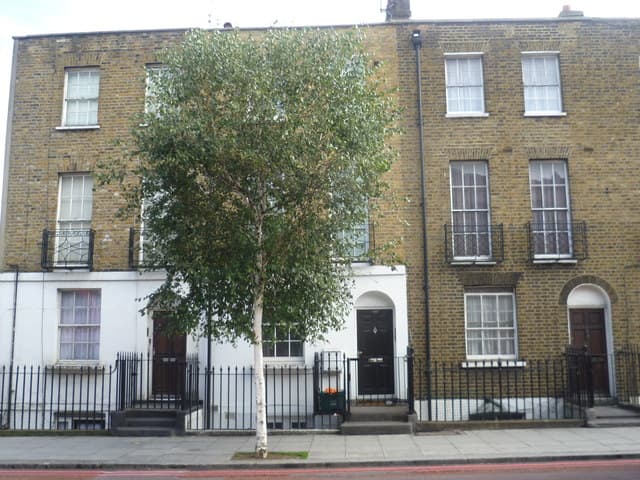
Mortgage pricing has turned. Fixed rates drifted down through the spring, bottomed out over the summer and have been repriced upwards since the start of September as the swap rates lenders buy their funding from climbed to three-year highs. The figures below are the current averages by deposit size, what is moving them, and what they mean if you are buying or selling this autumn.
What are UK mortgage rates right now?
The table shows average fixed rates by loan-to-value as at 11 September 2026. Loan-to-value, or LTV, is the size of your mortgage as a percentage of the property's value, so 60% LTV means a 40% deposit and 95% LTV means a 5% deposit. The bigger your deposit, the lower the rate you are offered.
Average UK fixed mortgage rates by deposit size, 11 September 2026 (Rightmove)
| Deposit / LTV | Two-year fix | Five-year fix |
|---|---|---|
| 40% deposit (60% LTV) | 4.68% | 4.73% |
| 25% deposit (75% LTV) | 5.02% | 5.05% |
| 15% deposit (85% LTV) | 5.10% | 5.13% |
| 10% deposit (90% LTV) | 5.32% | 5.30% |
| 5% deposit (95% LTV) | 5.78% | 5.75% |
What has changed since the spring?
Every band is more expensive than it was at the end of May 2026, when this article first ran. A 60% LTV two-year fix has gone from 4.59% to 4.68%, a 75% LTV two-year fix from 4.96% to 5.02%, and an 85% LTV two-year fix from 5.05% to 5.10%. Those are small moves in isolation. The change that matters more is the direction: in May lenders were trimming selected products, and since the start of September several have been raising them.
ValuQ comparison: average two-year fixed rates, 30 May 2026 against 11 September 2026 (Rightmove)
| Deposit / LTV | 30 May 2026 | 11 September 2026 | Change |
|---|---|---|---|
| 40% deposit (60% LTV) | 4.59% | 4.68% | +0.09 |
| 25% deposit (75% LTV) | 4.96% | 5.02% | +0.06 |
| 15% deposit (85% LTV) | 5.05% | 5.10% | +0.05 |
| 10% deposit (90% LTV) | 5.32% | 5.32% | no change |
| 5% deposit (95% LTV) | 5.76% | 5.78% | +0.02 |
Why are the average rates quoted elsewhere higher?
You will see higher headline averages in some reports. Moneyfacts figures published on 7 September 2026 put the average two-year fixed homeowner mortgage at 5.63%, up from 5.60% the previous working day. That figure is a whole-of-market average across every product and deposit size, while the table above shows the typical rate at each deposit tier. Both are correct and they answer different questions. A fixed-rate mortgage is one where the interest rate stays the same for a set period, usually two or five years, before it moves onto the lender's standard variable rate.
What is pushing rates up and down?
- The Bank of England base rate, the rate it charges banks, has been held at 3.75% since December 2025. The Monetary Policy Committee held it again on 30 July 2026, its fifth consecutive hold, on a 6 to 3 vote in which three members wanted a rise to 4%. The next decision lands on 17 September 2026.
- Swap rates, which lenders use to price fixed deals, have climbed. Five-year swaps moved above 4.5% in early September 2026, their highest in around three years, and two-year swaps rose with them.
- Lenders follow swaps with a lag. Moneyfacts noted on 7 September 2026 that further repricing was likely after HSBC, Barclays, NatWest and Santander had already raised pricing.
- Expectations have moved. Through the spring the market was pricing the next base rate move as a cut. Going into the September decision, a rise is back on the table, which is why fixed pricing has stopped falling.
What does this mean if you are selling?
Your buyer's budget is set by the rate they can borrow at, and that budget has stopped improving. The Lloyds House Price Index published on 7 September 2026 reported the average UK home at £298,468, down 0.2% over August and showing the first annual fall in house prices since November 2023.
The demand side is steadier than those headlines suggest. The RICS UK Residential Market Survey for August 2026, also published on 7 September, showed new buyer enquiries improving for a fifth consecutive month and agreed sales at their strongest reading since February, with the house price balance at minus 28. Buyers are coming back and they are price sensitive at the same time. Pricing to the evidence, rather than to what the house would have fetched in 2022, is what turns viewings into offers in that setting.
What should buyers do now?
- Get a decision in principle so you know the rate band your deposit actually puts you in, rather than the headline figure.
- If you have an offer in hand, check how long it is held for. With pricing moving upwards, a rate secured in August is worth protecting.
- Compare the two-year and five-year fix. A two-year fix bets on rates falling back, a five-year fix buys certainty at a price that is now close to the two-year rate at most deposit sizes.
- Build the monthly cost into your offer alongside the asking price, so the purchase still works if rates move again.
For a homeowner weighing a move, the rate you can borrow at and the price your current home will fetch are the two numbers that decide what is possible. ValuQ gives UK homeowners free, side-by-side property valuations from competing local estate agents, so you can fix the second number before you commit to the first.
Sources
- [1]Rightmove — Current UK mortgage rates · 2026-09-11 · https://www.rightmove.co.uk/news/articles/property-news/current-uk-mortgage-rates/
- [2]Mortgage Solutions — higher mortgage rates inevitable as swap rates rise, Moneyfacts · 2026-09-07 · https://www.mortgagesolutions.co.uk/mortgage-news/2026/09/07/higher-mortgage-rates-inevitable-as-swap-rates-rise-moneyfacts/
- [3]Lloyds Banking Group House Price Index, August 2026 · 2026-09-07 · https://www.lloydsbank.com/media-centre/house-price-index.html
- [4]RICS UK Residential Market Survey, August 2026 · 2026-09-07 · https://www.rics.org/news-insights/market-surveys/uk-residential-market-survey
- [5]Bank of England — Bank Rate and Monetary Policy Summary · 2026-07-30 · https://www.bankofengland.co.uk/monetary-policy-summary-and-minutes
Terms in this article
Plain-English definitions from the ValuQ property glossary.
Base rate
The base rate is the interest rate the Bank of England sets, which flows through to mortgage pricing across the market.
Agreement in principle (AIP)
An agreement in principle is a lender's conditional indication of how much it would lend you, based on basic details and a credit check.
Fixed-rate mortgage
A fixed-rate mortgage locks your interest rate and monthly payment for a set period, commonly two or five years.
RICS
RICS is the Royal Institution of Chartered Surveyors, the professional body that sets the standards UK surveyors and valuers work to.
Read next
Related insights
Does a good school nearby add value to my house?
Should I price my house on what I need for my next one?
House prices now falling in 1 in 3 areas of Britain
What happened to house prices after the last nine Budgets?
What is your home worth today?
ValuQ gives UK homeowners free, side-by-side property valuations from competing local estate agents. Anonymous until you choose. No cold calls.
Get your free anonymous valuationSellers and buyers never pay.