Am I competing with more sellers than usual right now?
Published 22 July 2026 · Reviewed 5 October 2026 · 7 min read · By Evren Ergin
Yes. Zoopla's figures published on 1 October 2026 show 5% more homes for sale across the UK than a year ago, while sales agreed are 9% lower, after a wave of new listings in September pushed England's stock up 16% in a fortnight.
TL;DR
- •Zoopla's September index, published on 1 October 2026, found 5% more homes for sale than a year earlier and 9% fewer sales agreed.
- •Yopa's count of homes for sale in England rose from 331,255 on 31 August to 385,565 on 14 September 2026, an extra 54,310 listings in a fortnight.
- •Nationwide reported prices down 0.2% in September and annual growth at 0.8%, so buyers have more choice and less urgency.
- •With the average buyer paying about £150 a month more on their mortgage than in January, a realistic launch price matters more than it did in the spring.
Advertisement

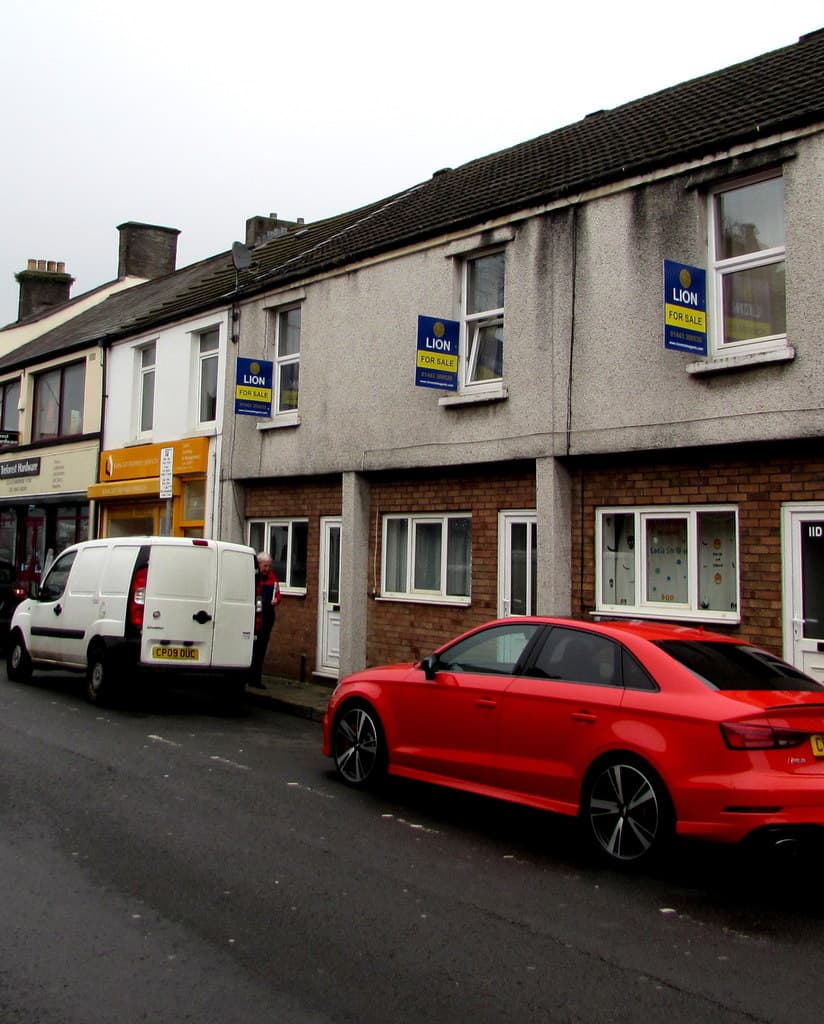
In July the story was a crowded market with very few new sellers joining it. September changed that, and the first figures for the month, published on 1 October, confirm it: more homes are for sale than a year ago while fewer sales are being agreed.
For anyone selling now, the practical question is not whether there is more competition. It is which homes you are really up against, and what buyers can afford when they compare them.
How many homes am I actually up against?
Available stock is the number of homes on the market at a given moment. Yopa's analysis, published on 17 September 2026, found it rose 16% in England in two weeks, with some of the sharpest increases in Rutland (35%), the Isle of Wight (34%) and Greater London (20%).
Homes for sale in England, autumn 2026 (Yopa)
| Area | Change, 31 August to 14 September 2026 |
|---|---|
| England | +16% (331,255 to 385,565 homes) |
| Rutland | +35% |
| Isle of Wight | +34% |
| Greater London | +20% |
| Worcestershire and Devon | +20% each |
| Oxfordshire, Bristol and Norfolk | +19% each |
| Somerset and Northamptonshire | +18% each |
Is this a normal September, or something bigger?
A jump in listings after the school holidays happens most years, so the direction is normal. What is different in 2026 is the backdrop: new sellers are arriving while prices are soft and borrowing has become more expensive.
The UK market at the start of October 2026, by the numbers
| Measure | Latest reading | Source and date |
|---|---|---|
| Homes for sale, UK | 5% more than a year ago | Zoopla House Price Index, 1 October 2026 |
| Sales agreed, UK | 9% fewer than a year ago | Zoopla House Price Index, 1 October 2026 |
| UK average price (Nationwide) | £274,251, down 0.2% in September; annual growth 0.8% | Nationwide, 1 October 2026 |
| Homes for sale in England | 385,565, up 16% in two weeks | Yopa, 17 September 2026 |
| New instructions to sell | Net balance 0%, up from -23% in June | RICS UK Residential Market Survey, 10 September 2026 |
| Market appraisals | Net balance -17% | RICS UK Residential Market Survey, 10 September 2026 |
| New buyer enquiries | Net balance -19%, least negative since January | RICS UK Residential Market Survey, 10 September 2026 |
| House price balance | Net balance -28% | RICS UK Residential Market Survey, 10 September 2026 |
| Extra mortgage cost for the average buyer | About £150 a month, £1,800 a year, more than at the start of 2026 | Zoopla House Price Index, 1 October 2026 |
| Average two-year fixed mortgage | 5.73%, up from 4.84% on 1 March | Moneyfacts, 15 September 2026 |
A net balance is the share of surveyors reporting a rise minus the share reporting a fall. The 0% for new instructions in August means as many surveyors saw more homes coming to market as saw fewer, a clear change from the steep falls of early summer.
What changed at the start of October?
The September indices landed on 1 October, and they point the same way. Zoopla found 5% more homes for sale than a year earlier and 9% fewer sales agreed, with the average home at £273,000 and prices up just 0.8% over the year. Nationwide reported a 0.2% fall in September, its fourth monthly fall in five months.
- More choice for buyers: a larger stock of homes and fewer agreed sales means each buyer is weighing more options.
- Less buying power: Zoopla estimates the average buyer is paying about £150 a month more on their mortgage than at the start of the year.
- A split market: Zoopla reported flat prices falling in 9 of 11 UK regions, while houses held up better, so what you are selling matters as much as where.
Why are so many homes coming onto the market now?
- Owners who held back through a soft summer have chosen September, when buyers traditionally return after the holidays.
- Many want to agree a sale in time to move before Christmas, which usually means listing in September or early October.
- Some owners whose fixed mortgage deals are ending are selling rather than refixing at higher rates.
Does a crowded market mean I have to drop my price?
Not automatically. It means the price has to be right at the point you launch, because a busy market punishes a wrong opening price far more than a quiet one does.
Borrowing costs sharpen that point. At 5.73%, a buyer paying about £1,438 a month on a 25-year mortgage can borrow roughly £229,000, against about £250,000 at March's 4.84%. Buyers comparing a dozen similar homes will favour the ones priced for what they can borrow today.
- A new listing gets its strongest run of viewings in the first two to three weeks, and that window is spent, not saved, if the price is wrong.
- Buyers scanning a portal now see your home next to many other fresh listings, so presentation and price do the work together.
- Agreed prices are still drifting down on the RICS measure, so a high launch price followed by a reduction costs you the early interest and the money.
You are not competing with every home on the market. You are competing with the handful a buyer shortlists after an evening of scrolling.
What should I do differently in a market like this?
- Ask every agent who values your home which recent local sales sit behind their number, rather than local asking prices.
- Ask how many of their listings in the past six months sold at or near the asking price, and how many were reduced.
- Agree the launch price and a review date together, so any reduction is a plan rather than a reaction.
- Get the photography, floorplan and description finished before the listing goes live, because the first fortnight counts most.
- When an offer comes, ask where the buyer is with their mortgage, because repricing hits buyers who have not yet applied.
- Compare valuations side by side before you pick an agent, because a number without a strategy tells you very little.
Is now a bad time to put my house on the market?
It is a competitive time rather than a bad one. Buyer enquiries improved through the summer on the RICS measure, but Zoopla's 1 October figures show 5% more homes for sale than a year ago and 9% fewer sales agreed, so realistic pricing decides which homes sell this autumn.
Will competition ease later in the autumn?
Possibly. RICS market appraisals, the valuation visits that come before a listing, were at -17% in August 2026, which points to fewer new homes later in the year. Nobody can promise what buyer demand does over the same period, so treat it as one factor rather than a reason to wait.
What is a net balance in these surveys?
A net balance is the share of surveyors reporting a rise minus the share reporting a fall. It shows direction and momentum, not the size of a change.
Should I wait until spring to sell?
Only if your timing allows it and you are comfortable with the uncertainty. Spring usually brings more buyers and more sellers together, and waiting does not guarantee a higher price, so decide on your own plans and the evidence for your street.
ValuQ gives UK homeowners free, side-by-side property valuations from competing local estate agents. In a market with this much stock, the agent who reads your street correctly is worth more than the agent who quotes the biggest number, and seeing their answers together is how you tell them apart.
Sources
- [1]Property Industry Eye, Sellers face fresh competition as thousands of homes hit the market (Yopa) · 2026-09-17 · https://propertyindustryeye.com/sellers-face-fresh-competition-as-thousands-of-homes-hit-the-market/
- [2]RICS UK Residential Market Survey, August 2026 · 2026-09-10 · https://www.rics.org/news-insights/market-surveys/uk-residential-market-survey
- [3]Property Industry Eye, Estate agents issue pricing warning as house price growth slows (ONS UK HPI, July 2026) · 2026-09-16 · https://propertyindustryeye.com/estate-agents-issue-pricing-warning-as-house-price-growth-slows/
- [4]IFA Magazine, Second wave of mortgage rate hikes begins before BBR decision (Moneyfacts) · 2026-09-15 · https://ifamagazine.com/second-wave-of-mortgage-rate-hikes/
- [5]Rightmove House Price Index, August 2026 · 2026-08-17 · https://www.rightmove.co.uk/news/house-price-index/
- [6]Zoopla House Price Index, September 2026 · 2026-10-01 · https://www.zoopla.co.uk/discover/property-news/house-price-index/
- [7]Bloomberg: UK house prices in sharpest drop since May, Nationwide says · 2026-10-01 · https://www.bloomberg.com/news/articles/2026-10-01/uk-house-prices-in-sharpest-drop-since-may-nationwide-says
- [8]Nationwide House Price Index, September 2026 · 2026-10-01 · https://www.nationwide.co.uk/media/hpi/reports/
Terms in this article
Plain-English definitions from the ValuQ property glossary.
Additional property surcharge
The additional property surcharge adds 5 percentage points to every stamp duty band when the purchase leaves you owning more than one dwelling.
Floorplan
A floorplan is the scale diagram of a property's layout and room sizes included in the listing.
RICS
RICS is the Royal Institution of Chartered Surveyors, the professional body that sets the standards UK surveyors and valuers work to.
Read next
Related insights
Does a good school nearby add value to my house?
Should I price my house on what I need for my next one?
House prices now falling in 1 in 3 areas of Britain
What happened to house prices after the last nine Budgets?
What is your home worth today?
ValuQ gives UK homeowners free, side-by-side property valuations from competing local estate agents. Anonymous until you choose. No cold calls.
Get your free anonymous valuationSellers and buyers never pay.