I have no building regs for my extension. Can I sell?
Published 22 July 2026 · 7 min read · By Evren Ergin
Yes, you can sell a home with work that was never signed off, and it happens in thousands of sales a year. There are two settled routes through it, an indemnity policy or a regularisation certificate, and the one thing that costs sellers money is picking up the phone to the council before deciding which route they want.
TL;DR
- •Missing building regulations paperwork is a common conveyancing problem, not a reason a sale has to collapse.
- •An indemnity insurance policy is the quick route. It is a one-off premium, commonly £20 to £300 depending on the property value, arranged through your solicitor.
- •Contacting the council about the work will usually make an indemnity policy unavailable, so decide your route before you make that call.
- •A regularisation certificate is retrospective approval from building control. It is available for work carried out on or after 11 November 1985 and needs an inspection.
Advertisement

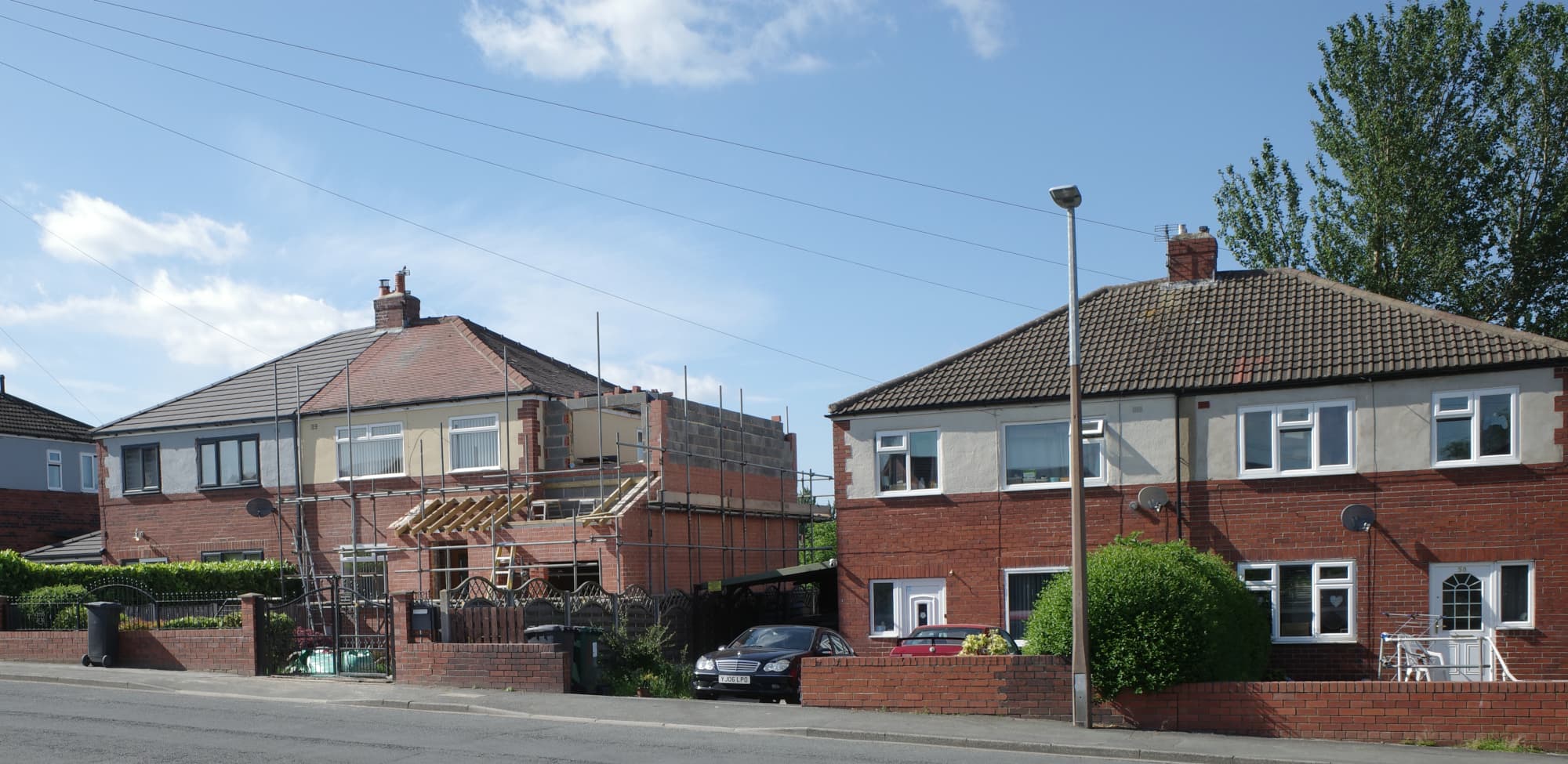
This is one of the most common wobbles in a sale, and almost all of them get resolved. The buyer's solicitor asks for the completion certificate, you go through the file, and it is not there. Perhaps the previous owner built it, or the builder disappeared before the final inspection.
Building regulations are the standards a building has to meet for structure, insulation, fire safety, drainage and ventilation. They are separate from planning permission, which is about whether the work was allowed at all. A completion certificate is the document building control issues when the work has been inspected and signed off.
Can I sell a house with work that was never signed off?
You can. The sale does not become unlawful and the property does not become unsellable. What happens is that the buyer's solicitor and the buyer's lender want protection before money changes hands, and they will ask for one of two things.
The first is an indemnity insurance policy. The second is a regularisation certificate. Neither is difficult to arrange, and which one suits you depends mostly on how old the work is.
Could the council still take action after all this time?
Under section 36 of the Building Act 1984 a council can require non-compliant work to be altered or removed. For work completed on or before 30 September 2023 that power runs for 12 months from completion, so for older work the practical risk is small.
The Building Safety Act 2022 extended that window from 12 months to 10 years for work completed on or after 1 October 2023, and the change does not apply retrospectively. So the date the work finished decides which rule applies to your home, and it is the first thing to establish.
Should I get an indemnity policy or apply for regularisation?
An indemnity policy pays legal costs and loss if the council ever does enforce. It does not make the work compliant and it does not cover defects in the building work itself. A regularisation certificate is retrospective approval: building control inspects what was built and certifies it, which usually means opening up part of the work so it can be seen.
The two routes compared
| Route | What it actually does | Typical cost | Time | Suits you when |
|---|---|---|---|---|
| Indemnity insurance policy | Pays legal costs and loss if the council enforces. Does not make the work compliant. | A one-off premium, commonly £20 to £300 depending on the property value | Days | The work is old and sound, and nobody has approached the council about it |
| Regularisation certificate | Building control inspects the work and certifies that it complies. | A fee set by your council, often calculated from its standard building notice charge | Weeks, longer if remedial work is needed | The work is recent, or the buyer's lender will not accept a policy |
One phone call to the council can close off the cheaper of your two routes for good. Decide which one you want first, then make the call.
What should I do first?
1. Pin down what was built and when
Write down the work, the year it was finished and who did it. The completion date decides whether the 12 month or the 10 year enforcement window applies, so an approximate year is not good enough if the work is recent.
2. Search for paperwork you may already have
Look for a completion certificate, a FENSA or CERTASS certificate for replacement windows, an electrician's Part P certificate, or a gas engineer's Building Regulations Compliance Certificate. Many sellers find the sale is not missing paperwork at all, only the right piece of it.
3. Ask your own solicitor before you ask anyone else
Tell your solicitor what is missing and ask which route the buyer's lender is likely to accept. This conversation costs nothing and it is the one that sets your strategy.
4. Do not contact the council if indemnity is still an option
An approach to the local authority about the work will usually make an indemnity policy unavailable, and once that door closes it does not reopen. If a policy is your likely route, keep the council out of it.
5. If you choose regularisation, apply to building control
Apply to your council's building control team for a regularisation certificate, which covers work carried out on or after 11 November 1985. Expect an inspection, expect some opening up, and allow weeks rather than days.
6. Answer the property information form accurately
The property information form asks about alterations and building work, and your answers become part of what the buyer relies on. Saying that paperwork is missing is a routine disclosure. Saying it exists when it does not is a misrepresentation.
7. Agree who pays, and when
In most sales the seller pays for the indemnity policy because the missing paperwork sits on their side. Agree the figure in writing at the point it is raised, so it does not reappear as a price reduction later in the sale.
How do I keep control while this gets sorted?
A missing certificate is the kind of issue a nervous buyer can use to reopen a price they already agreed. The way to stop that is to deal with it early, in writing, and to keep your own spending in step with theirs.
- Raise it yourself at the point the offer is agreed rather than waiting for their solicitor to find it. A problem you disclosed is far harder to reprice than one they discovered.
- Judge the buyer's commitment by what they have paid for. A solicitor instructed, searches ordered and a mortgage application submitted are commitment. Enthusiasm on a viewing is not.
- Hold the larger spend until the buyer is financially committed. A £175 policy is worth arranging early. A regularisation application with possible remedial work is worth gating on their progress.
- Keep a note of every figure quoted, so if the buyer asks for money off at the end you have the actual cost of fixing it rather than their estimate.
- If the sale falls away, the paperwork question follows the house, so anything you do resolve now is not wasted on the next buyer.
Can the council make me demolish my extension?
It is very unlikely on older work. A council's power to require alteration or removal under section 36 of the Building Act 1984 runs for 12 months from completion where the work was finished on or before 30 September 2023, and for 10 years where it was finished on or after 1 October 2023. Enforcement of long-finished domestic work is rare in practice.
Who pays for the indemnity policy, me or the buyer?
It is usually the seller, because the missing paperwork relates to work done during their ownership or an earlier one. The premium is commonly £20 to £300 depending on the property value, and it is arranged through a conveyancing solicitor rather than bought directly.
Will my buyer's mortgage be refused because of this?
Rarely. Lenders' solicitors ask for indemnity policies routinely, which tells you how normal the situation is. A lender is more likely to insist on regularisation where the work is recent or where a surveyor has flagged a structural concern.
I had planning permission. Does that cover building regulations?
No. Planning permission is about whether the work was allowed in that location and at that size. Building regulations approval is about whether it was built to the required standard. A home can have one without the other, and buyers' solicitors check for both.
ValuQ gives UK homeowners free, side-by-side property valuations from competing local estate agents. An agent who has handled this exact problem on your street will tell you how the local buyers and lenders tend to treat it, and comparing that thinking side by side is how you pick one.
Sources
- [1]Building Safety Act 2022, legislation.gov.uk · 2022-04-28 · https://www.legislation.gov.uk/ukpga/2022/30/contents
- [2]Mills and Reeve, Building safety: extension of enforcement for non-compliance · March 2024 · https://www.mills-reeve.com/blogs/construction/march-2024/building-safety-extension-of-enforcement-for-non-c/
- [3]HomeOwners Alliance, No building regulations certificate? What can you do? · Accessed 22 July 2026 · https://hoa.org.uk/advice/guides-for-homeowners/for-owners/no-building-regulations/
- [4]Rushmoor Borough Council, Regularisation application · Accessed 22 July 2026 · https://www.rushmoor.gov.uk/planning-and-building-control/building-control/regularisation-application/
- [5]GOV.UK, Building regulations approval: how to apply · Accessed 22 July 2026 · https://www.gov.uk/building-regulations-approval/how-to-apply
Terms in this article
Plain-English definitions from the ValuQ property glossary.
Building regulations approval
Building regulations approval certifies that works meet safety and construction standards, separate from and additional to planning permission.
Regularisation certificate
A regularisation certificate is retrospective building regulations approval for works done without consent, granted after inspection.
Indemnity insurance
Indemnity insurance is a one-off policy covering financial loss from a specific legal defect, bought instead of fixing the defect itself.
Planning permission
Planning permission is the council's consent to carry out development, from extensions to whole new buildings.
Building Safety Act
The Building Safety Act 2022 is the post-Grenfell law reshaping responsibility for building safety defects, protecting many leaseholders from remediation costs.
Misrepresentation
Misrepresentation is a false statement that induces a purchase, giving the buyer a claim for compensation or, rarely, unwinding the sale.
Price reduction
A price reduction is lowering the asking price of a home already on the market to restart buyer interest.
Completion date
The completion date is the contractual day the sale must complete, fixed at exchange and binding on both sides.
Read next
Related insights
Does a good school nearby add value to my house?
Should I price my house on what I need for my next one?
House prices now falling in 1 in 3 areas of Britain
What happened to house prices after the last nine Budgets?
What is your home worth today?
ValuQ gives UK homeowners free, side-by-side property valuations from competing local estate agents. Anonymous until you choose. No cold calls.
Get your free anonymous valuationSellers and buyers never pay.