House prices rose in August. Asking prices fell.
Published 1 September 2026 · 4 min read · By Evren Ergin
On 1 September 2026, Nationwide reported that UK house prices were up 0.2% on the month and 1.6% higher than a year ago, at an average of £275,465. Two weeks earlier, Rightmove reported the biggest August fall in new asking prices for eight years, down 2.0% to an average of £364,999.
TL;DR
- •Nationwide's August index, published on 1 September 2026, put annual house price growth at 1.6%, slightly above the 1.4% it recorded in July.
- •Rightmove's August index, published on 17 August 2026, put new asking prices down 2.0% on the month and 1.0% down on the year.
- •The two numbers measure different things: one is what buyers agreed to pay, the other is what sellers hoped to get.
- •For anyone listing this autumn, the gap is the story. Sold prices are holding. Optimistic asking prices are the ones being cut.
Advertisement

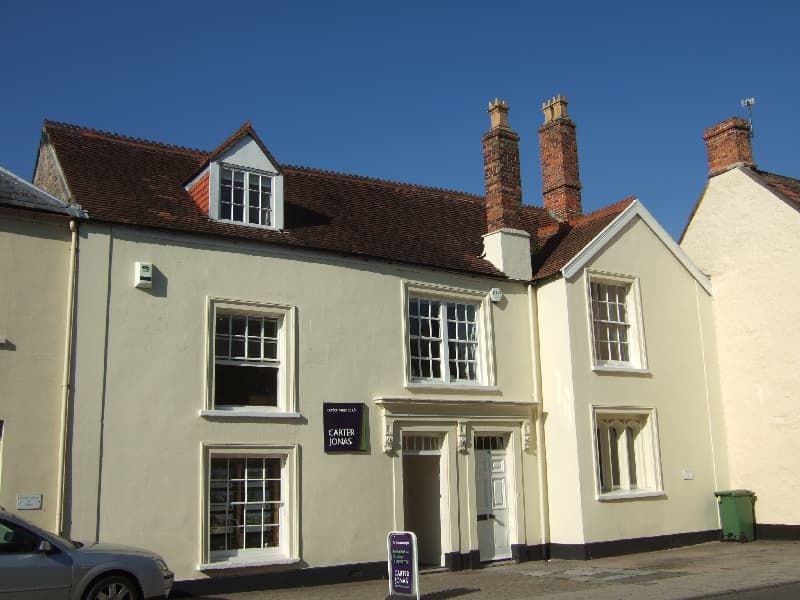
Two big property numbers landed in the last fortnight and they point in opposite directions. One says house prices are edging up. The other says asking prices are falling at their fastest August pace since 2018. Both are correct, because they are counting different things.
What did Nationwide actually report?
The Nationwide House Price Index is a monthly measure built from the prices agreed on Nationwide's own approved mortgages. On 1 September 2026 it put the average UK house price at £275,465, up 0.2% on the month once seasonal patterns are stripped out, and 1.6% higher than August 2025.
That is a slight improvement on July, when the same index recorded 1.4% annual growth. Nationwide's chief economist described activity and prices as subdued, and pointed to the uncertain economic backdrop as the reason.
So why are asking prices falling?
An asking price is what a seller puts a home on the market for. A sold price is what a buyer actually pays. The two only meet if the asking price was realistic in the first place.
Rightmove measures the first of those, on homes newly listed each month. In August it recorded a 2.0% drop, or £7,360, taking the average new asking price to £364,999, with the number of homes for sale at a 12-year high. Rightmove also cut its own forecast for 2026, from 2% growth to somewhere between 0% and minus 2%.
More homes competing for the same buyers means more sellers pricing carefully. That shows up in asking prices long before it shows up anywhere else.
The four August 2026 readings, and what each one counts
| Measure | What it counts | Latest reading | Published |
|---|---|---|---|
| Nationwide House Price Index | Prices agreed on its own approved mortgages | £275,465 average, up 0.2% on the month, up 1.6% on the year | 1 September 2026 |
| Rightmove House Price Index | Asking prices on newly listed homes | £364,999 average, down 2.0% on the month, down 1.0% on the year | 17 August 2026 |
| Zoopla House Price Index | Buyer and seller activity across its listings | Buyer searches up 7% on the year, agreed sales down 6% | 27 August 2026 |
| HMRC property transactions | Completed sales reported for tax | 96,710 in July, down 2% on June | 28 August 2026 |
Is my house worth less than it was a year ago?
On the sold-price measures, probably not. Nationwide has UK prices 1.6% higher than a year ago, and Zoopla's August index reported annual growth too. What has fallen is the price sellers are starting at.
Those are different problems with different fixes. A home that is genuinely worth less needs patience. A home that is priced above what buyers are paying needs a number, not time.
Falling asking prices are not the market telling you your home is worth less. They are the market telling you what it will pay attention to.
What should I do if I am listing this autumn?
- Price against what has completed near you in the last six months, not against what is currently sitting unsold on the portals.
- Ask every agent who values your home to show you the evidence behind the number, in sold prices with dates.
- Treat the first three weeks as your test. Strong viewing numbers and no offers is a pricing signal, not bad luck.
- Work out what a given price actually leaves you with after fees, mortgage payoff and legal costs before you commit to it.
- If you list at an optimistic number, agree with your agent in advance what you will do, and when, if it does not move.
What does this mean for buyers?
The number of homes for sale is at a 12-year high, and asking prices are coming down to meet buyers rather than the other way round. Zoopla's 27 August index recorded buyer searches 7% higher than a year ago, the strongest annual rise in twelve months, while agreed sales were still 6% below last year. Interest has returned faster than offers have.
Where does ValuQ fit in?
ValuQ gives UK homeowners free, side-by-side property valuations from competing local estate agents. You see every agent's number, fee and strategy on one screen before you speak to any of them, which is the point at which a realistic price is easiest to spot.
Sources
- [1]Nationwide House Price Index, House price growth remained subdued in August · 2026-09-01 · https://www.nationwide.co.uk/media/hpi/reports/house-price-growth-remained-subdued-in-august
- [2]Rightmove House Price Index, 17 August 2026 · 2026-08-17 · https://www.rightmove.co.uk/news/content/uploads/2026/08/Rightmove-HPI-17th-August-2026.pdf
- [3]Housing Today, House prices see largest August drop since 2018, says Rightmove · 2026-08-17 · https://www.housingtoday.co.uk/news/house-prices-see-largest-august-drop-since-2018-despite-burnham-effect-on-buyer-demand-says-rightmove/5143696.article
- [4]Zoopla House Price Index, August 2026 · 2026-08-27 · https://www.zoopla.co.uk/discover/property-news/house-price-index/
- [5]Mortgage Strategy, UK residential property transactions fell 2% in July: HMRC · 2026-08-28 · https://www.mortgagestrategy.co.uk/news/uk-residential-property-transactions-fell-2-in-july-hmrc/
Read next
Related insights
Trading up to a detached got cheaper in the South East. Not the North.
Online estate agent or high street agent: which should I use?
Can I sell my house if I still have a mortgage?
What does my council tax band say my house is worth?
Is your asking price where it should be?
ValuQ gives UK homeowners free, side-by-side property valuations from competing local estate agents. Anonymous until you choose. No cold calls.
Get your free anonymous valuationSellers and buyers never pay.