I have leased solar panels. Will they stop my sale?
Published 12 August 2026 · 7 min read · By Evren Ergin
Leased solar panels rarely stop a sale, but they are one of the most reliable ways to slow one down, and almost always because the paperwork is missing rather than because the panels are a problem. Get the lease and the certificates together before you list, and this becomes an administrative step rather than the thing that costs you your buyer.
TL;DR
- •A rent-a-roof lease is an agreement where a solar company owns the panels and rents your roof space, usually for 20 to 25 years.
- •Mortgage lenders do not refuse these homes as a rule, but they do check the lease against the UK Finance Mortgage Lenders' Handbook before releasing funds.
- •The delay almost always comes from missing documents: the MCS certificate, building regulations sign-off, the lease itself and the export tariff paperwork.
- •Gather the pack before you list, and hold off on your own big spends until the buyer's lender has seen the lease and said yes.
Advertisement

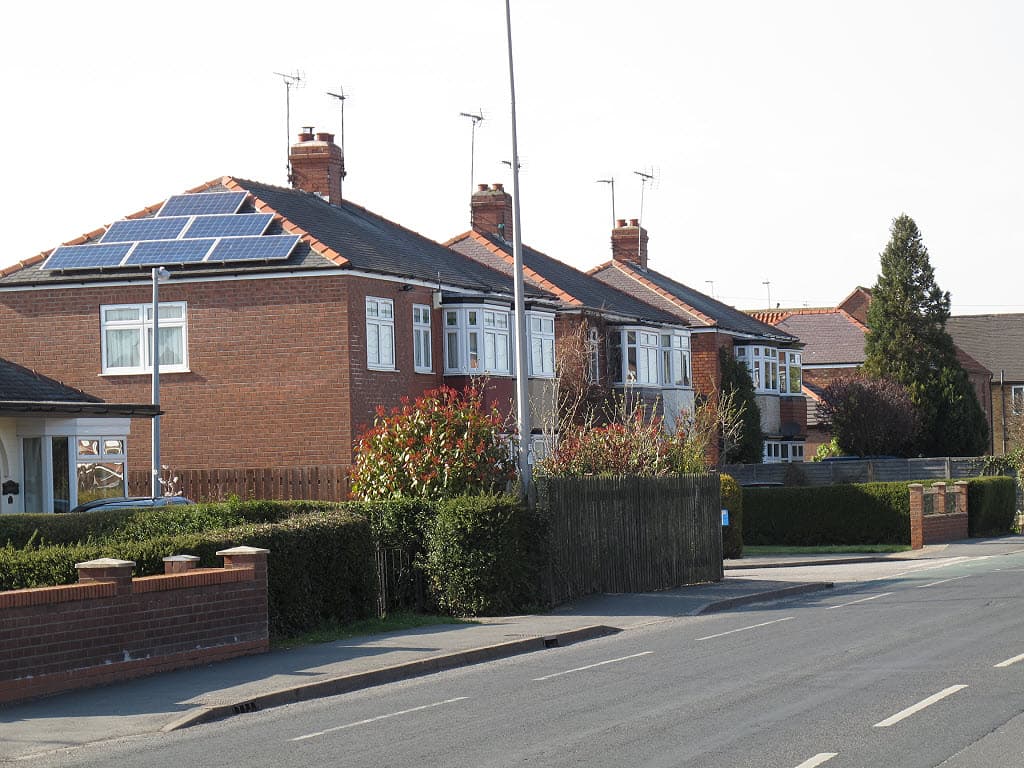
This is a common wobble and it usually resolves. Around 23.7% of agreed UK sales collapsed before completion in the first quarter of 2026 on TwentyEA's figures, and the ones that collapse over paperwork are almost always the ones where the paperwork was found late. You have time to fix that now.
What is a solar panel lease?
A solar panel lease, often called a rent-a-roof agreement, is a contract where a solar company installs panels at no cost to you, keeps the export income, and rents your roof space in return. You get the cheaper electricity while the panels are on the roof. The lease is registered against the title of your home, typically for 20 to 25 years, and it passes to whoever buys the house.
Most of these were installed between 2010 and 2016, when the Feed-in Tariff made the arrangement attractive to the installer. The Feed-in Tariff is the government scheme that paid a set rate for generated and exported electricity, and it closed to new applicants on 31 March 2019. Its replacement, the Smart Export Guarantee, has run since 1 January 2020.
Will a lender refuse to lend on my house because of it?
Not as a general rule. Lenders' requirements for leases of roof space are set out in the UK Finance Mortgage Lenders' Handbook, and the buyer's conveyancer checks the lease against them. What the lender wants to see is that the lease does not damage its security: sensible access rights, insurance, who repairs the roof, what happens if the solar company fails, and the lender's ability to have the panels removed if it ever has to take possession.
Some lenders lend on these homes without comment. Some lend with conditions. A small number decline.
If the lease does not meet the criteria, the usual fix is a deed of variation, which is a document that changes the terms of the existing lease. That means a solicitor, the solar company's own administration, and weeks rather than days.
What paperwork do I need before I list?
All of it, ideally before a buyer's solicitor asks. This is the single highest-value hour you will spend on the sale.
- Find the lease itself, including any variations, and check the remaining term.
- Find the MCS certificate. MCS is the Microgeneration Certification Scheme, the standard that certifies the installer and the installation, and lenders and buyers both look for it.
- Find the building regulations approval and the electrical installation certificate for the work.
- Find the Feed-in Tariff or Smart Export Guarantee paperwork, and the transfer form the provider uses when a property changes hands.
- Find the DNO approval, which is the permission from the local electricity network operator for the panels to connect to the grid.
- Find the warranties for the panels and for the roof, and any maintenance agreement.
- Call the solar company, tell them you are selling, and ask what they need from you and how long their side takes. Their administration is often the slowest part.
What's normal here, and what's a red flag?
Reading your own situation before the buyer's solicitor does
| What you find | What it means |
|---|---|
| Panels owned outright, certificates present | Normal. Treated as a fixture that passes with the house. Usually no lender issue at all. |
| Panels bought on finance still being repaid | Manageable. The loan is typically settled from the sale proceeds on completion. Get the redemption figure early. |
| Rent-a-roof lease, full paperwork present | Normal. Expect extra enquiries and a few extra weeks, not a failed sale. |
| Rent-a-roof lease, MCS certificate missing | Worth acting on today. Request a duplicate from the installer or MCS before you list. |
| Lease terms the buyer's lender objects to | A real red flag. Ask your solicitor about a deed of variation straight away, because this one has a long lead time. |
| Solar company no longer trading | A real red flag. Your solicitor needs to trace who now holds the lease before a buyer's lender will move. |
How do I stop this costing me the buyer?
Disclose it early and let the buyer package their mortgage application properly. A buyer who knows about the lease at offer stage can put it to their broker before they apply. A buyer who discovers it at week six feels misled, and that feeling breaks more sales than the lease itself ever does.
Then move in step with them rather than ahead of them. Instructing your own solicitor early is cheap and keeps momentum, and it is the right call because a solar lease needs legal legwork.
The bigger commitments are different. Judge a buyer by what they have actually spent and instructed: a solicitor engaged, searches ordered, a mortgage application submitted, a survey booked. Wait for their lender to confirm it is comfortable with the lease before you commit money you cannot get back or come fully off the market.
The lease is not the risk. The lease discovered late is the risk.
How much longer will my sale take?
Plan for extra weeks, and start from a slow baseline. Rightmove reported on 31 July 2026 that the average move in Great Britain now takes 216 days from listing to completion, with 154 of those days falling after a buyer has already been found. Solar enquiries land squarely in that second stretch, which is exactly why front-loading the paperwork is worth so much.
Can I just take the panels off before I sell?
Usually not on your own. Under a rent-a-roof lease the panels belong to the solar company, and removal is their decision and their cost. Ask them what an early exit would involve, but treat it as a last resort rather than a plan.
Do leased solar panels reduce what my house is worth?
There is no reliable single figure for this, and anyone quoting one is guessing. What is measurable is the effect on the pool of buyers: a lease narrows the number of lenders comfortable with the property, and a smaller pool is what shows up in the eventual price.
Do I have to tell the buyer about the lease?
Yes. It is registered against your title and will appear in the legal pack regardless, and the property information form asks about it directly. Answering openly protects you. Withholding it does not.
What if I can't find the MCS certificate?
Ask the installer first, then MCS itself, then the solar company that holds the lease. If it genuinely cannot be produced, your solicitor may raise indemnity insurance as an option, though a lender's view of that varies and it is a fallback rather than a fix.
Should I mention the panels in the listing?
Mention the panels and the lease. The cheaper electricity is a genuine selling point, and stating the lease alongside it filters out the buyers who were never going to proceed before they cost you two months.
Who is actually in control here?
You are, and earlier than you think. The seller who has the lease, the certificates and the solar company's transfer form ready on day one turns a sale-threatening surprise into a routine enquiry.
ValuQ gives UK homeowners free, side-by-side property valuations from competing local estate agents. When your home has something specific attached to it, like a solar lease, comparing several agents before you speak to any of them tells you quickly which ones have handled it before.
Sources
- [1]SAM Conveyancing, Selling a House with Solar Panels · 2026-04-08 · https://www.samconveyancing.co.uk/news/conveyancing/selling-a-house-with-solar-panels
- [2]Muve, How do solar panels affect your conveyancing? · 2026-05-07 · https://muve.me.uk/conveyancing-advice/how-do-solar-panels-affect-your-conveyancing/
- [3]Wards Solicitors, Selling your home with a solar panel lease · 2018-11-27 · https://wards.uk.com/news/selling-your-home-with-a-solar-panel-lease-not-always-sunshine-and-roses/
- [4]Ofgem, Feed-in Tariffs (FIT) · 2019-03-31 · https://www.ofgem.gov.uk/environmental-and-social-schemes/feed-tariffs-fit
- [5]Ofgem, Smart Export Guarantee (SEG) · 2020-01-01 · https://www.ofgem.gov.uk/environmental-and-social-schemes/smart-export-guarantee-seg
- [6]The Negotiator, Property fall-through rates edge down despite economic turmoil (TwentyEA, Q1 2026) · 2026-04-24 · https://thenegotiator.co.uk/news/uk-housing-market-news/property-fall-through-rates-edge-downwards-despite-economic-turmoil/
- [7]Property Industry Eye, Estate agents face longest wait on record to get paid (Rightmove, 216 days) · 2026-07-31 · https://propertyindustryeye.com/estate-agents-face-longest-wait-on-record-to-get-paid/
Terms in this article
Plain-English definitions from the ValuQ property glossary.
Building regulations approval
Building regulations approval certifies that works meet safety and construction standards, separate from and additional to planning permission.
Indemnity insurance
Indemnity insurance is a one-off policy covering financial loss from a specific legal defect, bought instead of fixing the defect itself.
Deed of variation
A deed of variation is a formal document changing the terms of an existing deed or lease by agreement.
Redemption figure
The redemption figure is the exact amount required to pay off your mortgage completely on a stated day, including interest to that day and any charges.
Legal pack
The legal pack is the pre-prepared bundle of title, searches, conditions and replies published for an auction lot before the sale.
Read next
Related insights
Can I switch estate agent while my house is on the market?
Can my estate agent use AI to edit photos of my house?
A buyer wants to film my house at the viewing. Should I let them?
How do I know if my estate agent is doing enough?
What is your home worth today?
ValuQ gives UK homeowners free, side-by-side property valuations from competing local estate agents. Anonymous until you choose. No cold calls.
Get your free anonymous valuationSellers and buyers never pay.