Is my house unmortgageable? What lenders refuse to lend on
Published 3 August 2026 · 6 min read · By Evren Ergin
A home is called unmortgageable when mainstream lenders will not lend against it because of what the property is, not because of who is buying it. Research published by the specialist lender Together on 31 July 2026 put the number at more than 1.5 million UK homes, around 6% of the housing stock, and almost all of them still sell.
TL;DR
- •Unmortgageable means high street lenders will not accept the property itself as security, so the buyer cannot borrow against it in the usual way.
- •Together's research, published 31 July 2026, counted more than 1.5 million such homes in the UK, roughly 6% of 28 million properties.
- •The usual triggers are the roof, the walls, the lease, the location or a missing kitchen or bathroom, and most are either fixable or fundable through a specialist lender.
- •If you think your home might be affected, find out before you list rather than after a buyer's valuation comes back, because it changes how you price and who you market to.
Advertisement

What does unmortgageable actually mean?
An unmortgageable property is one that mainstream lenders will not accept as security for a normal mortgage. The refusal is about the building, not the borrower. A buyer with a perfect credit file and a large deposit can still be turned down if the surveyor reports something the lender's policy will not accept.
A mortgage is a loan secured on the property. If the borrower stops paying, the lender needs to be able to sell the home and get its money back. Anything that makes the resale slow, uncertain or expensive to insure makes the lender cautious, and every lender writes its own list of what it will and will not accept.
Research published by the specialist lender Together on 31 July 2026 counted more than 1.5 million UK homes outside mainstream lending criteria, about 6% of the country's 28 million residential properties. Among the buyers it surveyed, 21% had already had a mortgage application rejected and 32% found only a small pool of lenders willing to look at their case.
Which homes do mainstream lenders turn down?
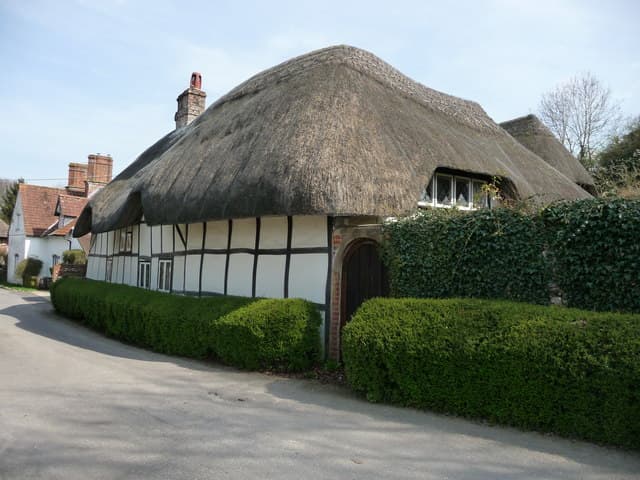
The list is more ordinary than most sellers expect. Together's research named thatched roofs, short leases, solid wall construction, high rise flats, homes close to commercial premises, and properties with no working kitchen or bathroom.
Property features that commonly trigger a mortgage decline. The first five are named in Together's research, published 31 July 2026; spray foam is a further trigger surveyors report.
| What the surveyor flags | Why the lender hesitates | Usual route to a sale |
|---|---|---|
| Thatched roof | Higher fire risk and specialist insurance, so a slower resale | Specialist lender, evidence of a current insurance policy and a recent thatch inspection |
| Lease under 80 years | The lease shortens every year and the cost of extending it rises sharply | Extend the lease before marketing, or agree that the buyer takes it on with a price adjustment |
| Solid wall or non-standard construction | Concrete, timber frame and prefabricated types can be hard to value and repair | A structural engineer's report, or a lender that writes policy for that construction type |
| High rise flat or a flat over a shop | Resale demand is narrower and fire safety paperwork may be missing | Building safety documents in hand before listing, plus a lender with no floor limit |
| No kitchen or no bathroom | The home is not habitable, so it cannot be valued as a home | A bridging or refurbishment loan for the buyer, or reinstate the room before you market |
| Spray foam insulation in the roof | It can hide timber decay and block ventilation, so surveyors report it as a risk | An independent survey of the roof timbers, or removal with certification |
Two homes with the same flag can get different answers from different lenders. A refusal from one bank is a data point, not a verdict on your house.
How do I find out before I put my house on the market?
The worst moment to learn about this is nine weeks in, when a buyer's mortgage valuation comes back and the sale unwinds. There are quiet checks you can run first, and none of them commit you to selling.
- Check your own mortgage history. If you got a normal mortgage on the property yourself, and nothing structural has changed since, most lenders will look at it again.
- Read your lease if you own a flat, and note the years remaining. Under 80 years is the point at which lending gets harder and the cost of extending rises.
- Gather the paperwork for any work done: building regulations completion certificates, guarantees for damp or timber treatment, electrical certificates, and any insulation installed under a grant scheme.
- Ask two or three local agents directly whether homes of your type and construction have been selling with mortgages in your area this year. They see the valuations that fail.
- If your building is a flat, ask the managing agent now for the fire safety and external wall information a lender will want.
Can I still sell a home mainstream lenders refuse?
Yes. These homes sell every week. What changes is the pool of buyers and the pace, so the strategy has to change with it.
- Cash buyers and specialist lending. Together's survey found 44% of buyers of these homes felt they got better value, 31% wanted a renovation project, and 28% were drawn by the lower price.
- Fix the flag first where the maths works. Reinstating a kitchen or extending a lease can move a home back into mainstream lending and widen the buyer pool considerably.
- Price for the buyer who can actually complete. A property that only a cash buyer can purchase is competing in a smaller market, and the asking price has to acknowledge that.
- Be open about it in the listing brief. A buyer who discovers the problem at valuation stage walks away; a buyer who knew from day one arranges the right finance.
A lender's refusal is a statement about its own policy, not a judgment on your home. Find out which category you are in early, and you get to choose the strategy instead of reacting to it.
Does this mean my house is worth less?
It usually means a narrower market rather than a lower value, though in a slower market the two start to look similar. Zoopla's House Price Index of 30 July 2026 put annual growth at 1.3% with an average UK price of £271,900, sales agreed down 9% on last year, and the supply of homes for sale up in eight of eleven regions. Nationwide's index of 31 July 2026 reported annual growth of 1.8% and an average price of £277,542.
When buyers have more choice, anything that makes a purchase complicated costs the seller time. That is the real price of a lending flag, and it is why finding out early matters more this year than it did two years ago.
Common questions about unmortgageable homes
Is unmortgageable an official category?
No. There is no register and no legal definition. It is shorthand for a property that falls outside most lenders' criteria, and each lender sets its own. A home refused by four banks may be accepted by a fifth.
My buyer's mortgage was declined. Does that make my house unmortgageable?
Not on its own. A decline can be about the buyer's income, credit file or deposit rather than the property. Ask, politely, which it was. If the valuation report flagged the building, that is a property issue and it will happen again with the next buyer.
Will a cash buyer pay less?
Often, yes, because they know their own competition is thin and they are carrying the risk of a home other people cannot fund. That discount is the trade for speed and certainty, and it is worth measuring against the cost of fixing the flag instead.
Can I get a mortgage on a home with a short lease?
Many lenders want a set number of years left at the end of the mortgage term, commonly 30 to 40 years beyond it, which is why leases under 80 years cause trouble. Extending the lease before you market removes the obstacle, and the cost of extending rises as the lease gets shorter.
Should I tell buyers before they offer?
Yes. A buyer who learns at valuation stage tends to withdraw, and you lose the weeks that sale took. A buyer told at the outset either arranges the right finance or moves on early, and you keep control of your timeline.
ValuQ gives UK homeowners free, side-by-side property valuations from competing local estate agents. Agents who know your street also know which lenders have been saying yes to homes like yours this year, and that is worth asking about before you choose one.
Sources
- [1]Mortgage Solutions: More than 1.5 million homes 'unmortgageable' with mainstream lenders, Together says · 2026-07-31 · https://www.mortgagesolutions.co.uk/mortgage-news/2026/07/31/more-than-1-5-million-homes-unmortgageable-with-mainstream-lenders-together-says/
- [2]Property Industry Eye: More than 1.5m UK homes 'unmortgageable', claims lender · 2026-08-03 · https://propertyindustryeye.com/more-than-1-5m-uk-homes-unmortgageable-claims-lender/
- [3]Zoopla House Price Index, July 2026 · 2026-07-30 · https://www.zoopla.co.uk/discover/property-news/house-price-index/
- [4]Nationwide House Price Index, July 2026 · 2026-07-31 · https://www.nationwide.co.uk/media/hpi/
- [5]Leasehold and Freehold Reform Act 2024 · 2024-05-24 · https://www.legislation.gov.uk/ukpga/2024/22/contents
Terms in this article
Plain-English definitions from the ValuQ property glossary.
Structural engineer's report
A structural engineer's report is a specialist assessment of a specific structural concern, such as cracking or movement, that a general survey flagged.
Non-standard construction
Non-standard construction is any home not built of brick or block walls under a tiled or slated roof, from concrete panels to steel frames.
Spray foam insulation
Spray foam insulation is expanding foam applied inside a roof, which many mortgage lenders treat as a barrier to lending because it can hide and trap timber decay.
Mortgage valuation
A mortgage valuation is the lender's check that the property is adequate security for the loan, not an inspection for the buyer's benefit.
Managing agent
A managing agent is the company the freeholder or management company appoints to run the building day to day and administer the charges.
Mortgage term
The mortgage term is the number of years over which the loan is scheduled to be repaid, commonly 25 to 40.
Timber frame
Timber frame construction carries the building's loads on a wooden structural frame, usually behind a brick outer skin.
Short lease
A short lease is one with few enough years left that mortgage lenders retreat and the price discounts toward cash buyers.
Read next
Related insights
Two in five flats bought in 2021 are worth less as fixes end
What is the TA6 form, and what changed in 2026?
My buyer wants to pay a 5% deposit on exchange. Should I agree?
My buyer wants to come back and measure up. Should I let them?
See every local agent on one screen.
Free for homeowners. Always. No cold calls. No data sales. No starting-line advantage for the fastest dialler in town.
Get your free anonymous valuationSellers and buyers never pay.