House prices rise 5% in Harlow but fall 3% next door
Published 12 June 2026 · 4 min read · By Evren Ergin
Official Land Registry figures for March 2026 show average prices in Harlow up 5.3% in a year while Epping Forest, the next district along, is down 3.4%. That 8.7 point gap between two neighbouring districts is the widest divide in Essex, and it makes the county average of +0.1% close to meaningless for anyone pricing a home.
TL;DR
- •ValuQ ranked all 14 Essex council areas by the latest official UK House Price Index annual change (March 2026, released 20 May 2026).
- •Harlow leads the county at +5.3% while neighbouring Epping Forest sits last at -3.4%.
- •The Essex average of +0.1% hides four falling areas and five growing by more than 2%.
- •No county or national average can price an individual home. Local sold evidence and several competing valuations can.
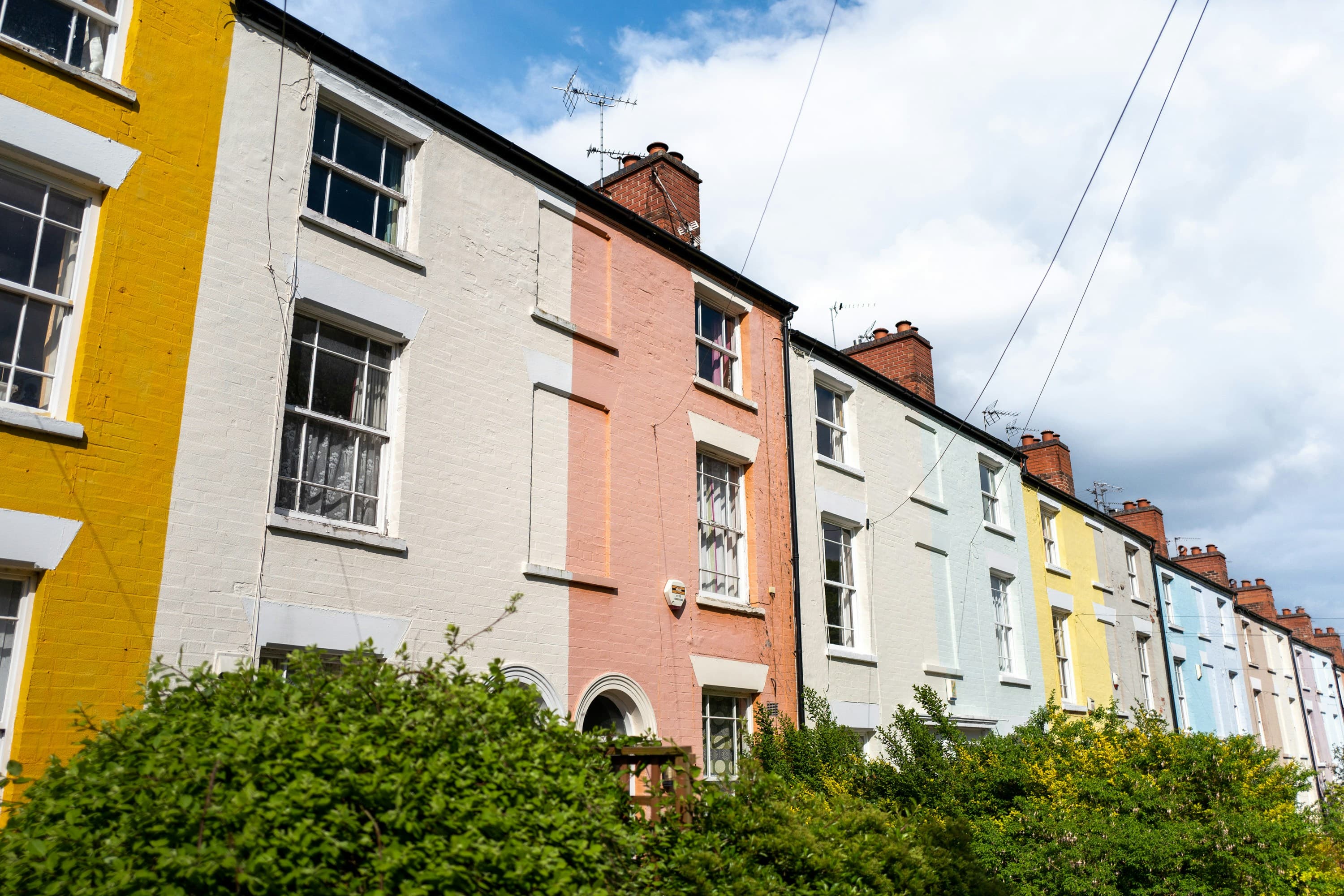
Research by ValuQ: we pulled the latest HM Land Registry UK House Price Index figures for all 14 Essex council areas on 12 June 2026 and ranked them by annual price change.
How far apart are Essex house prices right now?
Essex as a county looks becalmed. The official average is £357,476 and the annual change is +0.1%, which reads like a market doing nothing at all. The county number is hiding a divide. Four Essex areas are falling. Five are growing by more than 2%. And the fastest riser and the fastest faller in the whole county sit next to each other on the map.
Annual house price change by Essex council area, ranked. ValuQ analysis of HM Land Registry UK House Price Index, March 2026.
| Rank | Area | Average price (Mar 2026) | Annual change |
|---|---|---|---|
| 1 | Harlow | £316,293 | +5.3% |
| 2 | Rochford | £409,437 | +4.0% |
| 3 | Castle Point | £367,482 | +2.8% |
| 4 | Brentwood | £523,441 | +2.5% |
| 5 | Maldon | £387,071 | +2.2% |
| 6 | Colchester | £300,327 | +0.8% |
| 7 | Chelmsford | £375,996 | +0.5% |
| 8 | Southend-on-Sea | £328,502 | +0.3% |
| 9 | Braintree | £321,337 | +0.2% |
| 10 | Thurrock | £326,531 | +0.2% |
| 11 | Basildon | £355,621 | -1.6% |
| 12 | Uttlesford | £466,865 | -1.9% |
| 13 | Tendring | £258,096 | -2.8% |
| 14 | Epping Forest | £520,502 | -3.4% |
The gap from top to bottom is 8.7 percentage points in a single year. On these averages, a typical Harlow home gained roughly £16,000 over the year while a typical Epping Forest home lost more than £18,000. The two districts share a border.
It is not a simple case of cheap areas rising and expensive areas falling, either. Harlow is the most affordable London-line district in west Essex and leads the county, and the two most expensive areas, Brentwood and Epping Forest, are moving in opposite directions at +2.5% and -3.4%. Meanwhile Tendring, the cheapest area in Essex, is falling too. Each local market is running on its own logic.
Why is the gap between neighbouring districts so wide?
A district average moves when the mix of what actually sells changes, even when individual homes have not changed value at all. An area where affordable family homes are selling briskly to buyers priced out of London can post strong growth while a neighbouring area, where the market leans on larger and more expensive homes, posts a fall as that end of the market goes quiet. District-level figures are also built on fewer sales than national ones, so they swing harder. The honest reading is not that every Harlow home rose 5.3% and every Epping Forest home fell 3.4%. It is that no county or national average can tell you what happened to your street.
Fourteen council areas, one county, and a nine point spread in a single year. The number that matters to a seller is not the national average or even the county average. It is what homes like yours, on streets like yours, are actually selling for. Start from that evidence, then get more than one professional opinion on it. Evren Ergin, founder of ValuQ.
What does this mean if you are selling in Essex?
- Ignore the headline averages when pricing. The Essex average of +0.1% describes nobody: not a Harlow seller in a rising market, not an Epping Forest seller in a falling one.
- Ask every agent who values your home for sold comparables from your own postcode, dated within the last six months. In a market this divided, evidence from the next district along can point you thousands of pounds wrong.
- Get more than one valuation before you commit. ValuQ gives UK homeowners free, side-by-side property valuations from competing local estate agents, so the realistic number for your specific home is easy to see before you choose anyone.
- If your area is on the falling side of the table, realistic pricing from day one matters even more. Overpricing in a softening market costs the first and best weeks of buyer interest.
How we did this
ValuQ pulled the UK House Price Index, the official measure built from completed sales and published by HM Land Registry, for every one of the 14 Essex council areas (12 districts plus the unitary authorities of Southend-on-Sea and Thurrock) via the Land Registry open data service on 12 June 2026. The latest published month is March 2026, released on 20 May 2026. Annual change compares March 2026 with March 2025. The figures are HM Land Registry's own. The ranking and the comparison are ValuQ analysis. Contains HM Land Registry data, Crown copyright and database right 2026, licensed under the Open Government Licence v3.0.
Why do house prices differ so much between neighbouring districts?
Because a district average reflects the mix of homes actually selling there, and that mix differs sharply between areas. A district with brisk sales of affordable family homes can rise while its neighbour, where the market leans on larger and pricier homes, falls. District figures are also based on fewer sales than national ones, so they move more sharply.
Is the Essex county average misleading?
It is accurate as an average and unhelpful as a guide. Essex shows +0.1% annual change for March 2026, yet four of its 14 areas are falling and five are growing by more than 2%. The average is the midpoint of a divided market, not a description of any one place in it.
How should I price my home in a divided market?
From local evidence, not headlines. Use sold prices from your own postcode within the last six months, and put several competing agent valuations side by side before you commit. The spread between those valuations, and the comparables behind them, tells you far more than any index.
Sources
- [1]HM Land Registry, UK House Price Index for March 2026 (GOV.UK) · 2026-05-20 · https://www.gov.uk/government/news/uk-house-price-index-for-march-2026
- [2]HM Land Registry UK House Price Index open data service (per-district figures) · 2026-05-20 · https://landregistry.data.gov.uk/app/ukhpi/
Terms in this article
Plain-English definitions from the ValuQ property glossary.
Read next
Related insights
Should I sell my house to a cash buying company?
My buyer wants to exchange but I haven't found a house
My agent already has a buyer. Should I sell off-market?
Eight towns where first-time buyers just started paying stamp duty
See every local agent on one screen.
Free for homeowners. Always. No cold calls. No data sales. No starting-line advantage for the fastest dialler in town.
Get your free anonymous valuationSellers and buyers never pay.