Complaints about property agents rose 55% this year
Published 4 August 2026 · 5 min read · By Evren Ergin
The Property Ombudsman received 55% more complaints in the first half of 2026 than in the same period last year, according to figures published on 4 August 2026. The rise says more about how long and how fragile sales have become than about agents suddenly getting worse.
TL;DR
- •Complaints to The Property Ombudsman were 55% higher in the first half of 2026 than in the first half of 2025.
- •Sales are taking longer than at any point on record, and a longer sale creates more moments where communication can break down.
- •Every UK estate agent must belong to a government-approved redress scheme, and using it costs the consumer nothing.
- •The strongest protection is not the complaint you make later, it is the paper trail you keep from the day you instruct.
Advertisement

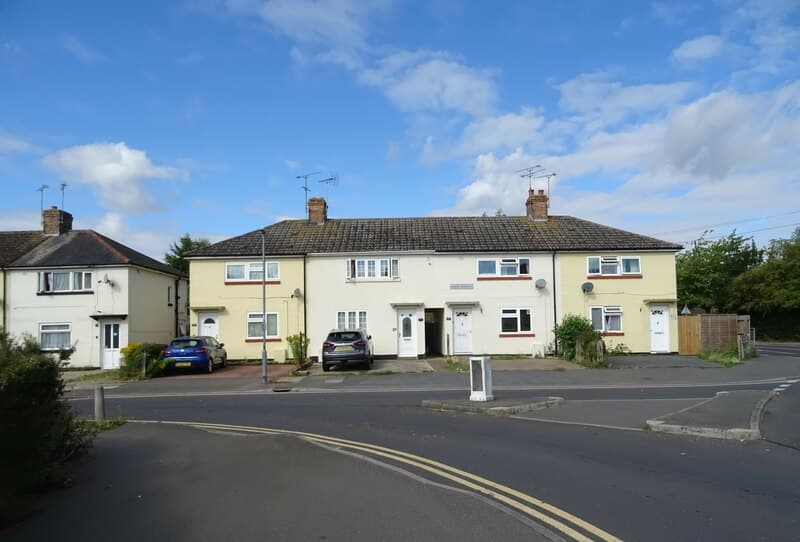
A complaint to a redress scheme is a formal dispute raised by a consumer against an agent, decided by an independent ombudsman rather than a court. The figures published on 4 August 2026 show the volume of those complaints climbing sharply.
What did the new figures actually say?
The Property Ombudsman reported a 55% increase in complaints in the first half of 2026 compared with the first half of 2025. It announced the figure alongside a new online portal for member agencies, built to handle the extra caseload.
With demand for our service increasing significantly, this portal is an important step in making support simpler, faster and more accessible for members. Lesley Horton, Chief Property Ombudsman, 4 August 2026.
Why are complaints rising now?
Three things happened at once, and none of them is a story about agents getting worse at their jobs.
- Sales got longer. The average time from offer accepted to exchange of contracts reached 104 days in April 2026, the first April on record above 100 days, according to Connells Group research published on 11 May 2026.
- Sales got more fragile. 37% of sales agreed in 2025 never reached completion, and 23% of those collapses came more than three months after the sale was agreed, up from 18% in 2019.
- Sellers got more informed. Greater awareness of consumer rights, housing reform, and readily available help in writing a submission have all made people more willing to raise a formal complaint rather than absorb the frustration.
A sale that runs for seven months has far more points at which a phone call gets missed, an update goes unsent, or an expectation goes unmanaged. Volume of complaints tracks length of transaction more closely than it tracks quality of service.
What does the market behind these numbers look like?
The 2026 market conditions behind the rise in complaints. ValuQ summary of published data.
| What changed | The figure | Source and date |
|---|---|---|
| Offer to exchange | 104 days in April 2026, up from 76 days in April 2019 | Connells Group, 11 May 2026 |
| Leasehold vs freehold time to exchange | 155 days vs 97 days, the widest gap on record | Connells Group, 11 May 2026 |
| Agreed sales that never completed | 37% during 2025 | Connells Group, 11 May 2026 |
| New homes listed for sale | 794,000 in the first five months of 2026, a ten-year high | TwentyCi, 18 June 2026 |
| Annual house price growth | 1.8% in July 2026, down from 2.2% in June | Nationwide House Price Index, 31 July 2026 |
| Bank of England base rate | Held at 3.75% on 30 July 2026 | Bank of England, 30 July 2026 |
More homes on the market and slightly slower price growth means each sale takes more work to hold together. That pressure lands on the agent and on the seller at the same time.
What can a seller actually complain about?
Redress covers how an agent behaved, not whether you liked the outcome. A disappointing sale price is not a complaint. A failure to pass on an offer, an unexplained fee, or weeks of silence is.
- Offers that were never passed on to you.
- Fees or contract terms that were not made clear before you signed.
- Marketing that was promised and never delivered.
- Long periods with no contact and no answer to direct questions.
- Poor handling of your personal information.
Every estate agent in the UK must be a member of a government-approved redress scheme in order to trade. Raising a complaint through that scheme costs the consumer nothing.
How do I protect myself before there is anything to complain about?
The seller with a clear record has a short complaint. The seller relying on memory has a long one.
- Get the fee, the tie-in period, and the notice period in writing before you sign anything.
- Ask for viewing feedback and offers to come to you by email, so there is a dated record of both.
- Keep every valuation you were given, including the ones you turned down.
- Put questions in writing when a sale goes quiet, and note the date you asked.
- Raise a concern with the agency in writing first. A redress scheme will normally ask you to give the agent a chance to put it right before it takes the case.
Does this mean agents are getting worse?
The figures do not support that reading. Complaint volumes rose in a year when transactions ran longer, stock hit a ten-year high, and consumers became more aware of the redress route open to them.
Most complaints are about communication rather than competence. The agents who come through a slow market well are the ones who tell a seller what is happening before the seller has to ask.
This is where the choice of agent at the start does most of the work. ValuQ gives UK homeowners free, side-by-side property valuations from competing local estate agents, so a seller can compare valuation, fee and strategy on one screen before speaking to anyone. An agent who wins on merit has a reason to keep the seller informed.
Sources
- [1]Property Industry Eye, TPO launches member portal as agency complaints surge · 2026-08-04 · https://propertyindustryeye.com/tpo-launches-member-portal-as-agency-complaints-surge/
- [2]Connells Group, Conveyancing delays push time to exchange contracts past 100 days · 2026-05-11 · https://www.connellsgroup.co.uk/news/2026/05/11/conveyancing-delays-push-time-to-exchange-contracts-past-100-days/
- [3]Mortgage Finance Gazette, New property listings reach a 10-year high: TwentyCi · 2026-06-18 · https://www.mortgagefinancegazette.com/market-news/new-property-listings-reach-a-10-year-high-twentyci-18-06-2026/
- [4]Nationwide House Price Index, July 2026 · 2026-07-31 · https://www.nationwide.co.uk/media/hpi/
- [5]The Property Ombudsman · 2026-08-04 · https://www.tpos.co.uk/
Terms in this article
Plain-English definitions from the ValuQ property glossary.
Base rate
The base rate is the interest rate the Bank of England sets, which flows through to mortgage pricing across the market.
Redress scheme
A redress scheme is the independent complaints body every UK estate agent must belong to by law, empowered to order compensation.
Exchange of contracts
Exchange of contracts is the moment a sale becomes legally binding, when the two signed contracts are formally swapped and the deposit is paid.
Viewing feedback
Viewing feedback is what buyers tell the agent after seeing your home, reported back to you.
Tie-in period
The tie-in period is the minimum time an agency agreement locks you to one estate agent.
Read next
Related insights
Two in five flats bought in 2021 are worth less as fixes end
What is the TA6 form, and what changed in 2026?
My buyer wants to pay a 5% deposit on exchange. Should I agree?
My buyer wants to come back and measure up. Should I let them?
See every local agent on one screen.
Free for homeowners. Always. No cold calls. No data sales. No starting-line advantage for the fastest dialler in town.
Get your free anonymous valuationSellers and buyers never pay.