Modern method of auction: should I sell my house that way?
Published 18 August 2026 · 6 min read · By Evren Ergin
You can sell through the modern method of auction, and more sellers are doing it: purchases by this route rose 14.5% in the year to August 2026. It is usually free for you as the seller because the buyer pays a reservation fee instead, and that fee is the thing to understand before you agree to anything.
TL;DR
- •The modern method of auction is an online auction run over about 30 days, after which the buyer has 56 days to complete.
- •The seller normally pays no fee, because the buyer pays a non-refundable reservation fee of at least 3% including VAT or a minimum of £6,000, whichever is higher.
- •That fee comes out of the buyer's cash before they bid, so it reduces what they can afford to offer for the property itself.
- •The speed is real: Lomond reported these sales completing in an average of 56 days against 98 days for other methods.
Advertisement

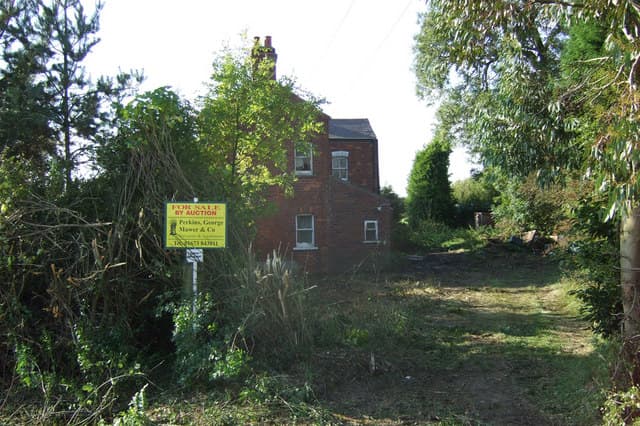
More homes are being sold this way than a year ago. On 18 August 2026, Property Industry Eye reported figures from the agency network Lomond showing house purchases through the modern method of auction up 14.5% year on year, with completions up 9.4%.
The appeal is speed. Conventional sales have been getting slower for two years, and an auction route with a fixed deadline looks like a way out of that.
What is the modern method of auction?
The modern method of auction is an online property auction held over a longer window than a traditional auction, usually around 30 days, with the sale completing to a fixed timetable afterwards. It is sometimes called conditional auction, because the winning bidder does not exchange contracts on the day the bidding ends.
That is the difference from a traditional auction. In a traditional auction the hammer falling is the exchange of contracts, and the buyer is legally committed there and then. Under the modern method the buyer instead pays a reservation fee and takes a fixed period to arrange their mortgage and exchange.
How does a modern method of auction sale actually work?
- You agree a reserve price with the auction partner, usually through an estate agent who offers the service.
- The property is listed with a starting bid and a guide price, and bidding runs online for roughly 30 days.
- When bidding closes, the highest bidder above the reserve wins and immediately pays a non-refundable reservation fee.
- The buyer then has a fixed period, commonly 28 days, to exchange contracts.
- Completion follows, with the whole post-bidding period typically capped at 56 days.
The reservation fee is what holds that timetable together. It is money the buyer loses if they walk away, which is why the drop-out rate is lower than a normal sale.
Why are more homes selling this way in 2026?
Because the conventional route has become slow. Rightmove reported on 31 July 2026 that the average move in Great Britain now takes 216 days from listing to completion, the longest at that point in the year since its records began, with 154 of those days falling after a buyer has already been found.
Against that, Lomond put the average modern method of auction sale at 56 days to complete, compared with 98 days for other methods. Regional growth has been uneven: auction listings in Yorkshire rose 25% year on year in the first quarter of 2026, and completions in Manchester rose 13.6%.
A deadline that costs the buyer money if they miss it is a real form of certainty. It is also a cost, and somebody is always paying it.
What does it cost, and who actually pays?
A reservation fee is a payment the winning bidder makes to secure the property, separate from the purchase price and not deducted from it. According to the HomeOwners Alliance, it is typically at least 3% including VAT, or a minimum of £6,000 including VAT, whichever is higher.
On a home priced at £275,000 that is roughly £8,250, payable straight away. It cannot come out of the buyer's mortgage, so it has to be cash they already hold, and it counts towards their stamp duty calculation.
Modern method of auction compared with a standard private treaty sale
| What you are comparing | Modern method of auction | Standard sale through an agent |
|---|---|---|
| Who pays the selling fee | Usually the buyer, as a reservation fee | Usually the seller, as agent commission |
| Typical size of that fee | At least 3% inc VAT, minimum £6,000 inc VAT | Commonly around 1% to 1.5% plus VAT |
| When the buyer is committed | On paying the reservation fee | On exchange of contracts |
| If the buyer pulls out | They forfeit the reservation fee | They usually lose only their own costs |
| Average time to complete | 56 days | 98 days |
| Price certainty for you | Reserve price protects the floor | Open to renegotiation at any point |
Fee sizes for a standard sale come from ValuQ's own guide to estate agent fees. The auction figures come from the HomeOwners Alliance and from Lomond's data reported on 18 August 2026.
If the seller pays nothing, where is the catch?
The catch is arithmetic. A buyer with £30,000 of savings who has to hand over £8,250 the moment they win has £8,250 less to put into the price of your house.
The HomeOwners Alliance is direct about this: the fee reduces a buyer's purchasing power. So a sale that is free to you at the point of listing can still show up in the price you achieve, and the honest way to judge it is to compare the likely final figure against what a standard sale would net you after commission.
What should I weigh up before agreeing to sell this way?
- Your reserve price, which is the floor below which you do not have to sell. Set it with more than one valuation behind you, not one.
- Whether your buyer pool needs a mortgage. Homes that lenders will not lend on suit auction well; ordinary family homes may simply reach a wider audience through a normal listing.
- The size of the reservation fee relative to your asking price, because that is money leaving the buyer's budget.
- Whether you are genuinely time-pressured. If a fixed 56-day completion solves a real problem for you, the trade-off may be worth it.
- What the same agent would forecast for a standard sale, so you are comparing two real numbers rather than one.
What are the risks for me as the seller?
- A buyer can still fail to complete. They lose their fee, but you lose the time and go back to market.
- Guide prices set low to attract bidding can anchor expectations below your home's value if the reserve is not set carefully.
- Not every buyer will engage with the format, so a home with broad mainstream appeal may see fewer bidders than it would viewers.
- The auction partner's terms are a contract. Read what happens if you withdraw, and what the tie-in is.
Is the modern method of auction the same as a traditional auction?
No. In a traditional auction the winning bid exchanges contracts immediately and the buyer is legally bound on the day. Under the modern method the buyer pays a non-refundable reservation fee instead, then has a fixed period, commonly 28 days, to exchange contracts and 56 days in total to complete.
Do I pay anything as the seller?
Usually not. The standard structure charges the buyer a reservation fee rather than charging you commission. Check your own agreement, because some sellers are charged an entry or marketing fee, and that is separate from the buyer's reservation fee.
Is my house safe if bidding does not reach my price?
Yes, provided you set a reserve. The reserve is the minimum price at which you are willing to sell, and the property does not sell below it. The guide price advertised to buyers is a marketing figure and is usually set lower to attract interest.
What happens if the buyer pulls out after winning?
They forfeit the reservation fee, which is non-refundable except in narrow circumstances such as the seller deliberately frustrating the sale. The HomeOwners Alliance records a case where a buyer lost £13,650 after withdrawing. Your property returns to the market and you start again.
Are these sales really faster?
The data says yes. Lomond reported an average of 56 days to complete against 98 days for other methods, and Rightmove put the whole-market average at 216 days from listing to completion on 31 July 2026. The fixed deadline and the money at stake are what compress the timetable.
Will I get less for my house?
Possibly, and it depends on the buyer. Because the reservation fee has to be paid in cash on top of the price, a buyer with limited savings has less left to bid. A cash-rich buyer or an investor may be unaffected. Compare the likely auction result against a standard sale net of commission before you decide.
How should I decide?
Get more than one view of what your home is worth and what it would realistically achieve on the open market, then set the auction result against that. A route that is free to you is still worth measuring, because the number that matters is what lands in your account at the end.
ValuQ gives UK homeowners free, side-by-side property valuations from competing local estate agents, so you can see several opinions on price and strategy on one screen before you commit to any selling method. The decision, and the timing, stay yours.
Sources
- [1]Property Industry Eye, House sales via modern method auction up almost 15% year-on-year (Lomond data) · 2026-08-18 · https://propertyindustryeye.com/house-sales-via-modern-method-auction-up-almost-15-year-on-year/
- [2]HomeOwners Alliance, Modern Methods Of Auction: The Pitfalls For Buyers To Avoid · 2026-01-01 · https://hoa.org.uk/advice/guides-for-homeowners/i-am-buying/modern-auction-pitfalls/
- [3]Property Industry Eye, Estate agents face longest wait on record to get paid (Rightmove data) · 2026-07-31 · https://propertyindustryeye.com/estate-agents-face-longest-wait-on-record-to-get-paid/
- [4]Fosters Solicitors, What is the Modern Method of Auction? · 2026-01-01 · https://fosters-solicitors.co.uk/insight/modern-method-of-auction
Terms in this article
Plain-English definitions from the ValuQ property glossary.
Modern method of auction
The modern method of auction sells online with the winning bidder paying a reservation fee for an exclusive period, commonly 56 days, to exchange and complete.
Exchange of contracts
Exchange of contracts is the moment a sale becomes legally binding, when the two signed contracts are formally swapped and the deposit is paid.
Traditional auction
A traditional auction sells a property with contracts exchanging the moment the hammer falls, the buyer paying a deposit that day and completing within the stated period, commonly 28 days.
Renegotiation
Renegotiation is reopening the agreed price after the survey or searches reveal something the offer did not account for.
Reserve price
The reserve price is the confidential minimum a seller will accept at auction, below which the property will not sell.
Guide price
A guide price is an indicative figure a property is expected to sell around, used where the final price is genuinely uncertain.
Stamp duty land tax (SDLT)
Stamp duty land tax is the tax buyers pay on property purchases in England and Northern Ireland, charged in slices at rising rates.
Auction completion timescales
Auction completion timescales are the fixed periods to finish the purchase: commonly 28 days from a traditional auction and 56 from the modern method.
Read next
Related insights
My buyer wants me to pay towards their costs. Should I?
House price growth halves to 0.8%. What now for sellers?
Should I sell my house first or buy first?
Mortgage approvals hit their lowest since 2023. What now?
What is your home worth today?
ValuQ gives UK homeowners free, side-by-side property valuations from competing local estate agents. Anonymous until you choose. No cold calls.
Get your free anonymous valuationSellers and buyers never pay.