Half of homes rated D or worse stayed below C for another decade
Published 10 June 2026 · 5 min read · By Evren Ergin
ValuQ matched 1.98 million homes in England and Wales that hold two energy certificates a median ten years apart, and among the 1.22 million that started at band D or worse, 52.4% were still below band C at the second test. After a decade of insulation schemes, boiler upgrades and net-zero noise, the country's leakiest homes mostly stayed leaky.
TL;DR
- •ValuQ analysed 1,982,553 homes with two EPC assessments roughly a decade apart, the largest possible same-home comparison from the public register.
- •Of homes that started at band D or worse, 52.4% had still not reached band C by the second assessment, and 35.1% had not improved their band at all.
- •11.4% of all re-assessed homes scored a worse band the second time.
- •The stuck homes cluster in rural and coastal England: King's Lynn and West Norfolk (71.7% still below C), Cornwall (68.5%) and Westmorland and Furness (66.0%) top the table.
- •Basildon beats the national average: 42.9% of its D-or-worse homes were still below C, against 52.4% nationally.
Advertisement

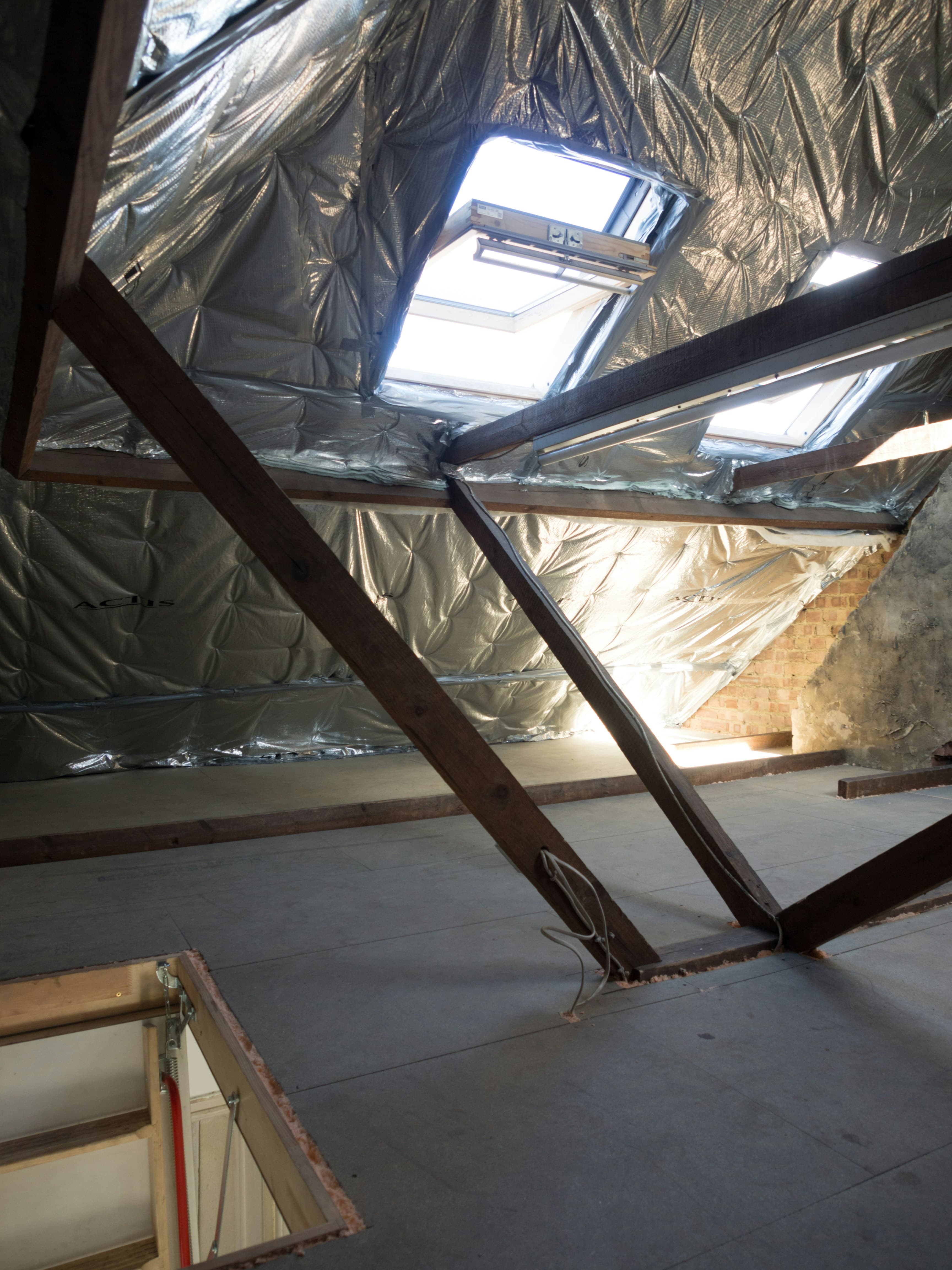
Research by ValuQ: we took the full domestic Energy Performance Certificate register for England and Wales, found every home with two certificates lodged at least eight years apart under the same property reference, and compared the first assessment with the latest one. It is the same home, tested twice, 1.98 million times over.
ValuQ Property Watch. An Energy Performance Certificate, or EPC, grades a home's energy efficiency from A (best) to G (worst), and band C is the level governments keep pointing the country toward. The register quietly records what a decade of upgrade schemes actually achieved, home by home. Nobody had run that comparison at full scale. We did.
Do homes actually improve their energy rating over a decade?
Mostly not by much. Across all 1.98 million re-assessed homes, 46.5% landed in exactly the same band as a decade earlier and 11.4% came back worse; 42.1% improved. The average efficiency score rose just 5.6 points on the 1-to-100 scale, roughly half a band's width, in around ten years.
ValuQ analysis: 1,982,553 homes tested twice, a median 10 years apart (EPC register, England and Wales)
| Outcome at second test | Share of homes |
|---|---|
| Better band | 42.1% |
| Same band | 46.5% |
| Worse band | 11.4% |
The sharper question is what happened to the homes that needed the work: the 1.22 million that started at band D, E, F or G. More than half, 52.4%, were still below band C when re-tested. About a third, 35.1%, had not moved up a single band. Only 2.9% of these improvable homes got worse, so the leaky stock rarely deteriorates further; it just stays put.
Where are homes most stuck below band C?
ValuQ analysis: homes starting at band D or worse that were still below C a decade later, council areas with at least 3,000 such homes
| Most stuck | Still below C | Least stuck | Still below C |
|---|---|---|---|
| King's Lynn and West Norfolk | 71.7% | Knowsley | 23.8% |
| Cornwall | 68.5% | Rochdale | 37.2% |
| Westmorland and Furness | 66.0% | North Tyneside | 38.1% |
| Carmarthenshire | 64.8% | Harlow | 38.2% |
| Tendring | 64.4% | Sunderland | 38.8% |
The pattern is consistent. The stuck columns are rural and coastal: older solid-wall cottages, homes off the gas grid, places where a heat pump or external insulation is a five-figure job. The improved columns are urban and northern, where cavity-walled terraces met a decade of funded efficiency schemes. Harlow, a New Town built with cavity walls from day one, sits among the national leaders.
How did Basildon do?
Better than the country. Of Basildon borough's re-assessed homes that started at D or worse, 42.9% were still below C, nearly ten points better than the 52.4% national figure. Post-war New Town construction takes retrofit well: cavity walls, regular layouts, gas heating. The borough's housing stock has absorbed a decade of efficiency work more successfully than most of England.
Why does a stuck EPC matter when you sell?
- Buyers see the band on every listing, and mortgage lenders increasingly price against it. Two otherwise identical homes can sit a band apart and sell differently.
- If your certificate is a decade old, your home may test differently today even if you changed nothing: assessment methods have been updated over the years, in both directions.
- If you have done real work, new boiler, insulation, windows, solar, an out-of-date certificate is underselling it. The register only knows what the last assessor saw.
A decade of energy schemes was supposed to move the country's coldest homes to band C. The register says half of them never arrived. For an owner, the lesson is smaller and more useful: know what your home would score today, because the certificate from 2014 is describing a home that may no longer exist. Evren Ergin, founder of ValuQ.
How we did this
ValuQ used the full domestic EPC register for England and Wales, published by the Ministry of Housing, Communities and Local Government and current to 1 June 2026. Homes were matched on their Unique Property Reference Number; we compared each home's earliest certificate with its latest where the two are at least eight years apart (median gap 10.0 years), giving 1,982,553 paired homes, 1,218,542 of which started at band D or worse. Council-area tables include areas with at least 3,000 such paired homes.
Honest limits. Homes are usually re-assessed because they are sold, let, or have just had funded work done, and improvement work itself often triggers a fresh certificate. That biases this sample toward improvers, so the true share of stuck homes across all housing is likely higher than 52.4%, not lower. Assessment methodology has also been revised over the years, which can shift an individual rating without any physical change; we compare bands rather than point scores to blunt that effect, and it cuts in both directions.
What should an owner with an old certificate do?
Before spending a pound on upgrades for sale, find out what the home is worth as it stands. ValuQ gives UK homeowners free, side-by-side property valuations from competing local estate agents, anonymously until you choose to connect, and local agents see every week how much an energy band actually moves buyers in your area. Free for homeowners, always.
Sources
- [1]MHCLG, Energy Performance of Buildings Register: full domestic certificates dataset · 2026-06-01 · https://get-energy-performance-data.communities.gov.uk/
- [2]MHCLG, Energy certificate data: guidance and methodology · 2026 · https://get-energy-performance-data.communities.gov.uk/guidance
- [3]HM Land Registry, Price Paid Data (context on sale-triggered assessments) · 2026 (data to 30 Apr 2026) · https://www.gov.uk/government/statistical-data-sets/price-paid-data-downloads
Read next
Related insights
Does a good school nearby add value to my house?
Should I price my house on what I need for my next one?
House prices now falling in 1 in 3 areas of Britain
What happened to house prices after the last nine Budgets?
What is your home worth today?
ValuQ gives UK homeowners free, side-by-side property valuations from competing local estate agents. Anonymous until you choose. No cold calls.
Get your free anonymous valuationSellers and buyers never pay.