Basildon's New Town homes have outgrown Billericay since 1995
Published 10 June 2026 · 6 min read · By Evren Ergin
The Act that built Basildon turns 80 this summer, and ValuQ's analysis of every recorded sale since 1995 shows its New Town estates have multiplied in value 6.6 times, against 5.8 in Billericay and 5.6 in Wickford. One borough, three markets, and the fastest growth came from the homes the planners built.
TL;DR
- •Since 1995, the median sale price in Basildon's New Town postcodes (SS13 to SS16) has risen from £49,000 to £325,000, a 6.6 times multiple.
- •Billericay rose 5.8 times (£82,000 to £475,000) and Wickford 5.6 times (£67,500 to £380,000) over the same period, in the same borough.
- •For terraced homes the gap is wider still: 7.1 times in the New Town against 6.25 in Billericay.
- •The cash gap has stretched the other way: Billericay's median is now £150,000 above the New Town's, up from £33,000 in the mid-1990s.
- •Across England's first wave of New Towns, three of six outgrew their old-town neighbours over 30 years, including Basildon, Crawley and Corby.
Advertisement

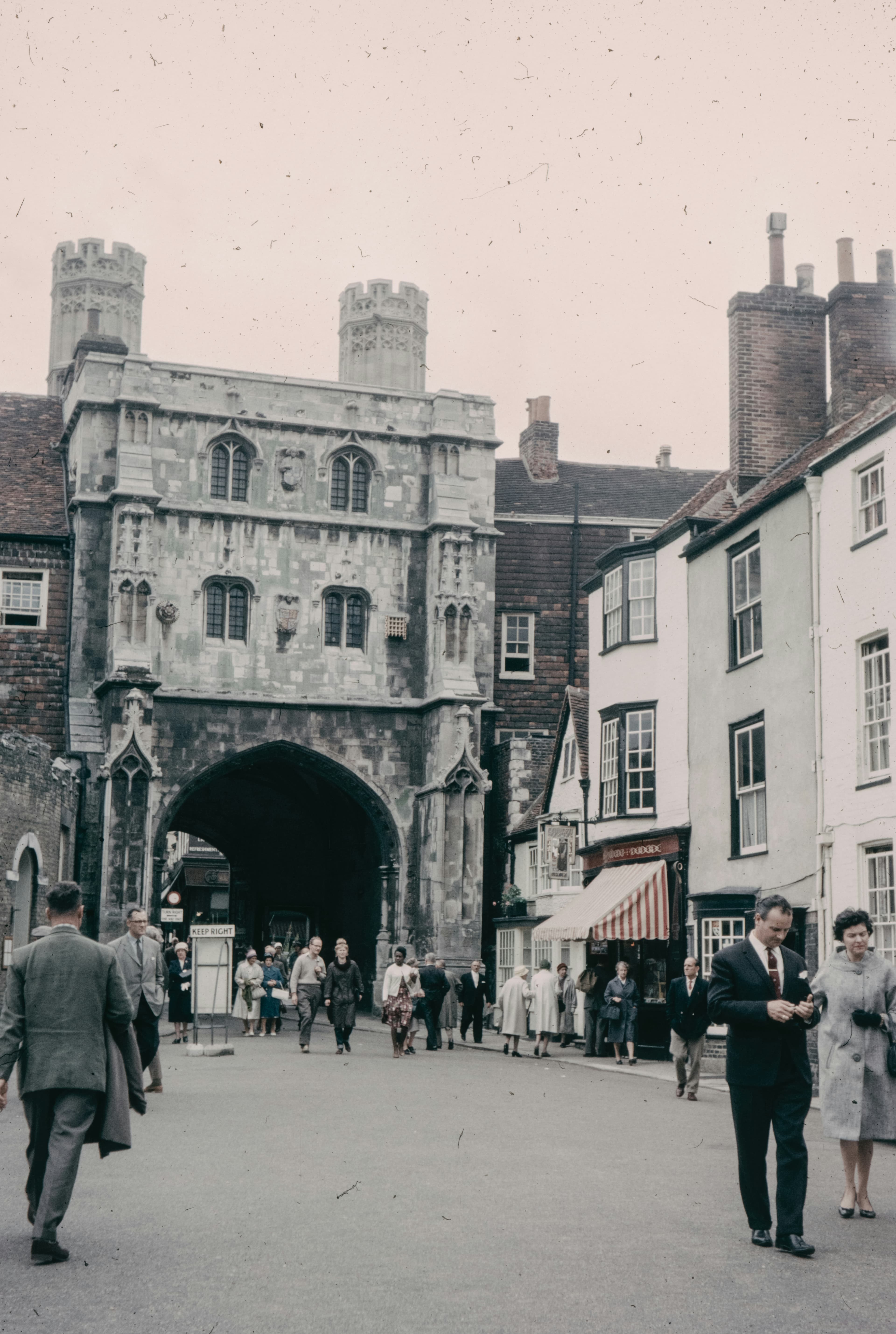
Research by ValuQ: we analysed every open-market sale recorded by HM Land Registry from January 1995 to April 2026 across Basildon borough's three towns, defined by postcode district (SS13 to SS16 for the New Town, CM11 and CM12 for Billericay, SS11 and SS12 for Wickford), then ran the same comparison for England's other first-wave New Towns and their nearest old-town neighbours.
ValuQ Property Watch. The New Towns Act received royal assent on 1 August 1946, eighty years ago this summer. Basildon, designated under that Act in 1949, was built to rehouse London families in modern homes at speed. Eight decades on, with the government planning a new generation of new towns, the sale records of the first generation tell a story almost nobody expects.
Have Basildon's New Town homes really grown faster than Billericay's?
Yes, in growth terms, and by a clear margin. In 1995 to 1997 the median home in the New Town postcodes of Pitsea, Fryerns, Laindon, Vange and Langdon Hills sold for £49,000. In 2023 to 2026 the median is £325,000. That is a 6.63 times multiple. Billericay's median went from £82,000 to £475,000 (5.79 times) and Wickford's from £67,500 to £380,000 (5.63 times).
ValuQ analysis: one borough, three markets, 1995-97 vs 2023-26 median sale prices (HM Land Registry, all property types)
| Area | Median 1995-97 | Median 2023-26 | Growth multiple |
|---|---|---|---|
| Basildon New Town (SS13-SS16) | £49,000 | £325,000 | 6.63x |
| Billericay (CM11-CM12) | £82,000 | £475,000 | 5.79x |
| Wickford (SS11-SS12) | £67,500 | £380,000 | 5.63x |
The comparison is built on 10,763 sales in the three 1990s windows and 7,467 sales in the 2023-26 windows, so this is not a quirk of thin data. Restrict it to terraced homes, the New Town's signature stock, and the gap widens: 7.11 times growth in the New Town against 6.25 in Billericay and 5.60 in Wickford.
If the New Town grew faster, why does Billericay still cost so much more?
Because multiples and pounds move differently. In the mid-1990s the gap between a median Billericay home and a median New Town home was £33,000. Today it is £150,000. The cheaper stock grew faster in percentage terms, as cheaper stock usually does, while the absolute gap stretched to its widest on record. Both things are true at once: the New Town owner got the better growth rate, the Billericay owner banked more pounds.
Did the other 1940s New Towns beat their neighbours too?
The 2024 national coverage of New Towns said their prices had stalled year-on-year. Over thirty years the picture splits down the middle. ValuQ ran the same paired comparison for six first-wave New Towns, each against the established town next door, all defined by postcode district.
ValuQ analysis: first-wave New Towns vs old-town neighbours, growth multiple 1995-97 to 2023-26
| New Town | Multiple | Old-town neighbour | Multiple | Faster grower |
|---|---|---|---|---|
| Basildon | 6.63x | Billericay and Wickford | 5.68x | New Town |
| Corby | 6.35x | Kettering | 6.11x | New Town |
| Crawley | 5.53x | Horsham | 5.12x | New Town |
| Harlow | 5.32x | Bishop's Stortford | 5.36x | Too close to call |
| Stevenage | 5.91x | Hitchin | 6.34x | Old town |
| Hemel Hempstead | 5.73x | Berkhamsted | 6.10x | Old town |
Three of six New Towns outgrew the old town next door, one tied, two fell behind. For a programme regularly written off as a property-market failure, that is a draw at worst. Basildon posted the strongest New Town multiple of all six.
Basildon gets talked about as the cheap seat next to Billericay. The record shows something different: pound for pound, the New Town has been the borough's best-performing investment for thirty years. The families who bought the planners' houses did better in growth terms than the families who bought the older streets. Evren Ergin, founder of ValuQ.
What does this mean if you own a home in one of these towns?
- A New Town home bought in the late 1990s for £49,000 now sits near £325,000 at the median. Many owners have not had a professional opinion on it in decades.
- The three towns are one borough but three distinct markets, and they move at different speeds. A valuation built on borough-wide averages will miss your town's own track.
- Billericay and Wickford owners hold the borough's highest price points, which makes the choice of agent and asking strategy worth more in pounds, not less.
How we did this
ValuQ analysed HM Land Registry Price Paid data, standard open-market sales (category A) from 1 January 1995 to 30 April 2026. Towns are defined by postcode district: Basildon New Town SS13-SS16, Billericay CM11-CM12, Wickford SS11-SS12, and equivalent districts for the national pairs (Stevenage SG1-SG2 vs Hitchin SG4-SG5, Harlow CM17-CM20 vs Bishop's Stortford CM23, Crawley RH10-RH11 vs Horsham RH12-RH13, Hemel Hempstead HP1-HP3 vs Berkhamsted HP4, Corby NN17-NN18 vs Kettering NN15-NN16). Growth compares the median sale in 1995-97 with the median in 2023-26; three-to-four-year windows smooth single-year noise. Medians reflect the homes actually sold in each period, so a shift in the mix of homes sold can move them; the terraced-only check above guards the headline against that.
Postcode districts do not follow council boundaries exactly: a few streets at the edges sit in neighbouring areas, and SS13 to SS16 includes some homes that predate the New Town. These edges blur the comparison slightly; they do not produce a 0.9 difference in growth multiple.
What should an owner do with this?
Compare before you commit. If your home is in the New Town's postcodes, its growth story is stronger than its reputation, and the right local agent will price it on the record, not the reputation. ValuQ gives UK homeowners free, side-by-side property valuations from competing local estate agents, anonymously until you choose to connect. Free for homeowners, always.
Sources
- [1]HM Land Registry, Price Paid Data (complete file, transactions to 30 April 2026) · 2026 (data to 30 Apr 2026) · https://www.gov.uk/government/statistical-data-sets/price-paid-data-downloads
- [2]New Towns Act 1946 (royal assent 1 August 1946) · 1946-08-01 · https://www.legislation.gov.uk/ukpga/Geo6/9-10/68/enacted
- [3]ValuQ Basildon property market data (SS13-SS16 breakdown) · 2026-05-07 · https://valuq.co.uk/basildon/property-market
Terms in this article
Plain-English definitions from the ValuQ property glossary.
Read next
Related insights
In Basildon, the step up to a detached shrank by up to £23,500
A Basildon house on a Close sells 4.4% below its neighbours
Does a good school nearby add value to my house?
Should I price my house on what I need for my next one?
What is your home worth today?
ValuQ gives UK homeowners free, side-by-side property valuations from competing local estate agents. Anonymous until you choose. No cold calls.
Get your free anonymous valuationSellers and buyers never pay.