My neighbour sold for more. Is my house worth the same?
Published 15 July 2026 · 5 min read · By Evren Ergin
A higher sale next door does not automatically mean your home is worth the same, and a lower one does not mean it is worth less. Two similar-looking homes can sell for very different figures because of condition, layout, the exact date they sold and how each deal was negotiated.
TL;DR
- •Sold prices are public on HM Land Registry, but they record the price only, not the condition, extensions or fixed problems that moved it.
- •Your neighbour's sale reflects their specific home and their specific deal on one day, not a price tag for the whole street.
- •The reliable way to know your own value is to compare several up-to-date valuations against recent local sold prices.
- •ValuQ gives you free, side-by-side valuations from competing local agents, so you see the real range for your home rather than a guess.
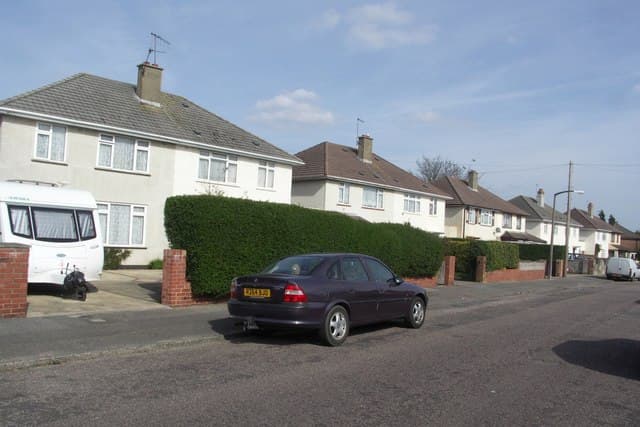
This is one of the most common worries a homeowner has, and it rarely means what people fear. A sold price is the figure one specific buyer paid one specific seller for a single home on a single day, recorded by HM Land Registry once the sale completes. It is a real number, but it belongs to that home and that deal, not to your address.
Why did my neighbour's house sell for more than mine might?
Because two homes that look alike from the pavement are often very different once you step inside and read the fine print of each sale. Condition, space, outlook and the circumstances of the buyer all move the final figure.
- Condition and updates, such as a new kitchen, boiler, rewire or extension.
- Layout and size, such as an extra bedroom, a converted loft or a bigger plot.
- Aspect and outlook, such as a south-facing garden, no road noise or a better view.
- Timing, such as a sale agreed in a busier month or during a local bidding situation.
- The buyer, such as a chain-free cash buyer paying a premium for speed and certainty.
- The negotiation, meaning how hard each side pushed on the price.
Two similar homes, different prices: what moves them apart
| Factor | Home A | Home B | Effect on price |
|---|---|---|---|
| Kitchen and bathroom | Refitted last year | Original and dated | Buyers pay more for move-in-ready |
| Extension | Two-storey side extension | None | Extra floor space adds value |
| Garden | South-facing and private | North-facing and overlooked | Light and privacy command a premium |
| Sale timing | Agreed in a busy spring | Agreed in a quiet winter | Demand shifts the achievable price |
| Buyer | Chain-free cash buyer | Buyer in a long chain | Certainty can be worth a few thousand |
How do I find out what my house is actually worth?
1. Pull the recent sold prices on your street
Check HM Land Registry sold prices, or a free local sold-price tool, to see what nearby homes actually completed at, and note how many months ago each sale was.
2. Compare like with like
Match on the details that move price, meaning bedrooms, floor space, condition, extensions and garden, not just the postcode.
3. Get more than one valuation
Invite several local agents to value your home so you see a range rather than a single opinion, because one agent can be high and another cautious.
4. Check each valuation against the evidence
Ask every agent which recent sales they based their figure on, and treat a number with no comparable sales behind it with caution.
5. Set your asking price on the evidence, not the neighbour
Price against verified recent sales and the honest condition of your own home, then let buyer interest confirm or correct it.
Should I just copy my neighbour's asking price?
No. An asking price is a hope, not a result, and copying a number without matching the home is how houses end up overpriced and stuck. Bear in mind that even the same street moves month to month: Rightmove recorded a 0.6% dip in new asking prices in June 2026, and sold prices only appear on HM Land Registry weeks after completion, so a recent sale next door may already be months old.
Are sold prices on Land Registry accurate?
Yes, they are the real completed price, but they record only the price, not the home's condition, size or improvements, so two similar addresses can differ for good reasons.
Can my house be worth more than my neighbour's identical one?
Yes. Updates, an extension, a better garden, a chain-free position, or simply a keener buyer on the day can all push one price above another.
How many valuations should I get?
At least two or three, so you see a range rather than trusting a single figure. A high outlier with no comparable sales behind it is a warning, not a windfall.
ValuQ gives UK homeowners free, side-by-side property valuations from competing local estate agents, so instead of guessing from one sale next door, you see several expert views on one screen with the evidence behind each. Comparing before you commit is the whole point. It turns a rumour about the street into a real, defensible figure for your own home.
One sale next door is a data point, not a valuation.
Sources
- [1]HM Land Registry UK House Price Index and Price Paid Data (April 2026 data) · 2026-06-17 · https://www.gov.uk/government/collections/uk-house-price-index-reports
- [2]Rightmove House Price Index, June 2026 · 2026-06-15 · https://www.rightmove.co.uk/news/house-price-index/
- [3]Zoopla, How long does it take to sell a house? · 2026-07-01 · https://www.zoopla.co.uk/discover/selling/how-long-does-it-take-to-sell-a-house/
Read next
Related insights
Asking prices fell 1% in July. Is my house worth less?
A buyer offered under asking. Should I accept or hold out?
Can I ask my estate agent to redo my listing photos?
Family homes lost value in 53 areas last year. None were northern.
See every local agent on one screen.
Free for homeowners. Always. No cold calls. No data sales. No starting-line advantage for the fastest dialler in town.
Get your free anonymous valuationSellers and buyers never pay.