My house won't sell. Should I rent it out instead?
Published 17 August 2026 · 7 min read · By Evren Ergin
Letting is a reasonable plan B, but it is a different job with different rules, and you cannot simply hand the keys over and wait for the market to improve. You need your lender's permission first, and the tax position changes in ways that quietly cost money later, so work through both before you take the board down.
TL;DR
- •You need consent to let from your mortgage lender. Letting a home on a residential mortgage without it breaches your mortgage terms.
- •Rental income is taxable. The first £1,000 of property income is covered by the property allowance, and above that you may need to file a Self Assessment return.
- •Only the last 9 months of ownership keep Private Residence Relief automatically once you have moved out, so a long let can create a Capital Gains Tax bill on a home that would have been tax free.
- •Letting Relief applies only if you lived in the home at the same time as your tenants, so moving out and letting the whole property does not qualify.
- •Before switching plans, test whether the problem is genuinely the market or simply the price and the presentation.
Advertisement

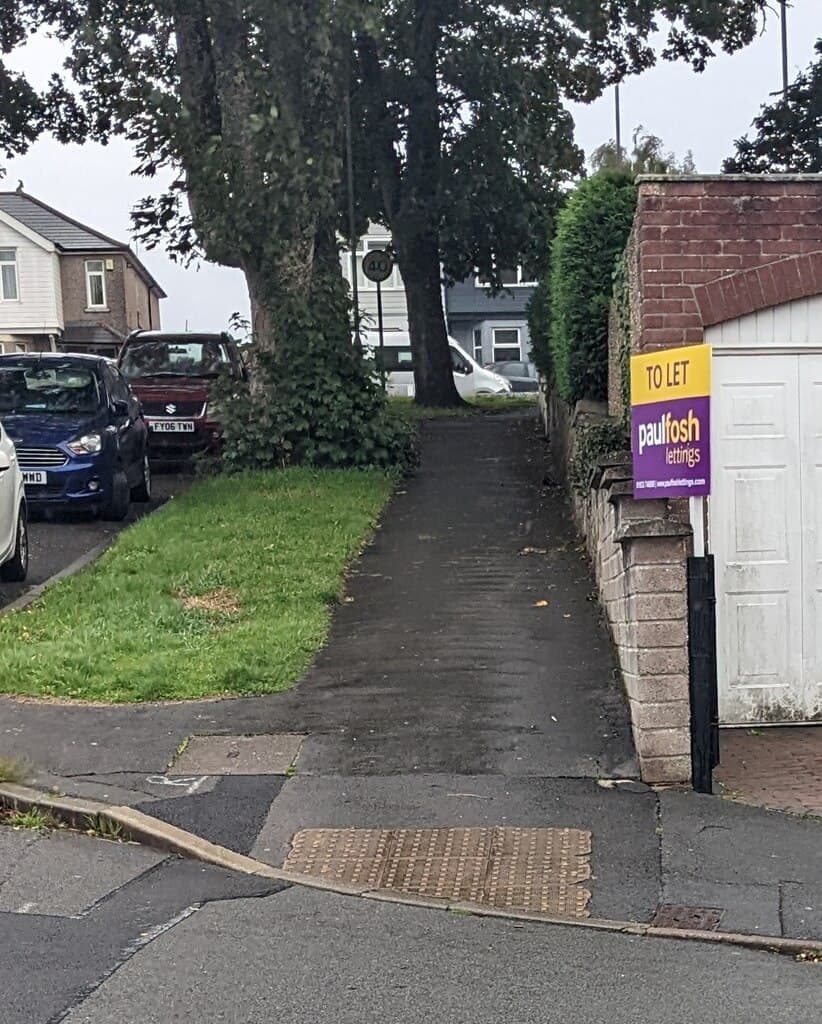
Almost every seller whose home has sat unsold for a few months has this thought, and it is a sensible one to have. Letting turns a stalled asset into income and buys you time. It is worth doing with your eyes open, because the decision has three separate gates and most people only think about the first one.
First, is it really the market, or is it the price?
Be honest about this before you make any other decision, because letting will not fix a pricing problem, it will only postpone it. Asking prices across Britain fell 2% in August 2026 to an average of £364,999, according to Rightmove, and buyer demand is around 10% below last year. There is genuine softness. There is also a large gap between a home that no buyer wants at any price and a home that is priced above what the current evidence supports.
- No viewings at all usually points at the price or the photographs, not the market.
- Viewings but no offers usually points at something on the visit itself, or at a price the buyer cannot justify to a lender.
- Offers that keep collapsing points at the chain or the property's paperwork, not at demand.
- If similar homes near you are selling and yours is not, the market is not the explanation.
Do I need permission from my mortgage lender to let my home?
Yes, in almost every case. Consent to let is temporary permission from your existing lender to rent out a property you hold on a residential mortgage. It is usually granted for a fixed window, often with a fee and sometimes with a rate increase, and it is granted at the lender's discretion rather than as a right.
Letting without that consent breaches your mortgage terms. Lenders can demand repayment of the loan, and an insurer can refuse a claim on a home that is let while insured as owner occupied. This is the first phone call, not the last.
What tax will I pay on the rent?
Rental income is taxable income. HMRC allows a property allowance covering the first £1,000 of income from property rental, which is tax free. Above that, the rules on reporting are set out on GOV.UK:
Reporting rental income to HMRC (GOV.UK guidance)
| Your rental income | What you need to do |
|---|---|
| Up to £1,000 | Covered by the property allowance. Nothing to report. |
| £1,000 to £2,500 after allowable expenses | Contact HMRC directly to agree how to pay. |
| Over £2,500 after allowable expenses | File a Self Assessment tax return. |
| Over £10,000 before allowable expenses | File a Self Assessment tax return. |
If you do not normally file a return, you must register by 5 October following the tax year in which you had rental income. Mortgage interest is no longer deductible as a straightforward expense; relief is given as a basic rate tax credit, which is why higher rate taxpayers often find the profit smaller than the arithmetic on the rent suggests.
Will letting create a Capital Gains Tax bill when I do sell?
It can, and this is the part that surprises people years later. Private Residence Relief is the relief that makes the sale of your own home free of Capital Gains Tax. Once you move out, GOV.UK confirms that relief continues to cover the last 9 months of ownership even if you were not living there.
Beyond those 9 months, the period the property is let is not automatically covered. Letting Relief exists, but GOV.UK is specific that it applies where you lived in your home at the same time as your tenants. Moving out entirely and letting the whole property does not meet that test.
A two year let to wait out the market can convert a completely tax free sale into a taxable one. That is not a reason to rule it out. It is a reason to price it in.
What else changes when you become a landlord?
- Safety obligations: a valid gas safety record, electrical installation condition report and working smoke alarms are legal requirements, not optional extras.
- Deposits: a tenant's deposit must be protected in a government approved scheme.
- Insurance: buildings and contents cover has to be on a landlord policy, not a standard residential one.
- Agency fees: full management typically costs a percentage of the rent every month, on top of the tenant find fee.
- Void periods and repairs: budget for months with no rent and for the boiler that fails in January.
None of this is unmanageable. It is simply a second job with a legal floor, and it should be compared against the cost of the price reduction you were trying to avoid.
Can I sell the house while a tenant is living in it?
You can, but your buyer pool narrows sharply. Most residential buyers want vacant possession, and most residential mortgage lenders will not lend on a property with a tenant in place, which leaves investors and cash buyers. Investors buy on yield, and that generally means a lower price than an owner occupier would pay.
Is renting out my home better than dropping the price?
It depends on the size of the reduction and how long you would let for. Work out the reduction you are avoiding, then set it against a realistic year of net rent after the agency fee, tax, insurance, safety certificates, repairs and a void period, plus any future Capital Gains Tax on the let years. Do that arithmetic before deciding, not after.
How long does consent to let usually last?
Lenders typically grant it for a defined period rather than indefinitely, and they can decline to extend it. Ask your lender what their maximum term is and what happens at the end of it, because the answer shapes how long your plan can actually run.
Can I switch to a buy to let mortgage instead?
That is the other route, and it is a full remortgage rather than a permission. Buy to let deals are assessed on the rent the property can achieve as well as your circumstances, and rates and fees usually differ from residential deals. It suits someone who has decided to keep the property, rather than someone waiting a few months.
Will letting the house damage its value?
Not in itself, but tenanted properties are usually presented less carefully than an owner occupied home for sale, and wear shows. If you intend to sell later, budget for redecoration before you relist.
What if I want to sell again in a year?
Then a short let with your lender's consent, a tenancy that ends when you need it to, and a clear diary note about the 9 month Private Residence Relief window is the shape to aim for. Speak to a tax adviser if the gain on your home is likely to be significant.
How do I decide, calmly?
Take the two options and give each one a real number rather than a feeling. On one side, the reduction that would genuinely sell your home this autumn, and what you would walk away with after fees and your mortgage. On the other, a full year of letting after every cost, plus the tax consequences of the years let.
One of those numbers is usually clearly better, and once you can see both, the decision stops being an anxious one. If the answer is to sell after all, the next question is simply what the right price is, and that is a question of evidence.
ValuQ gives UK homeowners free, side-by-side property valuations from competing local estate agents, so you can see several agents' reasoning on one screen before you decide whether to relist or let.
Sources
- [1]GOV.UK, Renting out your property: paying tax · 2026-08-01 · https://www.gov.uk/renting-out-a-property/paying-tax
- [2]GOV.UK, Tax when you sell your home: if you let out your home · 2026-08-01 · https://www.gov.uk/tax-sell-home/let-out-part-of-home
- [3]Rightmove House Price Index, August 2026 · 2026-08-17 · https://www.rightmove.co.uk/news/house-price-index/
- [4]HomeOwners Alliance, Becoming an accidental landlord · 2026-08-01 · https://hoa.org.uk/advice/guides-for-homeowners/i-am-selling/becoming-accidental-landlord/
- [5]GOV.UK, Renting out a property · 2026-08-01 · https://www.gov.uk/renting-out-a-property
Terms in this article
Plain-English definitions from the ValuQ property glossary.
EICR (electrical report)
An EICR is a qualified electrician's formal report on the safety of a property's wiring and electrical installation.
Private residence relief
Private residence relief is the exemption that makes the sale of your own main home free of capital gains tax for the time you lived in it.
Vacant possession
Vacant possession means the property will be empty of people and belongings when the buyer completes.
RICS Home Survey Level 1
A Level 1 survey is the most basic RICS inspection, reporting visible condition by traffic light with no advice or valuation.
Price reduction
A price reduction is lowering the asking price of a home already on the market to restart buyer interest.
Consent to let
Consent to let is a residential lender's permission to rent out your home temporarily without switching to a buy-to-let mortgage.
Read next
Related insights
Mortgage approvals hit their lowest since 2023. What now?
My house didn't sell last year. Should I try again now?
Mortgage rates rose after I agreed my move. Should I still go?
How many viewings does it take to sell a house?
What is your home worth today?
ValuQ gives UK homeowners free, side-by-side property valuations from competing local estate agents. Anonymous until you choose. No cold calls.
Get your free anonymous valuationSellers and buyers never pay.