Does off-street parking add value when you sell?
Published 29 July 2026 · 6 min read · By Evren Ergin
Off-street parking usually helps, but its value is local rather than national, and published estimates of the premium vary far too widely to be treated as a figure for your home. What parking reliably changes is the number of buyers who will consider your property at all, and from October 2026 the running-cost gap between a home with a driveway and one without gets wider.
TL;DR
- •Off-street parking is any parking on your own land: a driveway, a garage, a car port or an allocated bay.
- •There is no dependable national figure for the premium, because it depends on how scarce parking is on your street.
- •VAT on household electricity drops from 5% to 0% for six months from 1 October 2026, while VAT on public charging stays at 20%.
- •That widens the running-cost gap for electric car drivers, which makes a driveway a more concrete selling point than it was a year ago.
Advertisement

Does a driveway add value to a house?
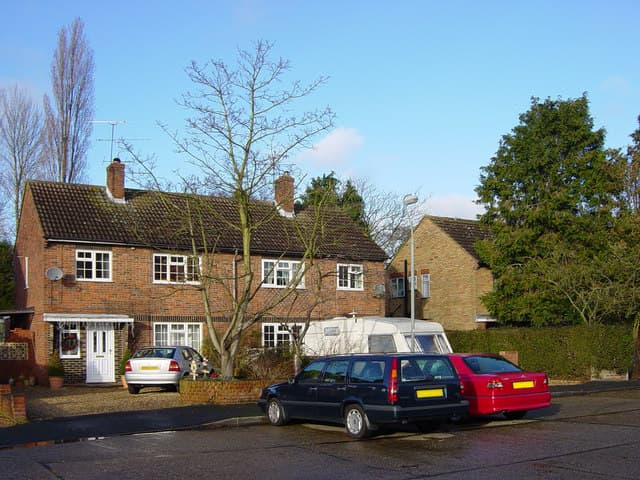
In most areas, yes, though the honest answer is that nobody can give you a reliable national percentage. Off-street parking is any parking on land you own or have exclusive rights to, which covers a driveway, a garage, a car port or an allocated bay. Published estimates of the premium range from a few per cent to well into double figures depending on who produced them, and they are usually drawn from areas nothing like each other.
The more useful way to think about it is buyer pool rather than percentage. On a street with permit-only parking and a long waiting list, a driveway can be the reason a family chooses your house over the identical one four doors down. On a rural lane where everyone parks outside, it barely registers.
Parking is not worth a fixed percentage. It is worth whatever it is worth on your street, which is a question only local evidence can answer.
Why does parking matter more this year than last?
Because the cost of running a car at home and the cost of running it in public are moving apart. The government confirmed on 21 July 2026 that VAT on household electricity bills falls from 5% to 0% from 1 October 2026, worth around £45 a year to a typical household. VAT on public charging stays at 20%.
That matters to any buyer who drives an electric car and is working out whether they can charge at home. It is one of the practical questions buyers now ask on a second viewing, alongside the EPC and the age of the boiler.
Charging at home against charging in public, July 2026
| What you pay | Charging at home | Public rapid charging |
|---|---|---|
| VAT rate | 5%, falling to 0% from 1 October 2026 for six months | 20%, unchanged |
| Typical cost per mile | Around 1.5p on an off-peak tariff | Around 16p to 20p |
| Requires | Off-street parking and a home charge point | Nothing, but you queue and you pay the higher rate |
| Source | GOV.UK, 21 July 2026 | Electric Vehicles UK, reported 29 July 2026 |
One caution on the VAT cut, because it is being oversold in places. MoneySavingExpert pointed out on 21 July 2026 that the October price cap is forecast to rise by about 5.1%, which cancels out much of the saving for households on a standard tariff. The gap between home and public charging is the durable part of this story, not the £45.
How do you find out what parking is worth on your street?
Look at what has actually sold. Find recent sales of the same property type on and around your road, separate the ones with parking from the ones without, and compare the achieved prices rather than the asking prices. Sold price data from HM Land Registry is public, and it reflects what buyers actually paid rather than what sellers hoped for.
- Compare like with like: same property type, same number of bedrooms, sold within the last twelve months.
- Note whether the parking is a driveway, a garage, or a bay, because buyers value them differently and a garage too narrow for a modern car is not really parking.
- Check what the council charges for a residents' permit and whether there is a waiting list, because scarcity is what creates the premium.
- Ask every agent who values your home to point at the specific sold comparables behind their number, not just the number.
ValuQ gives UK homeowners free, side-by-side property valuations from competing local estate agents. When several agents value the same property in the same week, the spread between their figures, and the evidence each one uses to justify it, tells you more about what a feature like parking is worth locally than any national average ever will.
Should you add a driveway before you sell?
Usually not, if the only reason is the sale. Creating a driveway normally means applying to the council to drop the kerb, and depending on the property it can also need planning permission and a surface that drains properly. That is weeks of process before any work starts.
The exception is where a driveway already exists in all but name: a hardstanding with a dropped kerb already in place, or a gravel area that needs tidying rather than creating. Cosmetic work on parking that is already there tends to pay back. Building parking from scratch to win a sale rarely does, because you are spending certain money on an uncertain premium.
How do you market parking properly when you have it?
- Put it in the first line of the listing, not in the seventh bullet. Buyers filter on parking before they read the description.
- Say how many cars fit. Parking for two is a different proposition from parking for one, and buyers with two drivers search for it specifically.
- Photograph it, empty and in daylight. A driveway hidden behind your own car in every photo does not exist as far as a portal browser is concerned.
- Mention a home charge point if you have one, and say where the consumer unit is if a buyer would need to fit one.
- If you have a garage, be straight about whether a car actually fits in it. Buyers find out at the viewing anyway, and being straight builds trust.
What if your home has no off-street parking at all?
Then you sell the property you have, honestly and well. Thousands of homes without parking sell every week, particularly terraces and flats in areas where nobody expects it. What loses sales is not the absence of a driveway, it is a listing that avoids the subject and a viewing where the buyer discovers the permit waiting list for themselves.
- Find out the facts before you list: permit cost, waiting time, whether visitors can park, and how the street looks at 7pm on a weekday.
- Give those facts to your agent in writing so every enquiry gets the same answer.
- Point buyers at what you do have: the station, the bus route, the school run on foot, the bike storage.
- Price it against homes that also have no parking, not against the one down the road with a double drive.
Does any of this matter in a slower market?
It matters more. Rightmove reported on 20 July 2026 that the average asking price fell by 1% over the month to £372,359. When buyers have plenty to choose from, the practical differences between two similar homes decide which one gets the offer, and parking is one of the few differences a buyer can see from the street.
How much value does a driveway add to a house in the UK?
There is no dependable national figure. Published estimates range from a few per cent to more than ten per cent, and they vary by area, property type and how scarce parking is locally. The reliable way to answer it for your home is to compare recent sold prices of similar properties with and without parking on your own street, then ask local agents to justify their valuation against those sales.
Is a garage worth more than a driveway?
Not automatically. Many older garages are too narrow for a modern car, so buyers treat them as storage rather than parking. A garage that genuinely takes a car, or one with power run to it for charging, is worth more than one that does not.
Does a home electric car charge point add value?
It helps rather than transforms. A charge point is worth a few hundred pounds to install against the value of a house, so it works best as a reason to choose your home over a similar one, not as a way to raise your asking price. From 1 October 2026 the running-cost argument behind it gets stronger, because home electricity is zero-rated for VAT while public charging stays at 20%.
Should I mention that parking is permit only?
Yes, and early. A buyer who finds out at the second viewing feels misled, and a buyer who feels misled renegotiates or walks. Stating the permit cost and the waiting time up front filters out the wrong buyers before they waste your time.
Can I convert my front garden into parking?
Often, but it is a project rather than a quick job. You normally need the council's permission to drop the kerb, the surface has to drain properly, and some properties also need planning permission. Start it because you want the parking, not because you are trying to add value before a sale.
Sources
- [1]GOV.UK, Government cuts tax on household electricity bills · 2026-07-21 · https://www.gov.uk/government/news/new-pm-cuts-tax-on-household-electricity-bills-to-give-breathing-space-on-cost-of-living
- [2]MoneySavingExpert, Electricity VAT to be scrapped for six months from 1 October · 2026-07-21 · https://www.moneysavingexpert.com/news/2026/07/electricity-bills-vat-cut-martin-lewis-analysis/
- [3]Property Industry Eye, Home charging tax break widens property divide · 2026-07-29 · https://propertyindustryeye.com/home-charging-tax-break-widens-property-divide/
- [4]Rightmove House Price Index, July 2026 · 2026-07-20 · https://www.rightmove.co.uk/news/house-price-index/
- [5]GOV.UK, Apply for a dropped kerb · Accessed 29 July 2026 · https://www.gov.uk/apply-dropped-kerb
Terms in this article
Plain-English definitions from the ValuQ property glossary.
Planning permission
Planning permission is the council's consent to carry out development, from extensions to whole new buildings.
HM Land Registry
HM Land Registry is the government body recording ownership of land in England and Wales, whose register is the definitive proof of title.
Consumer unit
The consumer unit is the modern fuse box, distributing power around a home and cutting it instantly when a fault is detected.
Read next
Related insights
What's the best day and time to hold house viewings?
My buyer wants a reservation agreement. Should I sign?
My deeds don't match my fence. Will that stop my sale?
Buyer demand improved again. Fewer homes are queueing behind it.
See every local agent on one screen.
Free for homeowners. Always. No cold calls. No data sales. No starting-line advantage for the fastest dialler in town.
Get your free anonymous valuationSellers and buyers never pay.