My buyer hasn't sold their own home. Should I accept?
Published 19 August 2026 · 7 min read · By Evren Ergin
An offer from someone who has not yet sold their own home is not a bad offer, it is an unfinished one. Whether to accept comes down to a question you can actually answer: how far along is their sale, and what have they already spent to prove it.
TL;DR
- •A buyer who has not sold cannot complete, so their offer is a commitment to try rather than a commitment to buy.
- •The gap is usually time rather than money: finding a buyer took 62 days on average in 2026, before the 154 days a sale then takes to complete.
- •Chain breaks caused 13% of failed sales in the second quarter of 2026, and roughly one in four agreed UK sales collapsed in the first quarter.
- •Accepting can still be the right call, provided you keep marketing until they have proved commitment with their own money and you do not spend ahead of them.
Advertisement

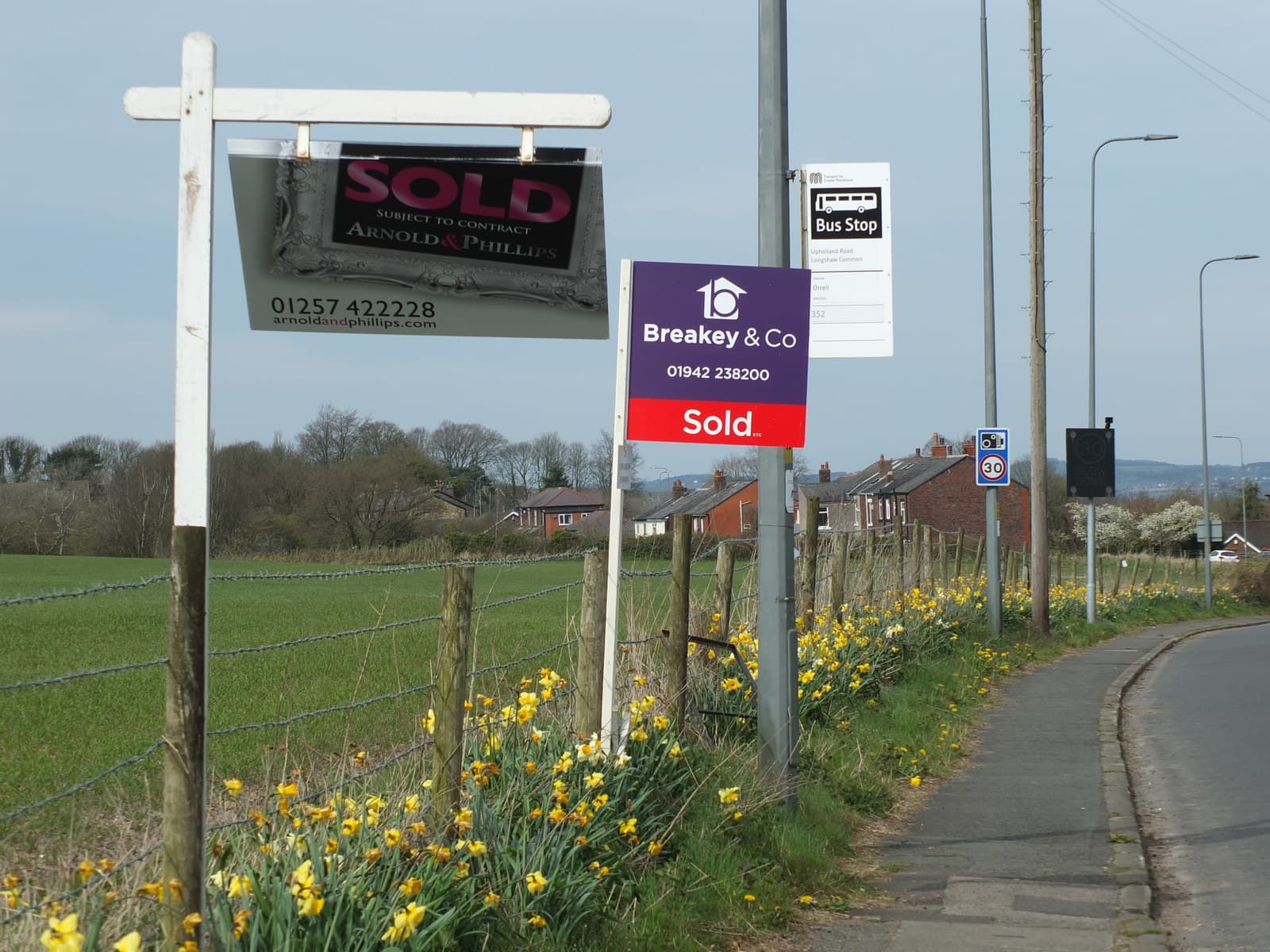
A buyer who has not sold their own home is what agents call an unsold buyer, or a buyer sitting at the top of an incomplete chain. They can agree a price with you and instruct a solicitor. They cannot exchange contracts until their own sale is far enough along to fund the purchase. Everything else in the process can move. Completion cannot.
That distinction is the whole of this decision. You are not judging whether they want your house. You are judging whether they are in a position to buy it, and when.
Is an offer from an unsold buyer worth taking seriously?
Often, yes. A great many completed sales start exactly this way, and an unsold buyer with a realistic home in a moving market is a very different proposition from one whose property has sat unsold for six months. What matters is not their intent. It is the state of their sale.
- Not yet on the market: no meaningful timetable exists yet.
- On the market with no viewings: the timetable could run to months and may need a price reduction first.
- Viewings but no offers: the market is looking and not buying at that price.
- Offer agreed on their home: a real chain now exists and can be assessed link by link.
- Exchanged on their own sale: for your purposes they are effectively a funded buyer.
How much time does an unsold buyer add to my sale?
Rightmove reported on 31 July 2026 that a move in Great Britain takes 216 days on average from listing to completion, of which 62 days are spent finding a buyer and 154 come after the sale is agreed. If your buyer has not yet found their own buyer, the honest starting assumption is that you are adding something in the order of those 62 days before your own clock can properly start.
Where your buyer stands, and what it means for you
| Their position | What they can do now | Realistic risk to you |
|---|---|---|
| Not yet listed | Agree a price only | High. No timetable and no evidence. |
| Listed, no offers yet | Agree a price, instruct a solicitor | High. Their asking price may have to move first. |
| Offer agreed on their home | Progress searches and enquiries | Moderate. The chain below them now matters. |
| Exchanged on their own sale | Exchange with you | Low. Their funding is committed. |
What actually causes these sales to fall apart?
Chains break, but they are not the biggest cause of failure. Quick Move Now's analysis of the second quarter of 2026 put mortgage and lending problems at 33% of collapsed sales, survey issues at 27%, and chain breaks, changes in a buyer's circumstances and legal issues at 13% each. Separately, TwentyEA put the national fall-through rate at 23.7% in the first quarter of 2026, down slightly from 24.0% the quarter before.
Why agreed sales collapsed, Q2 2026 (Quick Move Now)
| Reason | Share of failed sales |
|---|---|
| Mortgage or lending problem | 33% |
| Survey issue | 27% |
| Chain break | 13% |
| Change in the buyer's circumstances | 13% |
| Legal issue | 13% |
The useful read is that a chain adds a risk which is real, but smaller than the risks every sale carries anyway. It is a reason to manage the situation, not a reason to refuse it.
How do I judge whether this buyer is genuinely committed?
By what they have spent, not by what they have said. Money and instructions are evidence. Enthusiasm is not, and it costs nothing to give.
Reading commitment
| Says they are committed | Has proved they are committed |
|---|---|
| We absolutely love it | Their own home is on the market at a sensible price |
| We are ready to go | An offer is agreed on their own sale |
| Our solicitor is sorted | A solicitor is instructed and paid, and has written to yours |
| The mortgage is fine | A mortgage application is submitted, not only an agreement in principle |
| We will book the survey soon | The survey is booked and paid for |
How do I protect myself if I accept?
1. Ask exactly where their own sale is
Ask your agent for the position in writing. Is their home listed, at what price, how long has it been on, and is an offer agreed. Ask for the name of their agent so the answer can be checked rather than taken on trust.
2. Ask to see the chain below them
Every link below your buyer is a link that can break. Ask how many parties are in it and whether anyone further down is still unsold.
3. Keep marketing until they have proved it
In England and Wales nothing is binding until exchange of contracts. Staying on the market, or agreeing a defined window before you come off, is a reasonable position rather than a hostile one.
4. Set a review date rather than an ultimatum
Agree with your agent that you will review the position in four to six weeks if their own sale has not been agreed by then. A date removes the awkwardness of an open-ended wait.
5. Match your spending to theirs
Instructing your own solicitor early is cheap and keeps momentum. The larger non-refundable costs, and the decision to come fully off the market, are better held until your buyer has money committed to their own sale.
6. Keep any second-place buyer warm
Ask your agent to keep interested viewers informed rather than closing them down. If the chain fails, that is the difference between relisting from scratch and simply moving across.
7. Re-check the position before you commit to your onward purchase
Before you exchange on the property you are buying, confirm that your buyer's own sale has exchanged or is exchanging. That single check prevents most of the worst outcomes in a chain.
Is it unfair to keep my house on the market?
No, and it is worth saying plainly. Roughly one in four agreed sales did not complete in the first quarter of 2026. Continuing to market while a buyer's own sale is unagreed is a proportionate response to a known risk, and a serious buyer will understand it.
What matters is that you are open about it. Tell them, through your agent, exactly what would take the house off the market and when. A clear condition is fair to everyone. A quiet one is not.
Should I ask my buyer to take their own home off the market too?
You can ask, and some agents will suggest it, but think it through. What helps you is their sale progressing, not their property being harder to find. Their coming off the market slows the very thing you are waiting for.
Can I accept a better offer later if one comes in?
In England and Wales, until exchange of contracts, yes. It is legal and it happens. It is also worth handling openly, because the reputational cost of doing it quietly falls on you and on your agent.
Does a chain-free buyer always beat a higher offer?
Not always. A chain-free buyer with an unconfirmed mortgage can be less certain than a buyer who has an agreed sale and a submitted application. Judge funding and position rather than the label.
What happens if my buyer's sale falls through further down the chain?
Their sale collapses and yours goes with it, unless they can find a replacement buyer quickly. This is why the number of links below your buyer matters as much as your buyer does.
How long should I wait for an unsold buyer?
There is no fixed rule, but set the date in advance rather than in hindsight. Four to six weeks without an agreed sale on their side is a reasonable point to review, and reviewing is not the same as walking away.
The offer is theirs to make. The timetable is yours to set.
You are allowed to take your time with this. Ask the direct questions, watch what they spend rather than what they promise, and keep your own options open until theirs are real.
ValuQ gives UK homeowners free, side-by-side property valuations from competing local estate agents. It is free for homeowners, always, and sellers stay anonymous until they decide which agent to speak to.
Sources
- [1]Property Industry Eye, Estate agents face longest wait on record to get paid (Rightmove data) · 2026-07-31 · https://propertyindustryeye.com/estate-agents-face-longest-wait-on-record-to-get-paid/
- [2]Quick Move Now, Q2 2026 fall-through analysis · 2026-07-31 · https://www.newsfilecorp.com/release/306900/Quick-Move-Now-Data-Shows-27-of-Failed-UK-House-Sales-Collapse-at-Survey-Stage-in-Q2-2026
- [3]PropertyWire, Property fall-throughs decline to 23.7% in early 2026 (TwentyEA data) · 2026-04-16 · https://www.propertywire.com/news/property-fall-throughs-decline-to-23-7-in-early-2026/
- [4]Business Cheshire, New data reveals the hidden crisis behind UK property market fall-throughs in 2026 · 2026-04-24 · https://www.businesscheshire.co.uk/2026/04/24/new-data-reveals-the-hidden-crisis-behind-uk-property-market-fall-throughs-in-2026
- [5]Estate Agent Today, Record wait for sellers from listing to completion · 2026-07-31 · https://www.estateagenttoday.co.uk/breaking-news/2026/07/eight-months-from-listing-to-completion-record-wait-for-sellers/
Terms in this article
Plain-English definitions from the ValuQ property glossary.
Exchange of contracts
Exchange of contracts is the moment a sale becomes legally binding, when the two signed contracts are formally swapped and the deposit is paid.
Onward purchase
An onward purchase is the home a seller is buying with the proceeds of their sale, linking the two transactions.
Price reduction
A price reduction is lowering the asking price of a home already on the market to restart buyer interest.
Fall-through
A fall-through is an agreed sale collapsing before exchange of contracts, with neither side owing the other anything.
Relisting
Relisting is putting a withdrawn or fallen-through property back on the market, sometimes with a new agent, price or photographs.
Read next
Related insights
One in six recently bought homes now resells at a loss
My buyer wants me to pay towards their costs. Should I?
House price growth halves to 0.8%. What now for sellers?
Should I sell my house first or buy first?
Know what your home is worth today
ValuQ gives UK homeowners free, side-by-side property valuations from competing local estate agents. Anonymous until you choose. No cold calls.
Get your free anonymous valuationSellers and buyers never pay.